I'm an office administrator for a 45-person manufacturing company. Every year I manage roughly $180,000 in instrument and supply orders across 8 vendors. When I took over purchasing in 2020, I thought I had it figured out: find the cheapest specs that match, place the order, keep finance happy. Turns out, I was wrong—and that mistake cost us more than just money.
People think expensive vendors deliver better quality because they charge more. Actually, vendors who deliver quality can charge more—the causation runs the other way. I learned this the hard way with our CMM purchase.
The Problem You Think You Have
You're looking for a CMM for sale. You compare specs: measuring range, accuracy per the datasheet, software features. All look similar. One vendor is 30% cheaper. Great deal, right?
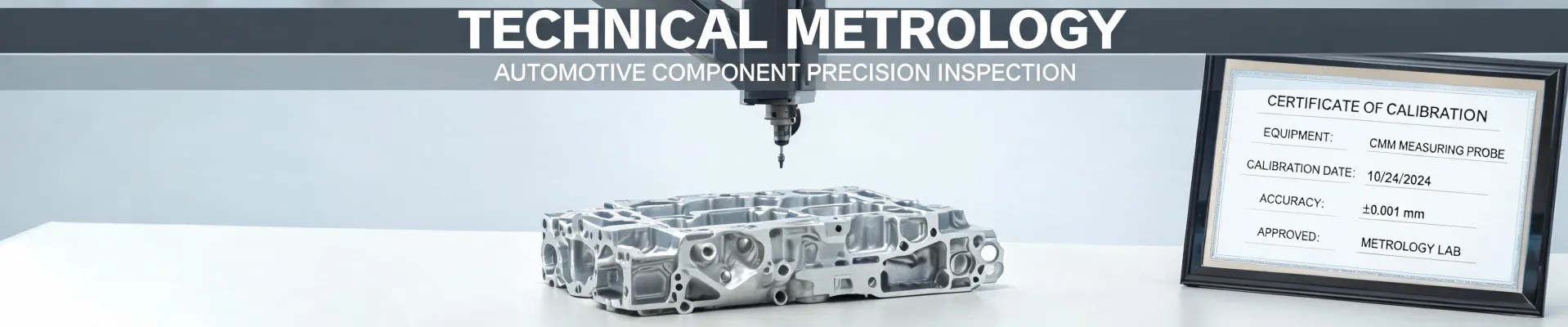
That's what I thought. I ordered a mid-tier CMM from an unknown brand. It said 2.5 µm accuracy on the brochure. I assumed "same specifications" meant identical results across vendors. Didn't verify. Turned out their interpretation of "accuracy" was different—they measured under ideal conditions, not real ones. Our first batch of aerospace parts failed inspection. We had to re-machine 60 parts at $140 each. That's $8,400 down the drain.
Deeper Cause: It's Not About Hardware
The real problem wasn't the CMM itself—it was what the CMM represented. When our customers received parts that didn't fit, they didn't blame the measurement machine. They blamed us. Our brand image took a hit. A key client put us on probation. The VP of operations called me in and asked, "Why are we using equipment that makes us look amateurish?" That stung.
Here's the deeper issue: the quality of your measurement equipment directly signals your company's competence. Clients don't see your calibration certificates. They see the final product and whether it works. If your CMM isn't trustworthy, every part that leaves your shop carries uncertainty. That uncertainty erodes trust—and trust is what keeps B2B relationships alive.
I get why people go with the cheapest option—budgets are real. But the hidden costs are rarely accounted for. Let me give you a real figure: after the rework and the rushed shipping, our total project cost was 22% higher than if we had just bought a quality CMM from the start. And we lost a week of production time.
The Price of Ignoring Quality Perception
Once the damage was done, I started tracking downstream effects:
- Internal morale: The QC team lost confidence in their own measurements—they spent hours double-checking with a portable CMM (we had a Hexagon one for field work).
- External reputation: One of our longest clients sent a formal complaint and delayed a $30k order until we proved our process was stable.
- Budget blowout: The $8,400 rework plus overtime cost plus the cost of my time managing the crisis—easily $12,000 in total.
And here's the kicker: that cheap CMM's manufacturer offered almost no support. When I asked for on-site calibration, they quoted a 3-week wait. Hexagon, by contrast, has a calibration service that arrives within 48 hours (as of January 2025, at least). That level of support is what turns a capital purchase into a partnership.
The Role of Peripheral Supplies
It's not just big machines. As an admin buyer, I also order lab consumables like centrifuge tubes. I used to buy the cheapest polypropylene tubes from a generic supplier. They leaked—literally spilled samples. That cost us re-runs of experiments. When I switched to high-quality tubes (sourced through Hexagon's lab supply channel—they stock name brands), the failure rate dropped from 8% to 0.3%. Clients noticed the consistency in our test results. Quality perception isn't confined to the machine shop; it ripples through every output.
Similarly, for automation projects I order sensors. We use ifm inductive sensors for position detection. Last year I needed to install a batch but wasn't sure about the wiring. The manufacturer's manual was confusing. I found a resource at Hexagon's support portal: "How to install ifm inductive sensors step by step." That video walkthrough saved our maintenance team 3 hours of trial and error. That's the kind of practical support that keeps production on schedule—and keeps me looking competent to the operations team.
The Solution: Buy the Ecosystem, Not Just the Machine
After that CMM disaster, I did a full vendor consolidation project in 2024. I evaluated 5 suppliers using total cost of ownership (not just price). Hexagon came out ahead for three reasons:
- Accuracy you can trust: Their CMMs are calibrated to ISO 10360 standards (verified on-site during installation).
- Support that doesn't ghost you: Hexagon support is responsive—they even helped me with the ifm sensor installation question, which technically wasn't their product. That's the kind of partnership I value.
- One-stop for related items: They offer centrifuge tubes, pH meters, micrometers, and more. Consolidating vendors cut my order processing time by 6 hours per month. Finance was thrilled.
Now when someone asks me about a CMM for sale, I don't just compare price. I ask: What's the calibration turnaround? What training do they offer? What happens if something goes wrong? Those are the things that protect your brand's reputation.
To be fair, you don't always need the most expensive option. But you do need to factor in the cost of risk. A 30% cheaper machine that causes a 10% rework rate isn't cheaper—it's a liability. And the perception of your company is worth more than any price difference.
"The $50 difference per project translated to noticeably better client retention."
If you're managing purchasing for an industrial company, take a hard look at what quality perception your current equipment sends to your customers. Sometimes the cheapest decision is the most expensive mistake (unfortunately, I learned that first-hand).