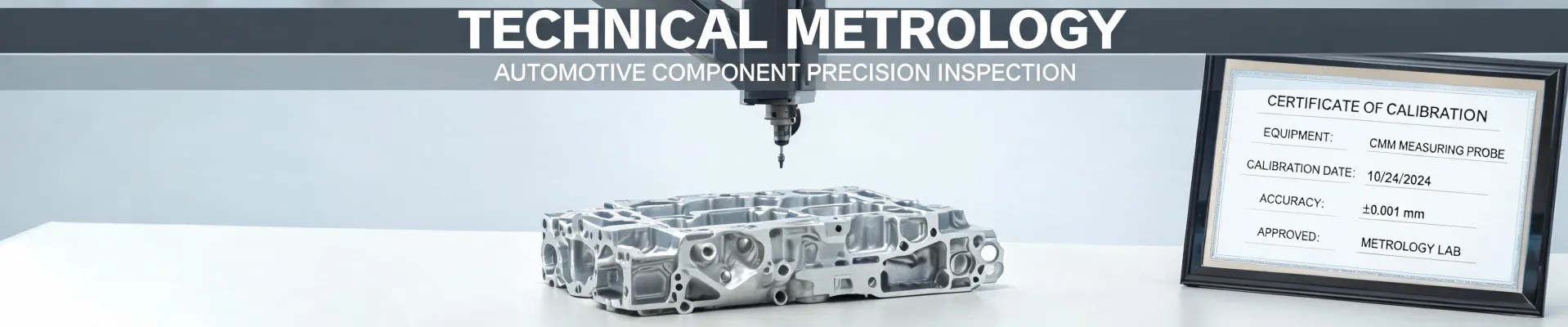
The Problem That Looks Familiar
You need a new digital dial indicator, or maybe you're sending out that Hexagon CMM for its annual calibration. You've got a quote, a deadline, and a budget. Seems straightforward, right?
I thought so too. Then I made a $890 mistake on a single order that could have been avoided if I'd understood one thing: the difference between a cheap price and a reliable outcome.
The Surface Issue: A Simple Order Gone Wrong
In March 2023, I needed to order a specific model of a portable CMM arm quick-check. We had a critical quality audit coming up. The budget was tight, and my purchasing team found a vendor offering the same model for $200 less than our usual supplier. We jumped on it.
The delivery was on time. The box looked professional. Inside was the right model, with a calibration certificate dated that week. Everything looked fine.
Then we used it.
Unpacking the Real Issue: Trust vs. Cost
The problem wasn't the hardware. It was the trust model behind the transaction. The cheaper vendor had a generic calibration certificate that didn't meet our specific quality system's requirements (we needed an ISO 17025 accredited report). We didn't catch this until the auditor flagged it.
In my experience, this is where most teams get caught. We focus on the visible cost — the sticker price — and miss the hidden cost of verification work.
The Data Gap
I don't have hard data on industry-wide defect rates for this specific error, but based on our team's 5 years of orders (we process about 200 calibration-related orders a year), my sense is that roughly 8-12% of first-time orders from non-authorized Hexagon distributors have documentation or certification issues.
Wish I had tracked that more carefully from the start. But that's hindsight.
The Cost of Getting It Wrong
Let's break down that $890 mistake:
- Rush re-calibration fee: $350 (because now we needed the right certificate in 2 days)
- Expedited shipping: $120
- My time (8 hours): ~$250 (pulling my hair out, re-verifying specs, dealing with the auditor)
- Lost trust with the client: Priceless (and embarrassing)
That $200 savings? It cost us $890 in redo plus a 1-week delay on a $15,000 project. The uncertainty of the cheaper option was far more expensive than the certainty of the more expensive one.
Why This Happens (Deep Cause)
The deeper issue isn't vendor selection. It's traceability. The cheaper vendor might have the right equipment, but they might not have the right processes to ensure their calibration certificates are universally accepted. They might use a 'manufacturer's calibration' instead of an 'accredited' one.
In my opinion, this is the single biggest risk when buying from a non-Hexagon-authorized distributor. You get the hardware, but you lose the chain of custody for quality assurance.
The 'Too Long; Didn't Read' Solution
We now have a simple pre-check checklist for any order from a non-primary distributor. It takes 5 minutes:
- Verify the calibration certificate: Does it have an ISO/IEC 17025 stamp?
- Check the scope: Is the lab accredited for the specific parameter (e.g., length measurement)?
- Confirm the origin: Can the vendor trace the equipment back to the original manufacturer?
The solution is simple: pay for certainty. That $200 savings looks small compared to the cost of a failed audit. Since implementing this checklist 18 months ago, we've caught 8 potential errors.
"In March 2024, we paid $400 extra for rush delivery from an authorized Hexagon service center. The alternative was missing a $15,000 product launch event. It was the easiest $400 we've ever spent." — Personal experience.
If you're ever in doubt, check the supplier's accreditation. It's not just about the equipment. It's about the trust behind it.