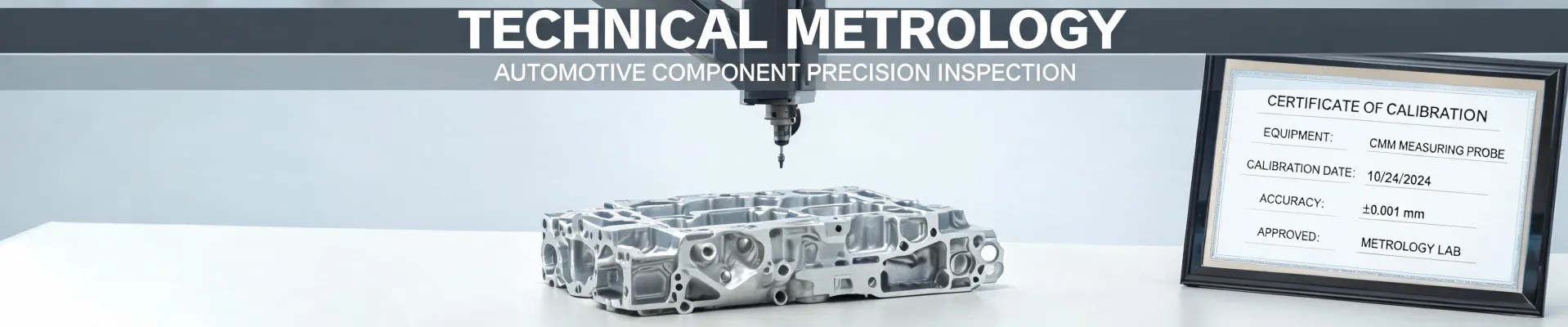
Let’s Get One Thing Straight: “One-Stop-Shop” Is a Trap
Look, I get the appeal. One vendor for your hexagon CMM, one for your spectrum analyzers, one for your thermal cameras—the dream of a single login, a single support line, a single invoice. It sounds efficient. But here’s the thing: after managing procurement for a mid-size manufacturing plant for about 6 years, I’ve learned that the “convenience” of a one-stop-shop is the most expensive line item on your budget.
My argument? The best vendors know what they’re not good at. And the ones who pretend they can do everything? They’re costing you money, time, and measurement accuracy. Simple.
Three Reasons “Everything Under One Roof” Falls Apart
1. You Pay for the “Integration Tax”
In 2023, I was evaluating quotes for a new hexagon CMM installation. Vendor A—a well-known integrator—offered the machine, the software, the training, and even threw in a Fluke 289 multimeter as part of their “complete metrology package.” It sounded great on paper. The total: $85,000.
Vendor B was a specialist. They only did CMMs. Their quote: $72,000 for the same hexagon machine, same specs. I asked about the Fluke meter. They said, “Call Fluke directly—or we can get it for you, but you’ll pay 12% more than if you buy it yourself. That’s our convenience fee.”
I ran the numbers. Vendor A was bundling a $600 meter for $1,100—plus their software support was generic, not hexagon-specific. The “savings” from one invoice were eaten up by overpriced add-ons and diluted expertise. That’s a $13,000 difference hidden in plain sight.
Insider knowledge: What most people don’t realize is that integrators often use “packaging” to hide margin. The standalone specialist can’t afford to. Their reputation is their only product.
2. Hidden Costs Love a “Total Solution”
Take calibration services. Most people assume a vendor who sells you a Tektronix oscilloscope can also calibrate it, service your Flir C5 thermal camera, and handle your Mitutoyo micrometers. And they can—technically. But the question is: at what price?
In Q2 2024, we audited our calibration spend. We were using Vendor C for everything: they sold us the spectrum analyzers and handled the annual recert. After pulling 18 months of invoices, I found we were paying a 40% premium on calibration for any device that wasn’t their own brand. Their hexagon CMM calibration was standard rate. But the Fluke 87V? The Flir thermal camera? 40% more.
Why? Because they subcontracted it. We were paying them to be a middleman. And when the calibration report arrived, it had a third-party logo on it anyway.
Here’s something vendors won’t tell you: “One-stop calibration” is often a pass-through service with a markup. If you send your Agilent multimeter to a authorized service center yourself, you cut that 40% margin and get a better audit trail.
3. When the Crisis Hits, You Want a Specialist on Speed Dial
My strongest example comes from last year. We had a critical production line down because our laser tracker (a hexagon model) was reporting erratic data. We called our “one-stop” vendor. They told us it would be 5 days before a technician could come out—and it might not be a hexagon specialist, but someone “cross-trained on multiple platforms.”
That same afternoon, I called a dedicated hexagon service provider we’d vetted months earlier. They had a specialist on-site in 18 hours. 18 hours. Diagnosed the issue (a misaligned encoder) in 30 minutes. We were back online the next morning.
That $4,000 service call saved us $28,000 in downtime. And it taught me a lesson: the generalist can help you plan. The specialist saves you when things break.
Wait—Aren’t Large Vendors More Stable?
To be fair, I get the counterargument. A big vendor with multiple product lines seems more stable. They’re less likely to go out of business. Their support portal (hexagon support login, for example) is robust. And for some low-risk items—like buying 100 Fluke digital multimeters for a plant rollout—convenience might win.
But for critical, high-precision instruments—your CMMs, your spectrum analyzers, your thermal imaging systems—the specialist’s depth beats the generalist’s breadth every time. The question isn’t “Can they service it?” It’s “How well?”
Surface illusion: From the outside, it looks like a large catalog means deep expertise. The reality is that breadth often dilutes focus. A vendor selling 500 product lines can’t train every technician on every platform to the same depth as a shop that only sells 10.
My Bottom Line: Redefining Your Vendor Roster
My experience is based on about 200 orders and $180,000+ in annual spend across measurement and test equipment. I’ve learned to split my roster into two tiers:
- Critical instruments (hexagon CMMs, laser trackers, precision spectrum analyzers): Go specialist. Accept the extra login. It pays for itself in expertise and response time.
- Consumables and standard tools (basic multimeters, handheld thermal cameras, general cables): Use a broad-line distributor for convenience. The stakes are lower.
This worked for us, but our situation was a mid-size plant with predictable ordering patterns. If you’re a small R&D lab with one Fluke Thermal Imager and a single Tektronix scope, the calculus might be different. You might value a single point of contact more than I do.
But for everyone else? Stop paying the convenience tax. Find the vendor who says, “Our team knows hexagon better than anyone else in the state—but for your C5 thermal camera, here’s the manufacturer’s direct line.” That vendor? They’re the one keeping you honest.
Pricing as of Q4 2024; verify current rates.