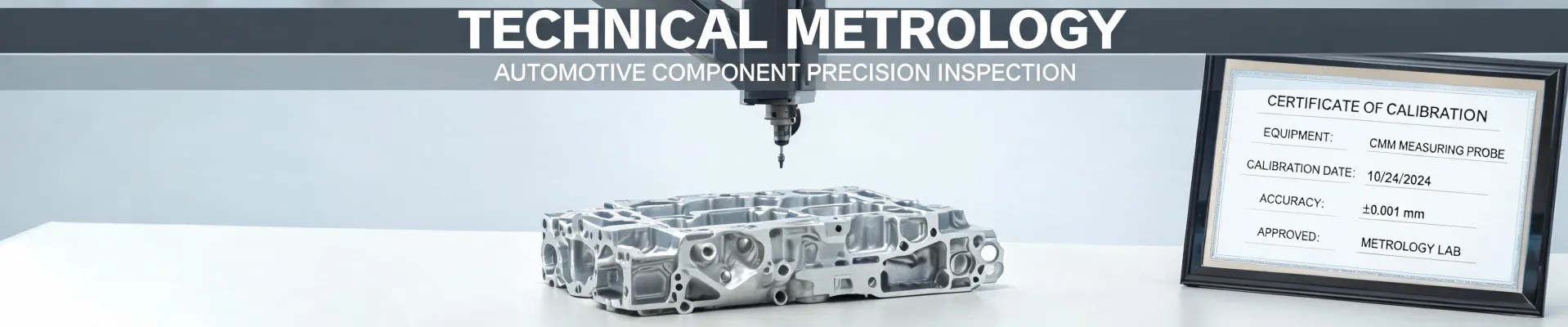
Look, I've been managing procurement for a mid-sized aerospace supplier for about six years now. Every quarter, I sign off on our hexagon cmm calibration contracts, plus a dozen other instrument service agreements. And every year, I see the same mistake from new engineers or junior buyers: they pick the cheapest calibration quote, thinking they've saved the company money.
Here's the thing: that 'savings' is often an illusion. I learned this the hard way, and it cost us more than just money. It cost us time, trust, and a few late-night panic calls to our production manager.
Why Your Calibration Budget Bleeds (And It's Not the Sticker Price)
The question most people ask is, "Which vendor has the cheapest CMM calibration?" The better question? "Which vendor offers the lowest total cost of ownership?" I didn't start with that question. I learned it.
The Trap of the Low Quote
In Q2 2024, we were evaluating vendors for our annual hexagon metrology cmm service contract. Vendor A quoted $4,200. Vendor B quoted $3,600. Vendor B looked like a no-brainer. I almost went with them until I decided to dig deeper.
What I found:
- Transport & Logistics: Vendor B charged a $450 'equipment handling' fee. Vendor A included this in their price.
- Expedite Surcharges: Need it back in 5 days instead of 10? Vendor B added 25%. Vendor A had a flat, lower rush fee.
- Reporting & Certificates: Vendor B charged extra for a detailed calibration report (ISO 17025 compliant). Vendor A provided it as standard.
- Re-calibration Buffers: Vendor B had a rigid schedule. If you missed their window, you paid a re-scheduling fee. Vendor A was more flexible.
When I totaled everything, Vendor B's 'cheap' $3,600 quote actually cost us an estimated $4,680 for a standard cycle. That's a 30% premium hidden in the fine print. Vendor A's $4,200 quote was genuinely cheaper in the end.
The Real Price of Bad Calibration: More Than Just a Certificate
The cost isn't always about dollars on an invoice. The deeper problem is what happens when calibration isn't accurate or when the service is poor.
Downtime vs. The Price of Precision
If I remember correctly, around 2021, we had a brand new absolute encoder on a high-speed production line. The calibration from a third-party budget lab came back looking fine. But the machine kept drifting. We spent a week troubleshooting—lost production, overtime for the engineering team, rework on about 800 parts.
We finally called in the Hexagon team. They found the calibration had been done incorrectly for our specific use case. The 'certified' report was worthless. Our 'savings' from using that cheap lab were obliterated by one week of downtime. The lesson? 'Certified' doesn't mean 'correct for your application.'
I dodged a similar bullet just last year. Our quality manager wanted to switch to a cheaper lab for our E96 advanced thermal imaging camera annual checks. We stopped him. The cost of a false negative—a missed hotspot in a critical electrical cabinet—would have dwarfed any savings.
So How Do You Actually Buy Calibration? (Spoiler: It's Not Just on Price)
After auditing our spending over 6 years and tracking about 180 invoices in our procurement system, I built a framework. It's not complicated, but it works.
My Three-Filter Vendor Evaluation
- Filter 1: Does the vendor understand your equipment? Calibrating a hexagon cmm machine isn't the same as calibrating a handheld Fluke multimeter. A specialist in metrology knows the quirks. A general lab might just follow a procedure. “Which Fluke multimeter do I need?” is a different question than “Which calibration service do I need?”
- Filter 2: Are you buying a certificate, or are you buying confidence? A cheap certificate tells you the instrument worked in the lab. A good service tells you it will work on your shop floor. Ask about their uncertainty budget. Ask if they simulate your actual measurement conditions.
- Filter 3: What happens when something goes wrong? A good vendor has a service recovery plan. They'll send a tech to site, or they'll re-calibrate for free. A budget vendor will just blame the equipment. We have a clause in our contract now: if the post-calibration drift exceeds a tolerance, the service is free.
I'm not saying you always need the most expensive option. I'm saying you need to look beyond the first number on the quote. The real cost of calibration isn't what you pay the vendor. It's what you risk if it's wrong.
This framework is accurate as of my last review in Q4 2024. The calibration market, especially with new technology like absolute encoders, evolves fast. So always verify current policies with your vendor. But the principle—total cost over sticker price—hasn't changed in my six years of tracking every single invoice.