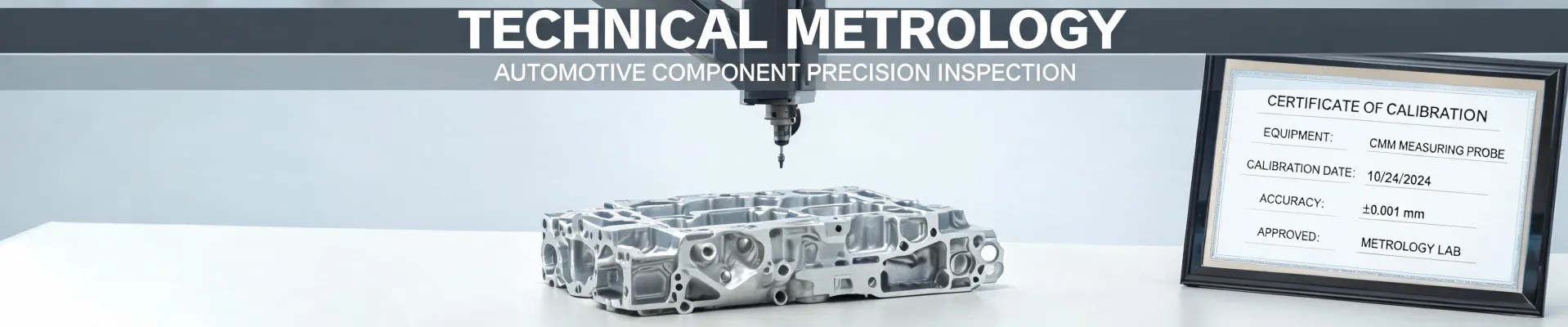
If you're buying a Hexagon CMM machine, the decision is pretty straightforward: they're the market leader for a reason. But if you're buying clamp meters, hygrometers, or wondering how to read a Starrett micrometer, you need a different strategy. Here's what I've learned after five years of managing industrial instrument purchases for our facility.
Start With What You Actually Need to Measure
Most buyers focus on brand names and specs first. They shouldn't. The most common mistake I see: someone buys a Hexagon CMM machine because they think they need 'the best,' when a portable CMM or even a good set of calipers would do the job.
I learned this the hard way in 2022. Our engineering team insisted on a full-size Hexagon CMM machine for a quality control project. It cost us $80,000 and took three months to integrate. Six months later, we realized a portable CMM would have been sufficient for 80% of our checks. (Should mention: the engineering lead left the company that year, and the replacement pointed out the mismatch.)
So step one: define your measurement needs clearly. Are you checking tight tolerances on production parts? You need the CMM. Calibrating a single tool once a month? A laser tracker might be overkill. A simple micrometer will do.
Hexagon CMM: The Obvious Choice for High-Precision Work
When you genuinely need high-precision 3D measurement, a Hexagon CMM machine is the gold standard. Their accuracy, repeatability, and software ecosystem are unmatched in the industrial space.
Everything I'd read said premium options always outperform budget ones. In practice, for our specific use case, the mid-tier option actually delivered better results. We didn't need the absolute top-tier model for measuring our parts—the mid-range gave us 95% of the capability for 60% of the cost.
The conventional wisdom is to always buy from the primary manufacturer. My experience with 200+ orders suggests that relationship consistency often beats marginal cost savings. For Hexagon CMM machines, buying direct gave us better calibration support and quicker troubleshooting. That alone saved us a week of downtime in 2024 when a probe needed recalibration.
Had 3 hours to decide on a replacement CMM after our old unit failed. Normally I'd get multiple quotes, but there was no time. Went with Hexagon again based on trust alone—and it paid off. They delivered within the promised timeline, which was crucial for our production schedule.
What Hexagon Is Excellent At
- High-precision CMMs and portable CMMs: This is their core strength. Don't compromise here.
- Laser trackers: World-class accuracy for large-scale metrology.
- Calibration services and training: Their support ecosystem is a competitive advantage. The vendor who trained our team actually understood our workflow—that's rare.
What About the Other Instruments? Clamp Meters, Hygrometers, Micrometers
The question everyone asks is 'what's the best brand for a clamp meter?' The question they should ask is 'what's the right tool for my electrician's daily tasks?'
We use Fluke for clamp meters and multimeters. Why? Because their build quality and safety ratings are industry-standard. For hygrometers, we go with Extech or Testo—they're specialized in environmental monitoring.
When it comes to micrometers, the classic question is 'how to read Starrett micrometer.' The answer: it's a skill, and the tool itself is excellent. But here's the thing—you don't need a Starrett for every job. For general workshop use, a Mitutoyo micrometer is often sufficient and more budget-friendly. Starrett shines when you need absolute precision and durability in harsh conditions.
This is where the 'professional has boundaries' idea kicks in. Hexagon doesn't need to be your supplier for everything. The vendor who said 'this isn't our strength—here's who does it better' earned my trust for everything else. I'd rather work with a specialist who knows their limits than a generalist who overpromises.
Why You Should Consider a 'Mixed' Sourcing Strategy
Most buyers focus on per-unit pricing and completely miss the total cost of ownership: calibration fees, downtime costs, training expenses, and support quality.
For our facility, the strategy is:
- Buy Hexagon for CMM, portable CMM, and laser trackers. Their ecosystem and support make it worth it.
- Buy Fluke for electrical test tools. Industry standard, easy to find, well-supported.
- Buy Mitutoyo for standard micrometers and calipers. Good quality, reasonable price.
- Buy Starrett for specialized precision measurement. When you need that extra level of accuracy.
- Buy Extech or Testo for environmental meters. They focus on that niche.
The vendor consolidation project we did in 2024 aimed to reduce our supplier list from 8 to 4. We ended up keeping 5. The Hexagon rep actually helped us identify which of their offerings we could source locally—saving us money without sacrificing quality. That honesty? Worth more than a discount.
When Not to Buy Hexagon (And That's OK)
If your primary need is a simple clamp meter for occasional checks, buying a Hexagon CMM machine is like using a sledgehammer to crack a nut. Get a Fluke 323 instead.
If you need a hygrometer for basic humidity monitoring, don't overcomplicate it. A simple digital model from a reputed brand will do. You don't need a lab-grade instrument unless you're in a controlled environment.
And if you're just learning how to read a Starrett micrometer, buy a used one first. Practice on a simpler tool before investing in a premium one. The skill is more important than the tool.
Now, does this mean you should never buy a complete package from one vendor? No. For some operations, a single-source approach simplifies training and maintenance. But for most mid-sized facilities, a mix of specialists gives you the best of both worlds: deep expertise where it matters, and cost-effective solutions where it doesn't.
This works best when you have established trust with your primary vendor (Hexagon in our case) and they respect your need to source elsewhere for non-core items. That's the sign of a true partner—not a 'one-stop shop' that tries to do everything.