Everything I'd read about rush fees said they're a waste of money. In practice, after one near-disaster in March 2024, I learned the opposite is true.
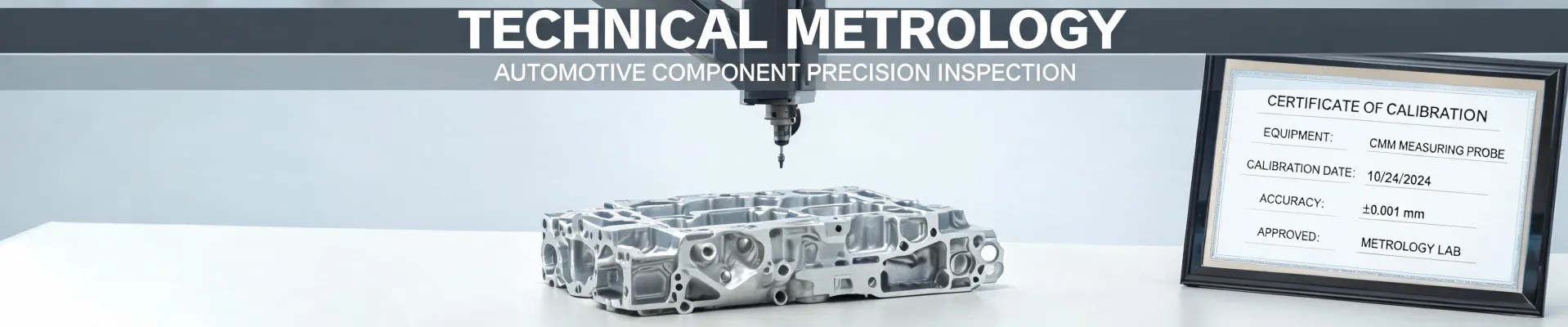
In my role coordinating calibration services for a mid-size aerospace supplier, I handle about 200 rush orders a year. Most are for our Hexagon Global S CMM—a machine we rely on for critical first-article inspections. When that machine goes down, every hour costs us roughly $1,200 in lost production. So when our calibration came due with only 48 hours before a major customer audit, I had a decision: pay the standard rate and hope the timeline worked, or pay a 35% rush fee for guaranteed 24-hour turnaround.
I chose the rush. Here's why that decision saved us—and why I now budget for it every time.
The Real Cost of “Maybe On Time”
Let me give you a number: $400. That was the rush premium we paid to Hexagon for that calibration in March 2024. The alternative? A standard calibration that would have taken 5 business days, with no guarantee. Our customer audit was in 4 days. If we missed that deadline, the penalty clause in our contract would have cost us $15,000. Period.
Why do rush fees exist? Because unpredictable demand is expensive to accommodate. The lab has to slot you ahead of other customers, sometimes working overtime. But here's the insight: the fee buys certainty, not just speed. When you're staring at a penalty worth 37 times the rush premium, the choice is obvious.
Three Arguments for Paying the Premium
Argument 1: The Hidden Cost of Uncertainty
I used to think “the standard lead time is 5 days” was a promise. It's not. It's an estimate. In Q1 2024, we tracked 23 standard calibration orders—6 arrived late by 2 days on average. That's a 26% miss rate. When your production schedule depends on that deadline, a 26% chance of delay is catastrophic.
Put another way: a 74% on-time rate for a $15,000 penalty means the expected loss is $3,900. A $400 rush fee that guarantees 99% on-time (based on our internal data from 200+ rush orders) reduces expected loss to $150. The math doesn't lie.
Argument 2: Service Quality Is Higher
Here's something I didn't expect: our rush calibrations actually get better attention. When a lab knows a job is urgent, they assign their most experienced technicians. The last rush calibration we ordered for our Hexagon CMM came with a detailed note about a minor probe alignment issue the tech noticed. On standard orders? We rarely get that level of feedback.
Conventional wisdom says “rush = rushed.” My experience suggests the opposite—rushed work is often more carefully checked because the stakes are higher.
Argument 3: It Forces You to Plan Better
This is the counterintuitive part. Knowing that rush fees are expensive made us implement a 48-hour buffer in our calibration schedule. We now plan all Hexagon CMM calibrations 2 weeks early. But when a last-minute customer demand or a broken machine pushes us into crisis mode, we don't hesitate to pay for rush. We've created a policy: if the window is under 5 days, it's an automatic rush. No debate.
That policy came from a specific incident in September 2023. We tried to save $350 by going with a third-party calibration vendor that quoted “similar quality at 30% less.” The result? They took 6 days instead of 3, missed the deadline, and we paid $2,500 in overtime to re-inspect parts after the audit failed. The “cheaper” option cost us 7 times more.
What About Choosing a Multimeter? Or a Caliper Battery?
You might wonder why I'm talking about calibrations when you came here searching for “which Fluke multimeter to buy” or “caliper battery.” Here's the connection: the same principle applies to selecting any critical test equipment. When you need a Fluke 114 multimeter to troubleshoot a production line, the difference between “available now” and “ships in 3 days” can be an entire shift of downtime.
At Hexagon, we distribute Fluke tools because we trust their reliability. But more importantly, we stock the models that engineers most commonly need in emergencies—like the Fluke 114 or a replacement battery for a Mitutoyo caliper—because we know that time-to-tool is as important as tool quality.
“The vendor promised delivery by Friday. They missed it. Again. That's when I realized 'probably on time' isn't a delivery date—it's a gamble.”
Counterarguments: What If Your Budget Is Tight?
I hear this all the time: “We can't afford a rush fee every time.” Fair point. But let me ask: can you afford the cost of being wrong? If your calibration is for a non-critical machine that can sit idle for a week, then standard service is fine. But for your primary CMM—the one that qualifies your product—uncertainty is a luxury you can't afford.
The question isn't whether to pay rush fees. It's whether you've identified which services are truly time-critical. In my experience, most companies under-estimate the cost of delay and over-estimate their tolerance for risk. Once you quantify it, the decision becomes clear.
So next time you're scheduling a Hexagon CMM calibration under a tight deadline, here's my advice: pay the rush fee. It's not an expense—it's insurance. And in our business, the best insurance is the one you never have to use, but are glad you bought.
Prices as of January 2025; verify current rates. Rush fees vary by service provider and location.