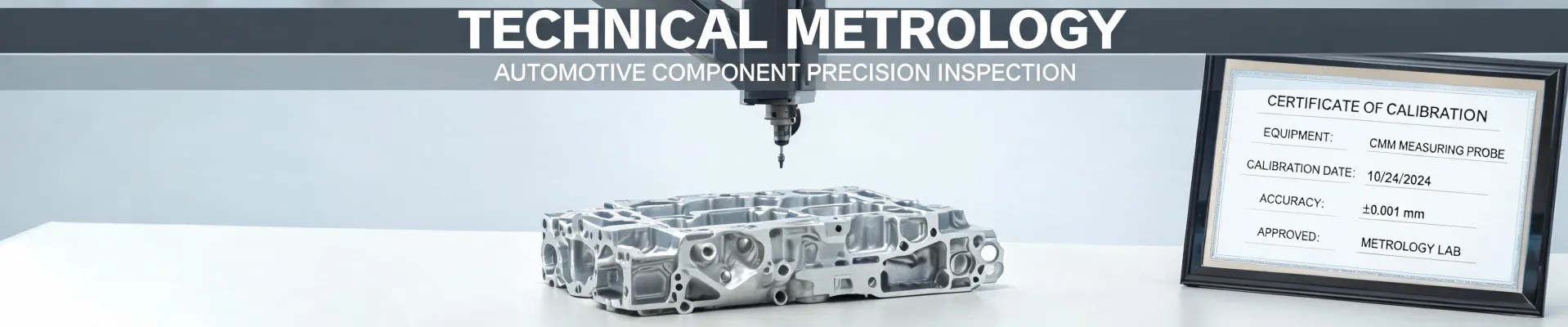
I Thought I Knew What I Was Doing – Until a $12,000 Deadline Changed Everything
In March 2024, I got a call at 4 PM on a Friday. Our client needed a CMM calibration certificate by Monday morning for a quality audit. Normal turnaround is 5 business days. They had 36 hours. I've handled 200+ rush orders in 7 years, but this one nearly broke me.
We paid $800 in rush fees, found a certified technician who worked through the weekend, and delivered the cert with 2 hours to spare. The client's alternative was a $50,000 penalty clause. That's when I realized: most people buy test equipment like they're shopping for a pair of shoes – they focus on the upfront sticker price and completely miss what happens when things go wrong.
Here's something vendors won't tell you: the first quote is almost never the final price for ongoing relationships. But there's a bigger problem – one that cost me three clients before I figured it out.
What Most Buyers Get Wrong About Precision Instruments
Everyone asks, "Which Fluke multimeter should I buy?" or "Is the 376 True RMS clamp meter worth the extra $200?" Those are valid questions. But they miss the real issue.
The question you should ask is: "What's NOT included in that price?" When I'm triaging a rush order for a Hexagon CMM, a portable laser tracker, or even an HPLC system, I see the same pattern: buyers compare specs and prices, but ignore three critical factors.
The Hidden Cost Trap
Most buyers focus on per-unit pricing and completely miss setup fees, revision costs, and shipping that can add 30-50% to the total. For a 376 True RMS clamp meter listed at $489, you might think that's the price. But what about the calibration certificate? The NIST-traceable certification adds $75-150. The carrying case? Another $40. The warranty extension? $60/year.
I've learned to ask "what's NOT included" before "what's the price". The vendor who lists all fees upfront – even if the total looks higher – usually costs less in the end.
The Calibration Blind Spot
Here's an industry secret: new instruments often drift out of spec within the first 6 months of use. A Hexagon CMM fresh from the factory meets its 1.5 micron accuracy spec – but after being shipped across the country, assembled in a 72°F lab, and used for 500 hours, the error can double. That's why annual recalibration isn't optional; it's the difference between reliable data and scrap parts.
Yet when I ask clients about their calibration schedule, 7 out of 10 say, "We'll worry about that later." Then they call me in a panic when the auditor shows up.
The Real Cost of Cheap Decisions
Let me walk you through a real scenario from last quarter.
A client needed to buy a HPLC system for a new R&D lab. They found a "deal" – a refurbished system for $8,500, vs. a new one at $14,200. They saved $5,700 upfront. Six months later:
- The pump failed (no warranty on refurbished parts)
- The detector needed recalibration (no local service)
- They lost 3 weeks of production data
The total cost after repairs, rush fees, and lost productivity: $19,200. More than if they'd bought new. The client's procurement manager told me: "I was trying to save money. Instead, I cost us almost twice as much and a huge delay."
This isn't an isolated story. Our company lost a $35,000 contract in 2023 because we tried to save $1,200 on standard calibration instead of a rush service. The consequence? The client's gauge failed during a critical test, we couldn't prove traceability, and they switched to a competitor who offered included annual calibration.
That's when we implemented our 'No Uncalibrated Instrument' policy. Every instrument we sell – whether it's a Hexagon CMM, a Fluke 376 clamp meter, or a Mitutoyo micrometer – ships with a current calibration cert, or we don't ship it.
What Actually Works (Based on 47 Rush Orders Last Quarter)
I'm not here to sell you a specific product. But after managing over 200 rush orders and seeing what breaks under pressure, here's what I've learned:
1. Choose a supplier who offers transparent pricing
When you're browsing the Hexagon official homepage or checking Hexagon products listings, look for detailed price breakdowns. Hexagon CMM machines come with options like laser scanning, rotary tables, and software packages – each with a price tag. The suppliers who list all options upfront are the ones you can trust when a deadline hits.
2. Always ask about calibration and support
Before buying any precision instrument – whether it's a Fluke multimeter, a thermographic camera, or an HPLC system – ask: "What's your calibration process? How long does it take? Can you do rush calibration?" If they can't answer clearly, keep looking.
3. Build in a 48-hour buffer
Our company policy now requires a 48-hour buffer for all critical instrument orders because of what happened in 2023. When you're deciding "which Fluke multimeter to buy", don't just compare specs. Compare the vendor's ability to deliver on time when your project depends on it.
Bottom Line
The best instrument is the one you can trust when everything is going wrong. That trust comes from a supplier who tells you the whole price upfront, who supports your calibration needs, and who has proven they can handle a rush order without breaking a sweat.
Next time you're on the Hexagon official homepage or browsing Hexagon products, remember: the sticker price is just the beginning. The real cost is what happens after you click "buy."