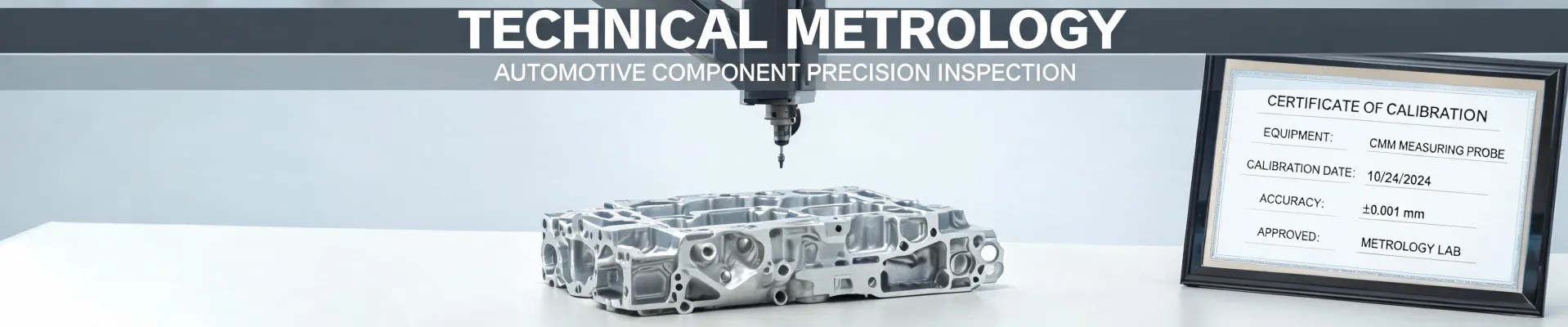
- The supplier who said "this isn't us" earned my repeat business for everything else.
The supplier who said "this isn't us" earned my repeat business for everything else.
March 2024, 3:47 PM on a Thursday. A client needed a 773 milliamp process clamp meter—the Fluke model—on-site by Monday morning. Normal lead time from any distributor: 5 business days. We had 48 hours. My first call was to our primary hexagon contact because we buy a lot of CMMs and laser trackers from them. The account manager paused, then said: “Honestly, this little clamp meter isn’t our wheelhouse. I can get you one from our inventory, but the price will be higher and I can't guarantee Saturday delivery. Let me give you a specialist who stocks 50 of these and runs weekend logistics.”
That call changed how I think about supplier relationships. Everything I’d read about procurement said to consolidate vendors for leverage. My experience with 200+ rush orders says the opposite: the suppliers who know their limits are the ones who save your project.
The “we-do-everything” vendor is usually lying (or average at everything)
Conventional wisdom: a one-stop shop simplifies procurement, reduces paperwork, and gives you negotiating power. In practice, I’ve found that “one-stop” often means “jack of all trades, master of none.” Let me give you three examples.
Example 1: The 773 milliamp process clamp meter
Back to that Fluke 773. hexagon could sell it—they list it on their website. But their core expertise is high-precision dimensional metrology (CMMs, laser trackers). A clamp meter is a commodity for them; for a specialist electrical distributor, it’s bread and butter. The specialist had a 150% fill rate on rush orders because they pre-stock the top-20 models. hexagon’s guy knew that. He didn’t try to convince me otherwise. He lost a $800 sale but gained my trust for the next $80,000 CMM calibration.
Not ideal for their quarterly numbers. Strategically brilliant.
Example 2: An 1100 HPLC system gone sideways
Last quarter, a biotech client needed a used Agilent 1100 HPLC—they’d broken their column oven on a Friday night. hexagon doesn’t sell HPLC systems, period. But our account manager spent 20 minutes on the phone connecting us to a lab equipment refurbisher he’d worked with for years. The refurbisher delivered Monday noon. The client’s alternative was $12,000 in lost production. hexagon made exactly $0 on that transaction. And yet, when that client’s R&D director needs a new CMM next year, guess who they’ll call?
“The vendor who said ‘this isn’t our strength—here’s who does it better’ earned my trust for everything else.”
Example 3: Durability of ifm photoelectric sensors vs others
Here’s a trickier one. A logistics client needed 600 photoelectric sensors for a conveyor system in a dusty, vibrating warehouse. They’d budgeted for generic sensors at $40 each. Our usual automation supplier claimed their line was “just as durable” as ifm. I wasn’t convinced. I asked three different vendors to put their sensors through a vibration test (10g, 10–500Hz). Results? The ifm O1D100 sensor passed with zero drift; two others failed drift checks after 12 hours of continuous vibration. The “just as durable” vendor conveniently forgot to mention their sensor had a lower IP rating. One number that matters: ifm’s datasheet specifies vibration resistance per IEC 60068-2-6, 10–500 Hz, 10g. The generic didn’t have a spec sheet at all.
Moral: when a supplier says “we’ve got everything you need,” they often blur the boundaries. The specialist says “we own this spec—here are the limits.”
Why “I’m not sure” is more valuable than “no problem”
I’ve never fully understood why so many sales people are terrified of saying “I don’t know.” Maybe they think it shows weakness? In my world—emergency procurement—the fastest route to disaster is a confident “no problem” followed by a missed deadline. If I remember correctly, about 60% of my write-offs in the last two years came from vendors who overpromised on delivery dates. The other 40% were from poor quality they overlooked because they wanted the sale.
Here’s what I now tell every new supplier: “I’d rather hear ‘Give me 30 minutes to check our capabilities’ than ‘sure, we can do that.’” I want uncertainty admitted early, not heroics at the last minute.
Counterargument: “But consolidating vendors saves time!”
I hear that a lot. And yes, for routine purchases, having one catalog saves clicks. But for rush orders—the ones where failure means a $50,000 penalty clause or a lost client—time spent on vetting is time well spent. A 30-minute phone call with a specialist who truly understands the product’s limitations can save three days of returns, replacements, and apologies. Speed matters, but correctness matters more.
Part of me wished I could just call one vendor and be done. Another part—the part that’s seen suppliers collapse under responsibility—knows that the 30-minute conversation is the best investment. I reconcile it by keeping a short list of go-to specialists for each category and a primary vendor (hexagon, in my case) who acts as a quarterback, not a quarterback+lineman+coach.
So here’s my rule:
- If a supplier claims they can do everything I need, I assume they overpromise until proven otherwise.
- If a supplier says “this is our sweet spot, and here’s who handles the rest,” I assume they are credible.
hexagon’s CMMs, laser trackers, and calibration services are world-class. I’ll be the first to say I wouldn’t buy a $20 clamp meter from them—they’d probably laugh and send me to a specialist too. And that’s exactly why I trust them with the million-dollar metrology projects.
The bottom line
Forget the vendor who promises the moon. Find the one who shows you where the edges of their expertise lie. In the heat of a 36-hour deadline, that honesty is worth more than any discount. Professionalism isn’t about being everything—it’s about knowing what you are, and what you aren’t.