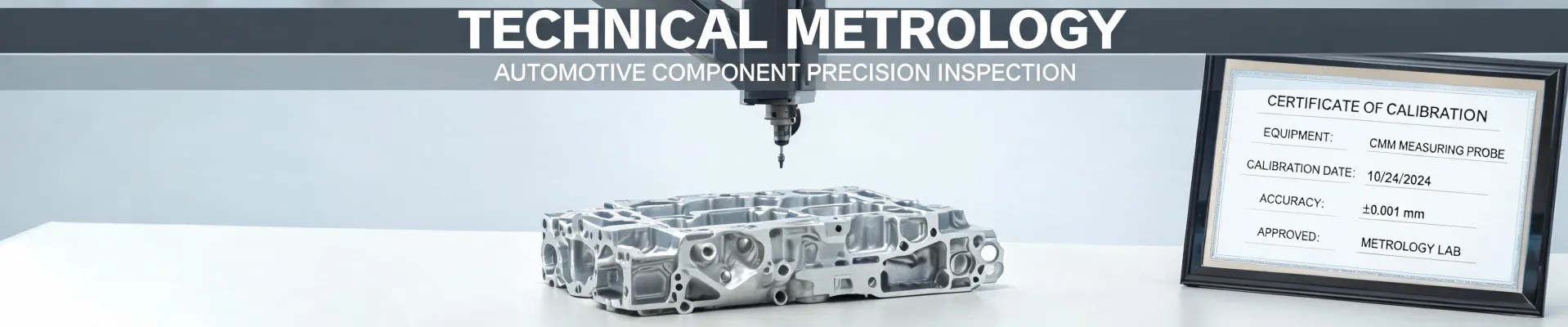
When I took over instrument purchasing for our team in early 2021, I figured it was just another supply chain task—find the right tool, get a price, place the order. Simple, right? Two years and a few very expensive mistakes later, I've learned the hard way that the how you order is almost as important as the what you order. For the sake of this comparison, let's look at two dominant approaches: Online ordering (think hexagon shop portals) versus the traditional manual/phone-call method. This isn't about which one is 'better' overall—it's about what fits your workflow, your people, and your tolerance for risk.
Dimension 1: Speed & Urgency (Online vs. Manual)
This is the most obvious differentiator, and honestly, the biggest reason I started leaning heavily online. A few months ago, we had a rush calibration job and needed a specific hexagon portable CMM probe. I logged into the hexagon shop at 2:30 PM. Found the part, saw it was in stock, and placed the order. It shipped that same day. (Note to self: check shipping cutoffs—this was a lucky break.) Total time: maybe 8 minutes.
Contrast that with our old manual process for the same scenario. I'd call our sales rep. If they were in a meeting, I'd leave a message. Wait for a call back (anywhere from 30 minutes to 4 hours). Then they'd check stock and get back to me again. Then we'd process a PO manually. The probe arrived the same week, but the ordering process alone took almost a full day of back-and-forth. It drove me nuts.
The clear winner here is online—but with a caveat. For truly urgent, 'I need this yesterday' situations, having a portal you can log into at 3 PM on a Friday is a lifesaver. However, if you don't have the right part number and need help identifying it, a quick phone call to a knowledgeable person can still be faster than scrolling through a poorly filtered product list.
Dimension 2: Product Specificity & Accuracy
Now for the dimension that surprised me. I initially assumed that because online catalogs are so searchable, they'd be more accurate. But in practice, for complex industrial instruments like motion control sensors or pressure sensor manuals, the manual method has a real edge.
Here's what happened. I needed to source a specific pressure sensor manual for an engineer on my team. I found a part number from a PDF on our server and plugged it into the hexagon shop search bar. The system listed four similar-looking manuals. I wasn't 100% sure which one matched the old serial number we had, so I ordered the one that looked right (which, honestly, felt like a guess). It was wrong. The engineer called me, slightly frustrated, and I had to reorder.
The traditional route? I called our vendor's support line. The rep asked three questions: the serial number on the unit, the approximate year it was purchased, and the application. They confirmed the exact manual in about 90 seconds. (Take this with a grain of salt: good support is not guaranteed everywhere.) That level of diagnostic questioning is still something online search algorithms struggle with.
Winner for standard parts: Online. Winner for ambiguous, legacy, or highly complex parts: Manual. It's a split decision. If your team has 100% accurate part numbers and serials, go online. If there's any ambiguity, make the call.
Dimension 3: Cost & Budget Visibility
This was a key worry for me, reporting to both operations and finance. The manual process in 2022 was a nightmare for expense reconciliation. I would get a verbal quote, place an order, and a week later get an invoice that sometimes didn't match. One vendor couldn't provide a proper invoice (handwritten receipt only) and my finance team rejected the $2,400 expense report. I had to eat it out of my department budget. That was the trigger event that pushed me toward online ordering.
Online buying from the hexagon shop gave me a line-by-line breakdown, including tax and shipping, before I clicked submit. The invoice matched the order exactly. For a department processing 60-80 orders annually, this consistency cut our reconciliation time from about 3 hours a month to maybe 30 minutes. It also eliminated the surprise rush fees—online portals almost always show the 'expedited' cost upfront. (Which, to be honest, saved me from having an awkward conversation with my VP about a $180 overnight fee I didn't anticipate.)
Winner: Online, by a long shot. The cost transparency and automated record-keeping are too valuable to ignore. But I will say this: I have found that for large, complex multi-item orders (say, over $5,000), calling in and negotiating a bulk discount or a free shipping code is still a skill worth having. It's rare, but it happens. The manual process gives you negotiation room the portal doesn't.
Final Thought: Which Approach Fits Your Team?
After 5 years of managing these relationships, here's my practical advice:
- Go online for: Re-orders of known SKUs, standard instruments (like Fluke multimeters or Mitutoyo calipers), and any order under $500. Especially if your finance team is strict on documentation.
- Pick up the phone for: Technical questions, complex specs, compatibility checks, and large-volume orders where you have leverage.
We didn't have a formal process for this distinction at first. Cost us when we ordered a $1,000 laser tracker component based on a web search and got the wrong mounting bracket. Now our team has a simple checklist: 'Unknown spec? Call. Known part? Click.' It's not revolutionary, but it works. (I really should write that checklist down formally, though.)