That First Order Felt Like a Victory
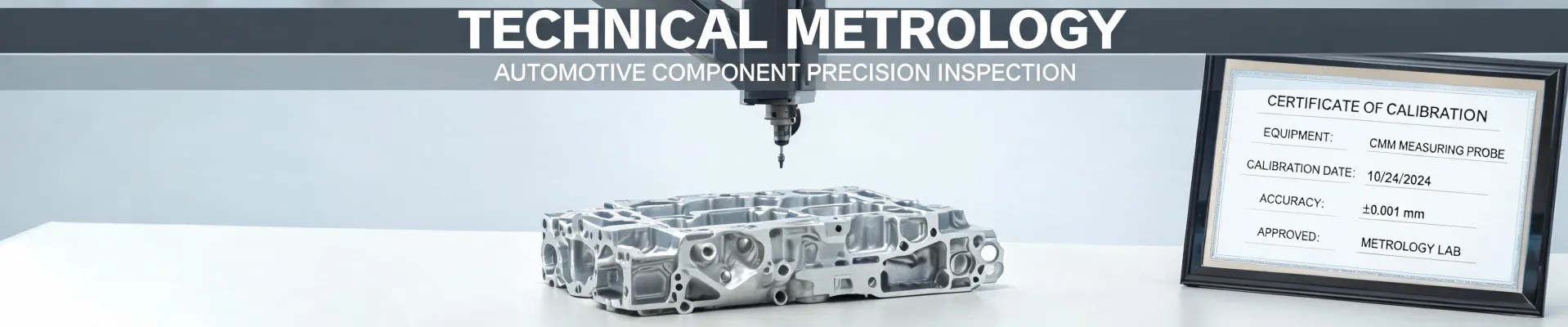
Last year, I spent over $42,000 on equipment and calibration services. The biggest line item? A Hexagon CMM for our quality lab. I remember signing off on that PO and thinking, 'Finally, we can stop outsourcing these measurements.' The finance team was happy with the single-vendor pricing. Operations was thrilled about the promised 6-week turnaround on installation.
But here's what nobody tells you when you buy a precision instrument: the cost of ignorance is higher than the cost of the machine. And I learned that the hard way.
What I Actually Bought vs. What I Needed
The Assumption That Cost Us $3,000 in Repairs
I assumed 'CMM' meant a machine that anyone with basic engineering training could operate. Didn't verify. Turned out our Hexagon CMM came with software so sophisticated that our lead technician spent 40 hours just on the geometry configuration. We had to pay the Hexagon support team for an emergency training session (roughly $2,400) just to get a single production part programmed.
Learned never to assume operator skill levels match vendor training materials after that incident. (Note to self: always budget for 2-day onsite training upfront.)
The Calibration Surprise
Our purchase order covered the machine and basic warranty. Nothing about annual calibration. When the first calibration reminder arrived from Hexagon—$1,600 for a full CMM calibration with traceable artifacts—I about choked. That wasn't in the budget. (Ugh, classic rookie mistake.)
What most people don't realize is that 'standard calibration' often covers only the machine itself. Your stack-up uncertainty analysis? That's extra. Your probe qualification training? Extra. Your data traceability certificate? Also extra.
Why Your $4,000 Investment Can Become an $8,000 Problem
The Real Cost: Idle Machines and Rushed Decisions
Six months in, our Hexagon CMM was running less than 60% utilization. Here's what was really happening:
- Training gaps: Our team knew how to run standard programs but not how to create new ones. So we kept using the same measurement routines—even when they weren't ideal for the part.
- Workflow friction: The lab supervisor was spending 3 hours a week scheduling access. Three engineers were waiting in a queue. That's 12 hours of lost engineering time per week.
- Data inconsistency: Two different operators measuring the same part got different results. Cue the quality department meetings. (Which, honestly, could have been avoided with proper training.)
People think expensive machines deliver accurate results automatically. Actually, operator proficiency and repeatable processes produce accurate results. The causation runs the other way: you need the training to unlock the machine's potential.
The Hidden Communication Failure
I said to the vendor: 'We need the machine to measure production parts within ±0.001 inches.' They heard: 'We need a machine that can measure production parts within ±0.001 inches with standard training.' Result: we got a machine that could do it; they assumed we knew how. We didn't.
We were using the same words but meaning different things. Discovered this when the first batch of non-conforming parts came back from final inspection.
How Proper Procurement Strategy Fixes This
The 50% Rule
After 5 years of managing procurement, I've come to believe that the budget for capital equipment should be split 50/50 between the hardware and the knowledge to use it. For our next Hexagon CMM purchase, we carved out $2,500 specifically for:
- Initial onsite operator training (not generic online videos—real, hands-on, from Hexagon).
- Annual calibration and maintenance contract bundled at purchase.
- A 'spare parts' starter kit (probes, styli, artifacts) based on support's recommendations.
In my opinion, that upfront investment saved us at least $5,000 in emergency service calls and rework in the first year.
Bundled Knowledge From Trusted Vendors
When we consolidated our lab supplies under a single online ordering platform—the same one we use for Fluke multimeters, Mitutoyo calipers, and lab consumables like HPLC columns—we started getting better pricing and faster support. Why? Because the vendor saw our full relationship, not just one-off transactions.
From my perspective, the switch saved our accounting team about 3 hours per month. And we got tariff updates automatically—which is huge when you're ordering industrial instruments that fluctuate with trade policies.
What I'd Tell Anyone Buying a Hexagon CMM Tomorrow
If you are evaluating whether to buy a Hexagon CMM—or any precision instrument—ask yourself three questions before you request a quote:
- Who will program it? If the answer is 'the same person who runs it,' budget for formal Hexagon CMM training immediately.
- How will we verify it? Include calibration in your capital request, not your operational expense line.
- What happens if it breaks? A support contract costs money; guessing costs more.
Here's something vendors won't tell you: the first quote is almost never the final price for ongoing relationships. There's usually room for negotiation on training packages once you've proven you're a reliable customer. We got a 15% discount on our second training session.
Per FTC guidelines (ftc.gov), claims about equipment performance should be substantiated with evidence. This means the burden is on you—the buyer—to verify that training and calibration are included in the performance claim, not just the machine specs.
The Bottom Line
It took me 3 years and about 150 orders to understand that vendor relationships matter more than vendor capabilities. Our Hexagon machine is excellent—when it is used correctly. The difference between a $4,000 paperweight and a $4,000 productivity asset is the knowledge infrastructure you build around it.
An informed customer asks better questions and makes faster decisions. Next time you're buying a multimeter—or looking at 'which Fluke multimeter to buy'—treat the question the same way. The instrument is the cheap part. The expertise to use it is where the real value lies.