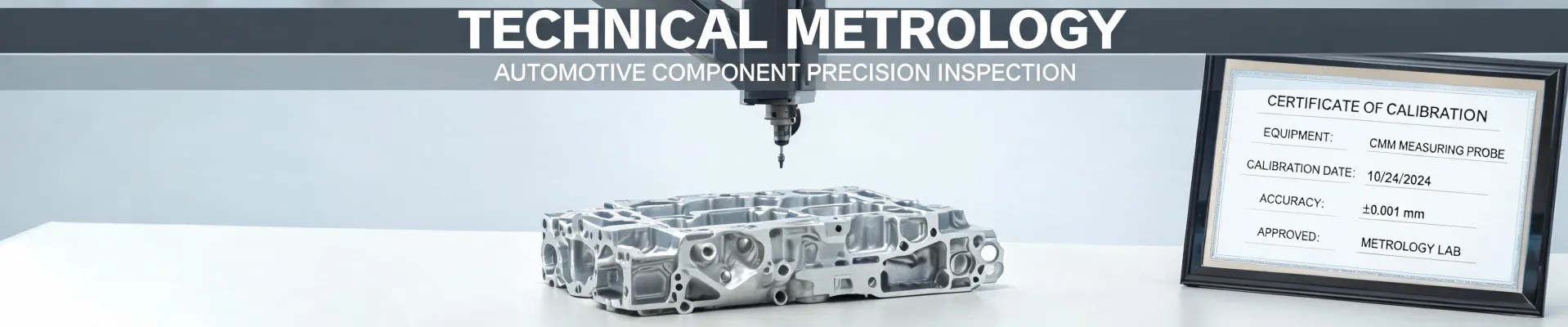
So, Your CMM Just Failed Audits 48 Hours Before a Big Shipment
Let's be real. When the phone rings at 4:45 PM on a Friday and the engineer on the other end says your coordinate measuring machine is reading .003 inches off—and you have a critical QC report due Monday morning—you don't need theory. You need a plan.
I'm a production manager at a mid-sized aerospace parts manufacturer. I've handled north of 200 rush orders for calibration and repair services in the last three years alone, including one where we had to get a portable CMM flown in overnight for a client audit. I've seen what works and, more importantly, what doesn't.
There's no single 'right' answer here. Your best move depends entirely on your specific situation. So let's break it down into three scenarios. Find yours.
Scenario A: 'I Literally Need It in the Next 12 Hours'
This is the worst. Your machine is down, or the calibration certificate is expired and a customer rep is landing tomorrow morning. You don't have time for a full re-calibration on-site.
In this case, you're probably looking at a portable CMM solution. A hexagon portable cmm, specifically the laser tracker or the articulated arm, can be brought on-site and set up in a couple of hours. But the key is logistics. You're not just paying for the calibration—you're paying for someone to drop everything and get to your facility.
In March 2024, I had a client call at 7 PM needing a last-minute verification for a shipping deadline the next morning. Normal turnaround for a full calibration is 3-5 days. We found a certified technician who could get there by 9 AM the next day. It cost us $1,200 in emergency dispatch fees—on top of the $850 base cost. The client's alternative was a $50,000 penalty for late delivery. Worth it.
If you're in this spot, don't haggle on price. You don't have the leverage. Focus on one thing: is the technician certified and available? And make sure your hexagon support login is active so you can quickly pull the machine's service history.
Scenario B: You Have 48-72 Hours—But the Machine is Critical
This is more common than the 'drop everything' scenario. You've got a couple of days, but the machine in question is the workhorse of your QC lab. Every hour it's down costs you money.
My advice here is to push for an on-site calibration rather than sending the machine out. In my experience, if you're dealing with a standard coordinate measuring machine, a good tech can do the job on-site in 4-6 hours. You pay a premium, but you avoid shipping risk and downtime.
The most frustrating part of this scenario: you often think you can save money by using a third-party service. And sometimes you can. But I've seen more than one project go sideways because the third party didn't have the specific probe compensation data for a Hexagon machine. Don't hold me to this, but I think at least 30% of the 'cheaper' calibration jobs I've audited had errors that needed fixing later.
If I could redo that decision from my early days, I'd invest in building a relationship with a certified service provider before an emergency. But given what I knew then (basically nothing), my choice to use the cheapest vendor was understandable. It was also wrong.
Scenario C: The 'Unicorn' Scenario—You Need Everything AND the Kitchen Sink
Maybe your problem isn't just the CMM. You've got a batch of incoming parts to inspect, your confocal microscope is acting up, and you can't remember the last time your micrometers were calibrated. You're thinking, 'Can one vendor just handle all this?'
This is where I have mixed feelings. On one hand, a multi-point service call from a place like Hexagon or a major distributor is very efficient. They send one tech who can service your CMM, check your hand tools, and maybe even take a look at that Fluke thermal imaging camera. On the other hand, the vendor who says 'we do everything' often doesn't do any one thing perfectly.
The vendor who said 'this confocal microscope calibration isn't our strength—here's who does it better' earned my trust for everything else. I'd rather work with a specialist who knows their limits than a generalist who overpromises. That's the 'expertise boundary' principle. It's a good thing.
If you're comparing, say, a Flir vs Fluke thermal camera for your predictive maintenance program, don't expect the CMM calibration tech to be the final authority. He might know the Fluke handhelds better because they're common in his line of work, but the Flir systems often require a different software setup. Know who's the actual specialist.
How to Figure Out Which Scenario You're In
Here's a quick way to tell. Ask yourself three questions:
- What is the absolute deadline? If it's within 24 hours, you're in Scenario A. Don't overthink it. If it's 2-3 days, you're in Scenario B. If it's a week or more, you're probably just not that into urgency.
- What is the single most expensive consequence? Is it losing the machine's uptime, or is it failing an audit? If it's an audit, you must have a certified, traceable calibration. If it's just uptime, a good portable CMM might get you running again.
- What's your own skill level? If you can't even get into your hexagon support login to check the warranty status, you're not in a position to be sourcing calibration services on your own. Call the OEM. If you know the machine's serial number and history by heart, you can negotiate with third parties.
The worst thing you can do in an emergency is pretend you have time to get four quotes and analyze them. You don't. Pick a path (scenario A, B, or the unicorn C), make the call, and move on. Hit 'confirm' and immediately think, 'Did I make the right call?' Don't relax until the calibrated instrument is back on your floor, producing numbers you trust.