-
Step 1: Lock down tolerance and units before you book anything
-
Step 2: Choose between a bridge CMM and a portable CMM based on the part
-
Step 3: 'Which multimeter should I buy?' Start with safety, not the logo
-
Step 4: Know when a portable oscilloscope is worth the extra case
-
Step 5: How to read a Sensus water meter when someone is waiting on the number
-
Step 6: Verify the instrument before you trust its output
-
Step 7: Write the report while you are still on site
-
What people skip even when they know better
In March 2024, a client called at 7:15 PM with a problem that had a clock on it. A medical-device audit was scheduled for Thursday, and their shop-floor CMM was down after a coolant leak. Missing that window would have meant rescheduling a $60,000 production run and answering to a certification body. We brought in a portable coordinate measuring machine and an applications engineer the next morning. It worked. But it worked because the decisions were made in the right order.
In my role coordinating urgent measurement support, I have been through somewhere north of 110 rush deployments in the last six years. Maybe 120—I would have to check the log before giving you a hard number. The pattern is consistent: emergency jobs fail because of selection, not because of equipment. Wrong tool, wrong units, wrong setup, wrong paperwork. It took me years to see that clearly.
Use this checklist when a critical measurement has to happen within 24 to 72 hours. The scenario does not have to be a cleanroom. It can be a customer audit, a production line running bad parts, or a facility water bill that doubled and nobody knows why. The order of operations is the same.
Step 1: Lock down tolerance and units before you book anything
The quickest way to burn a day is to answer the question 'which tool is best?' before answering 'what are we measuring, and how close do we need to be?'
When someone asks me to get a CMM on site tomorrow, I ask back: which dimensions, what tolerance, what units, and where is the part? A 0.5 mm gap check and a 0.02 mm press-fit investigation are different jobs. One might be handled with a calibrated caliper; the other needs a coordinate measuring machine or a height gage, depending on geometry. If that first conversation stays vague, the wrong tool shows up and the clock keeps running.
Step 2: Choose between a bridge CMM and a portable CMM based on the part
The biggest source of confusion in the CMM world is assuming that a fixed bridge machine and a portable arm do the same job. They are related, but they are not interchangeable.
If the part can come to a temperature-controlled metrology room, and you need high precision with repeatable throughput, a fixed bridge machine such as the Hexagon Global S CMM is usually the right answer. Parts are small enough to stage on a granite table, the environment is stable, and the machine does not have to be packed up at the end of the day.
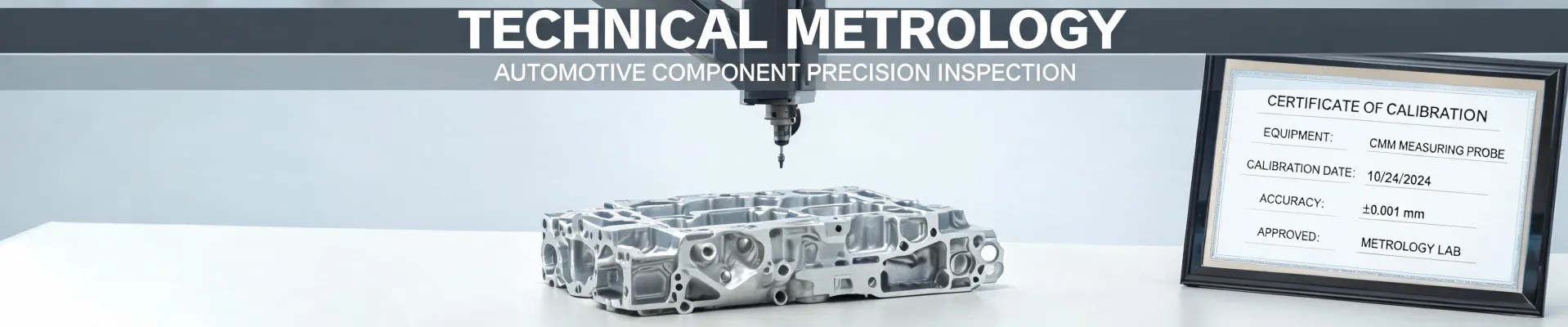
If the part is large, installed, fragile, or on a customer's floor, do not try to move it. A Hexagon portable CMM—a ROMER Absolute Arm or a laser tracker, depending on volume—goes to the part instead. Setup and operator skill matter more, but you skip transport and teardown, which is often the real time killer.
Which is more accurate? Usually the fixed machine in a controlled environment, assuming the part can reach it. Accuracy that never gets to the part does not help you on a rush job.
Whatever you rent or buy, acceptance and reverification testing follows the ISO 10360 series. Ask the supplier which test procedure was run and what measured length error came out of it. If the answer is just 'it's calibrated', keep pushing. The certificate serial number belongs in your report.
Step 3: 'Which multimeter should I buy?' Start with safety, not the logo
This exact question shows up in my inbox regularly. People expect a model number, and I rarely start there, because the right answer depends on where the probes will go.
- Match the measurement category to the circuit. For industrial panels and branch circuits, choose at least CAT III with a 600 V rating. For work at the utility service entrance, choose CAT IV. The category rating is not marketing; it reflects tested transient protection under IEC 61010.
- Choose true RMS if you will be around variable frequency drives. An averaging meter can give a reading that looks fine while the actual signal is distorted.
- Check the inputs you actually need. If you work on 4-20 mA loops, thermocouples, or data logging, buy a meter that supports those functions. No brand name will save you an extra trip.
So which multimeter should I buy? A meter from a manufacturer that supports calibration, with a rating that matches your highest-energy circuit, and a display you can read in poor light. A $60 meter with a CAT IV rating is safer than a $200 meter whose rating you cannot verify. If the case has no category rating, do not use it above 30 V AC or 60 V DC.
Step 4: Know when a portable oscilloscope is worth the extra case
A multimeter gives you a number. It does not show you what a signal is doing over time. When a motor drive drops out intermittently, when an analog sensor signal is noisy, or when a PLC input is seeing false triggers, you need to look at the waveform.
That is the portable oscilloscope's job. The bandwidth and sample rate should match the signals in your plant, but for most drive and discrete control work, the more critical spec is input isolation. A benchtop oscilloscope with a grounded reference does not belong on a floating drive bus. A purpose-built portable scope with isolated channels and probes rated for the circuit voltage is the safer tool.
If it is battery-powered, check the charge before you leave. A dead scope at the customer's site is not a tool; it is cargo.
Step 5: How to read a Sensus water meter when someone is waiting on the number
Not every urgent call is about machined metal. A facility manager sees consumption double and needs to know whether to call a plumber or a leak detection company. Before spending that money, I ask for one thing: a meter reading that was taken correctly.
Here is the procedure I give them:
- Find the meter box and lift the lid. Remove debris and wipe the glass or plastic cover.
- Locate the register—it looks like an odometer with numbers across it.
- Write down every digit, left to right, including leading zeros.
- Record the unit printed on the register face: gallons, cubic feet, or cubic meters. This step is not optional.
- To check for a slow leak, note the reading, keep water off for at least 15 minutes—an hour is better—and read again. If the total changed while nothing was using water, you have a leak. The little flow indicator on the register will often show it sooner.
Some Sensus meters, including the iPERL electronic line, cycle through screens. Wait for the full display cycle and write down the total volume screen, not the flow rate screen. If you are not sure which is which, take a photo and send it to someone before you act on it.
The largest error I see is units. If your bill is in gallons and the register reads in cubic feet, multiply by 7.48 before comparing numbers. Do not call a leak detection company until that conversion is done.
Step 6: Verify the instrument before you trust its output
When a job is urgent, skipping verification feels efficient. It is not. Ten minutes of checking has saved me from hours of retraction more times than I can count.
For a CMM, confirm the calibration certificate is current, lists the actual instrument serial number, and states the measured length error. For a multimeter or oscilloscope, check the calibration due date, then do a sanity check against a known voltage source or reference resistor. For a water meter, the known reference is simpler: no flow should mean no movement.
This is also where pricing transparency matters. The vendor who lists every fee upfront—even if the total looks higher—usually costs less in the end.
Ask what is not included before you ask what something costs. In rental quotes for portable arms or oscilloscopes, the extras are usually calibration certificates, probe kits, transit cases, operator labor, and after-hours support. Two years back I accepted a rental quote that looked reasonable; the final invoice had a trip charge and a calibration certificate fee I did not expect. Maybe I was told and forgot—do not quote me on that. The fix is the same: ask the question backwards. A one-page quote that lists everything is worth more than a low number with blanks.
Step 7: Write the report while you are still on site
Reports are not paperwork; they are part of measurement. When the reading is done, spend five minutes on the evidence:
- Photograph the instrument and its serial number.
- Photograph the setup and the display or reading.
- Write down the units, the time, and the person who was there.
- Attach the calibration certificate reference.
For a Sensus meter, one photo of the register face showing both the number and the unit label can prevent a callback. For a CMM job, record the probe configuration the same way you record the results. Without that context, a good measurement can turn into an unprovable claim.
What people skip even when they know better
A few closing notes from jobs that went sideways:
- Batteries, chargers, and probes. A portable oscilloscope without a charger and the right probe is a box of electronics. Check the kit list, not just the main device.
- Units. The 7.48 multiplier I mentioned is the one I have seen cause the most red faces. Write the unit on the same line as the number, every time.
- Calibration dates. A certificate that expired last month is not a certificate for today. Check before you drive, not after.
- The schedule buffer. In July 2023, a courier lost a stylus kit and a two-day CMM job turned into five days. Now, I work backwards from the deadline and add at least 24 hours before promising anything. Extra time is cheaper than an apology.
I do not have hard numbers on how many of my urgent jobs could have been avoided with a 48-hour buffer, but anecdotally, it is more than a third. That is an opinion, not a statistic.
Emergency measurement work does not have to be chaotic. It has to be sequenced. Units first, then the right tool, then verification, then the report. When the phone rings at 7:15 PM, that sequence is what gets you home at a reasonable hour.