In November 2024, I went through our cost tracking system to prepare the 2025 budget. I wanted to understand why instrument spending kept drifting upward. I expected a big-ticket culprit, like a rushed calibration order or an expensive sensor I approved without enough debate. Instead, the first line that made me stop was on a $74 order of centrifuge tubes: a $38 charge labeled 'misc. handling fee.'
I manage procurement for a 140-person contract manufacturing company. Our testing and calibration budget is around $220,000 a year, and I've tracked it in the same system for six years. I mention that not to sound impressive. I mention it because this mistake had been hiding in my own process for months.
I called the supplier, and after waiting on hold, the rep explained that their warehouse system added the fee to anything marked 'lab grade.' I asked what special handling had happened. She said, 'None. It's just how the code is set up.' She removed the fee and refunded the previous months. To be fair, they handled it well once I asked. But I only asked because I was in audit mode, not because the invoice made the fee obvious.
That tiny fee did more for my annual budget than any spreadsheet. It taught me that the real cost of a purchase is not the first line. It's the line that is not there yet.
The CMM Quote That Made Me Reread Every Page
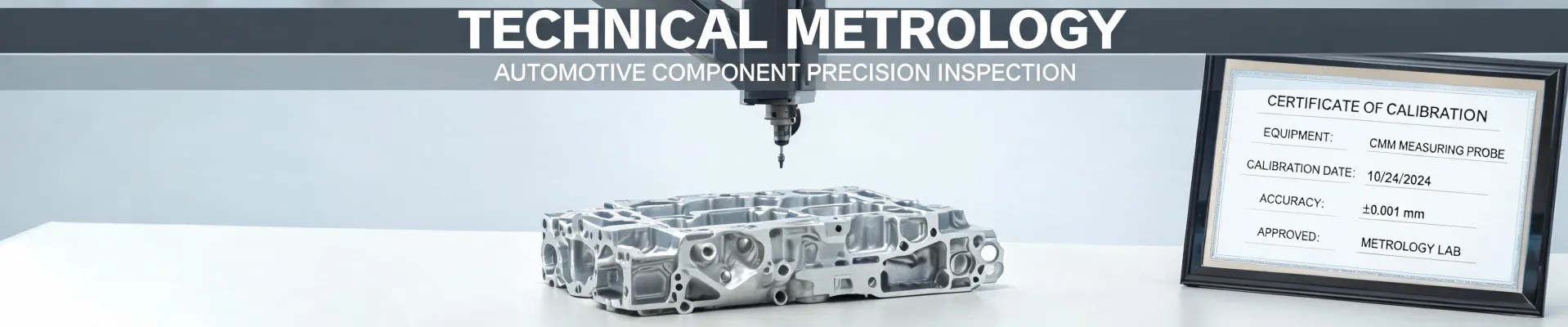
The clearest example came from the coordinate measuring machine we bought for our QC lab. We asked three vendors for quotes against the same specification sheet. The lowest quote was $61,500. The highest quote was from Hexagon, at $68,900. If I had stayed with my old habit, I would have approved the lowest one and moved on.
I almost did. Then I read the Hexagon quote more carefully, not because I planned to buy it, but because the sales engineer had asked about our shop floor temperature. He wanted to know what the temperature variation was between the loading dock and the lab. Our lab is held at 20 degrees Celsius, but the corridor is not climate controlled. He explained that a long move through a warm corridor could affect the machine before it reached its pad. No other vendor had asked about that.
When I looked at the full quote, Hexagon had listed freight, setup, calibration artifact, operator training, and the first year of support. It also listed what was not included: moving the old CMM out, special rigging for the mezzanine, extra software seats. I had never seen a vendor volunteer a 'not included' section, because it invites follow-up questions. That section raised my trust more than any discount could have.
I did the same exercise with the lowest quote. The salesperson had mentioned that training and calibration were available, but they were not on the quote. Once I added equivalent freight, calibration, training, and support, the $61,500 number became roughly $70,900. The Hexagon quote stayed at $68,900. I had not found a cheaper deal. I had found an incomplete one.
That is when I stopped comparing sticker prices and started comparing outcomes. We purchased the Hexagon CMM machine for $68,900. The final invoice was about $150 above the quote after a cable length change, and that change was approved before shipment. I know exactly what every dollar covered. Put another way, I did not have to decode a single line after delivery.
I also learned what 'hexagon support' actually means after the check cleared. I called twice in the first month: once about a probe calibration cycle and once about a software license that was not showing up on a new laptop. Both times I got a clear answer, and nobody tried to sell me something else while we were on the phone. I should add that not every support call in my career ends that way. But those two did.
The Thermal Camera and the Dealer Question
That experience changed smaller purchases too. In December 2024, our maintenance supervisor requested a FLIR TG165-X MSX thermal camera for motor inspections. The first quote I received was about $50 lower than the second. My old self would have approved it immediately. This time, I asked for the same list: calibration statement, warranty terms, included accessories, and what happens after the warranty ends.
The cheaper quote did not include the calibration statement or the two-year warranty. It also did not mention shipping until the end of the call. The second quote listed both upfront and added one line: 'If the camera is used for safety-critical inspections, keep the calibration documentation on file.' I picked the second quote and did not second-guess it.
A few days later, I caught myself searching for 'is Microscope World an authorized Zeiss dealer?' before contacting a microscope reseller. That question would have felt overly cautious a year earlier. After the CMM purchase, I knew that authorization affects who services the instrument, who honors warranty claims, and whether the training counts for anything. The search took five minutes. It made me slow down and verify something that would have been painful to discover after the invoice.
What I Do Now
My rule is simple: ask what is NOT included before I ask what the price includes. Let me rephrase that: I assume every quote is missing something. I know the phrase 'not included' sounds negative. But it is the most honest part of a quote, because it lets me choose what I do not need.
That applies to a $74 centrifuge tube order and a $68,900 CMM machine. The $38 centrifuge tube fee did not look important on its own. But the process it triggered saved much more than $38. During our December budget review, I used the same question on service contracts and found two active contracts for equipment that had been retired in 2023. Together they cost $4,200 a year. That was money I approved because I had not reviewed renewals line by line.
This is not a story about how the expensive option is always better. Price still matters. The point is to compare prices on the same scope. If one quote includes support and another does not, that is not a price difference; that is a product difference. I would rather compare complete totals than guess what gets added later. I still look for the lowest number on the quote. I just make sure it is the total number.