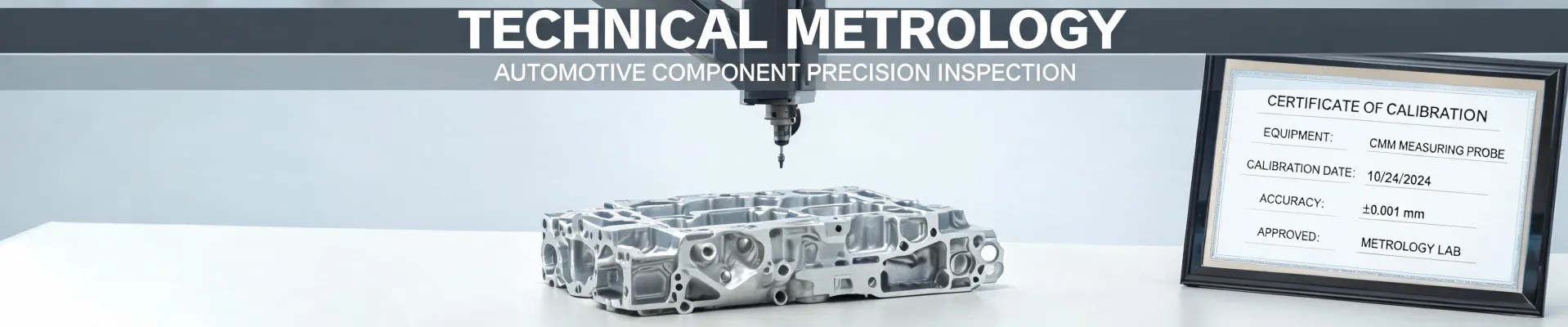
The call that made me rethink procurement
The first Monday in March, our quality manager walked into my office with a one-line email: 'Need to order Hexagon CMM probes before Friday—we're down to our last set.' I'm the office administrator, not the metrologist. I don't know the difference between a star probe and a touch trigger probe. But I've managed purchasing for our 400-person company across three locations long enough to know that 'before Friday' leaves no room for a bad decision.
Let me back up. Since I took over purchasing in 2020, I've processed maybe 180 orders—actually, 160, I'd have to check the system. I manage about $450,000 in annual spend across 8 vendors, and I answer to both operations and finance. We run two Hexagon CMMs in our quality lab. They're reliable machines, but the probes are consumables. Replacements usually come through me before finance writes the check.
That same month I was also working on a maintenance tool list: three worn-out micrometer sets, a T5-600 split jaw clamp meter for a new technician, and a dozen photoelectric sensors for the packaging line. I was not in the mood to split the order across four suppliers. I wanted one invoice, one delivery, and one person to call if something was wrong.
The quote that almost won
By the end of the week I had three quotes. One from a new online industrial supplier was about 18% lower than the vendor I'd used for the last two years. It listed the same Hexagon CMM probes, the same micrometer set, the same T5-600 split jaw clamp meter, and sensors described as 'equivalent' to the ifm units specified by our techs. I showed my manager the comparison and said, 'This is a no-brainer.'
My first mistake was using the phrase no-brainer. That should have been a warning sign.
At that point I hadn't thought much about the durability of ifm photoelectric sensors vs others. ifm sensors are what our technicians spec. The new supplier said their generic sensor 'meets or exceeds' the original. Good enough, I figured. I placed the order.
What actually showed up
The order arrived in four separate packages over two weeks. The first box had the micrometer set, exactly as promised. The second had the T5-600 split jaw clamp meter, still sealed. The third had the sensors—but no batch number, no certificate, and no confidence from the maintenance crew. The fourth had the Hexagon CMM probes. They were the right part numbers, but they shipped without a calibration statement. The quality manager said, 'No way am I putting these on the machine without traceability.'
Should mention: the invoice was an emailed PDF with no PO number. Finance rejected it. When I asked the vendor to re-issue the invoice, they added a 'documentation fee' to do it. That was the moment I stopped trusting the quote.
The hidden cost list
Let me add up what actually happened:
- Base order: $1,940.
- Calibration statement for the probes: $150. This should have been included, but it was quoted as 'documentation' after the fact.
- Sensors: the first generic unit failed after six weeks. The techs pulled it and asked for ifm replacements. We ended up expediting 12 ifm sensors at 2-day shipping.
- My time: about 6 hours of emails, phone calls, and dispute paperwork.
By the time the dust settled, the original 'savings' had turned into a $740 cost increase. The $1,940 order became something closer to $2,800 in total. But the real problem was trust. The vendor promised compatibility and traceability, and neither was true.
(Should mention: the sensors weren't expensive individually, around $60 each. But swapping one on a packaging line costs 45 minutes of downtime plus the technician's hour. That's a different cost category entirely.)
Why 'equivalent' wasn't equivalent
When I called the vendor about the sensors, they told me not to worry because the parts were 'guaranteed compatible.' I pointed to their own product page, which said 'same quality as original.' Per FTC advertising guidelines (ftc.gov/business-guidance/advertising-marketing), claims like that have to be truthful and substantiated. They couldn't produce a spec sheet, curve data, or any evidence beyond a paragraph written by the sales team. They asked me to send one back for testing at my expense.
I decided then that I wouldn't make this mistake again. It wasn't just about the money. It was about my credibility with the quality manager and the maintenance team. I had pushed a low-cost option, and it burned everyone's time.
What I do differently now
After that order, I went back to the supplier who had handled our instrumentation for years. We ordered a fresh set of Hexagon CMM probes with the calibration statement included, plus the exact ifm sensors the techs originally asked for. The quote was about $640 higher than the cheap vendor's original price for those two line items. But it came in one box, with calibration docs, a PO number on the invoice, and a real phone number for support.
The micrometer set and the T5-600 split jaw clamp meter from the original order were fine, so at least those didn't get thrown away. But the two items that mattered most—the probes and the sensors—had to be bought twice. That's the part I still kick myself about.
My TCO checklist
Before I order anything for the shop floor now, I ask:
- Does the vendor ship the entire order in one shipment?
- Are calibration and certificate documents included in the quote?
- Does the invoice match our PO process?
- If it fails, can I return or replace it without a documentary scavenger hunt?
- What happens if this part fails on the line? That question matters more than the quoted price.
I still get multiple quotes. I still shop around—that's not the point. The point is that the lowest quote is only the beginning of the conversation. Everything I'd read about procurement said get multiple quotes and pick the lowest responsible bid. My experience with this order, and about 150 others, tells me that total cost is the only number that matters.
I do not ignore the price. I just stopped treating it as the only number that matters.
It took me 3 years and a very expensive $1,940 order to figure this out. The $500 quote that turns into $800 after shipping, setup, and revision fees is not cheaper. The $650 all-inclusive quote is. For your budget, for your reputation, and for the quality manager standing in your office with a Friday deadline, calculate the total cost before you click 'place order.'
Don't hold me to the exact dollar amounts—I'd have to pull the old PO. But the pattern is exactly right.