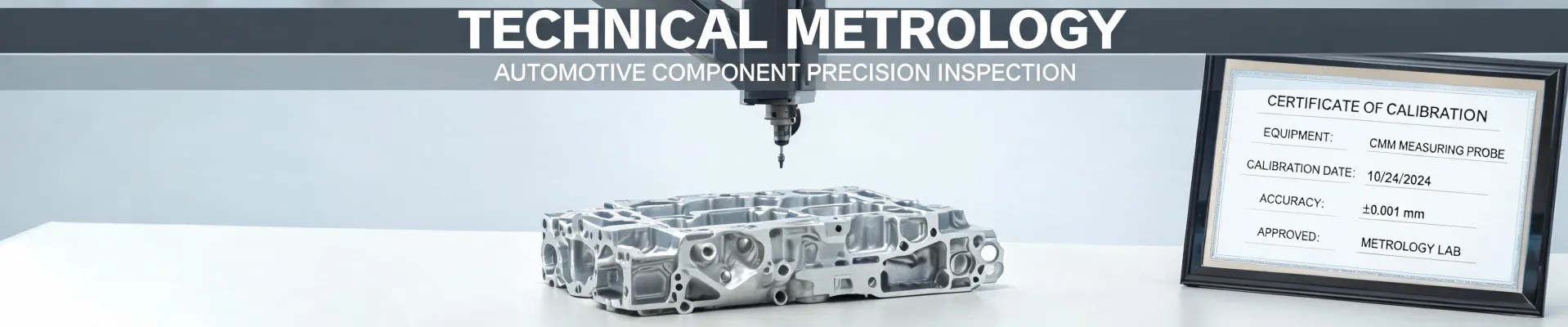
My phone rang at 4:47 PM on a Thursday. Not unusual. I coordinate rush orders for a test and measurement equipment company — the person you call when you need a portable CMM verified before an audit, or a replacement multimeter before the morning shift.
This call was a quality manager at an aerospace parts shop. His coordinate measuring machine was reading drift on the Z-axis, an auditor arrived Monday, and he needed traceable measurement data by Friday. "Can you help?"
In my role coordinating emergency deliveries for industrial clients, I've handled 200+ rush orders in 13 years. Last quarter alone: 47 rush jobs, 95% on-time. Same-day turnarounds for manufacturing clients. Calibration techs who keep a bag packed. And after all that, I can tell you what nobody wants to hear: the deadline was never the real problem.
The Surface Problem: Everyone Blames the Calendar
When people call me, they open with "I need it by Friday." They've already diagnosed the issue: not enough time. And time is a constraint, sure. But it's rarely the root cause.
If you've ever had a piece of equipment fail mid-run, you know that sinking feeling. You compare prices, you look up spec sheets, you search for "hexagon support login" while waiting on hold and wonder if anyone has ever actually answered that help desk. (note to self: we really need to fix our phone tree).
Look, I get the panic. Most people in this position are competent professionals caught by a failure they couldn't predict. But when I start asking questions, the story gets less clear.
"What exactly are you measuring?"
"Shaft diameters."
"What tolerance?"
"± 0.01 mm."
"Which model is failing?"
"Not sure — it was here when I started."
The spec is vague. The tolerance is aggressive. The equipment history is unknown. A rush order placed on top of that uncertainty isn't a purchase. It's a gamble.
The Deep Cause: Don't Know What You Don't Know
Here's something vendors won't tell you: most rush orders come down to specification ambiguity, not manufacturing lead time. The product isn't hard to get. Deciding what the right product is — that's where everything falls apart.
People search for "hexagon portable cmm" or "hplc price" because they've settled on a product category. They haven't settled on the configuration, the capability, the calibration requirements, or whether that category is even right for the job. What most people don't realize is that the blank space between "I need a portable CMM" and the actual measurement task is where failure lives.
In March 2024, 36 hours before an end-of-month production audit, a client needed to check in-process parts. We had a hexagon portable cmm in stock. Fine piece of equipment — for the right application. But this client measured small, intricate injection-molded housings with tight geometric tolerances. The right answer was a benchtop CMM with a smaller probe configuration. The portable arm was easier to get quickly, so that's what they asked for.
Two days after delivery, the mismatch showed up exactly in the tolerance ranges the portable setup couldn't hit. They passed the audit, barely. But the rework schedule, the scrap rate, the internal arguments over whether their data could be trusted? That went on for weeks. Paying extra in rush fees (on top of the $18,000 base cost) felt like a lot at the time. It was nothing compared to the overtime they burned chasing bad measurements.
Honestly, I'm not sure why we didn't push back harder on that order. My best guess is we were rushing too — quarterly targets, a panicked customer, and that reflex to say "yes" when someone is in trouble. It's a mistake I've made. I don't make it anymore.
The Generalist Trap
The same pattern shows up in subtler forms. A lab tech whose HPLC died mid-study searches "hplc price" and falls into a rabbit hole of quotes. A clinic owner searches "zeiss vs global dental microscope" after reading a forum thread and spirals into comparison paralysis.
I'm not a chemist, so I can't speak to which HPLC configuration suits a specific lab workflow. This gets into chromatography territory that isn't my expertise. What I can tell you from a procurement perspective is this: people who Google brand comparisons usually haven't defined the problem they're solving.
The "zeiss vs global dental microscope" question is unanswerable as a yes-or-no. Zeiss makes excellent optics, and Global builds solid clinical workhorses for specific use cases. But whether one is "better" for you depends on working distance, procedure mix, ergonomics, and budget — a list of requirements, not a spec sheet. A dental microscopy specialist could sort that out in 20 minutes. Instead, people spend days comparing forums, YouTube reviews, and spec tables with zero context.
I'd rather work with a specialist who knows their limits than a generalist who overpromises. The same is true for the people buying equipment.
The Cost: What the Rush Actually Costs
Here's the story that changed how I operate. In 2023, our company lost a $250,000 contract because a client tried to save $18,000 on the wrong choice. They chose a vendor who said "we can do everything" — sales, service, calibration, training. The generalist. By the time our client realized the calibration data wasn't compatible with their quality system, they were three weeks from a compliance deadline.
Missing that deadline would have meant a $70,000 penalty clause with their own customer. They paid us $12,000 for a rush calibration audit, passed with hours to spare, and then the contract went to a competitor anyway. The $18,000 "savings" destroyed a quarter-million-dollar relationship. That's not math. That's a tragedy.
This was true fifteen years ago when instruments were simpler and measurement data lived in a binder. Today, equipment has to integrate with your quality system, calibration has to be documented to current standards, and training isn't a nice-to-have — it's the difference between a measurement and a guess. The "cheapest fast option" thinking is a legacy from an era that no longer exists.
The Hidden Costs That Never Make the Invoice
- Wrong-answer premium: Rush fees add 25-100% to the price. A wrong specification adds 100% of the purchase price, plus the cost of downtime, plus the cost of finding the right answer later. Nobody budgets for that.
- Skipped-training debt: A multimeter seems simple. But proper multimeter training covers input impedance, CAT ratings, and uncertainty budgets — things you won't discover by reading the quick-start guide. Techs who skip training are the ones submitting support tickets after a week of suspicious readings (and the ones who later discover their "suspicious readings" were a $4,000 mistake).
- The "I got this" effect: When you've convinced yourself a purchase was thought through, you're more likely to ignore warning signs. Drift. Calibration due dates. That weird reading that's still within tolerance, so it's probably fine. It's not.
What Actually Works
I could give you a checklist. But the solution is simpler, and harder, than a list: learn to name what you don't know.
When a rush order comes in now — and I still get one almost every week — I ask different questions. "What's the measurement tolerance? Who signs off on the data? Was this working last week or has it been a problem for months?" If the answer is vague, I say so. I don't sell a portable CMM to someone who needs a benchtop. I don't quote an HPLC without checking their workflow. And I absolutely don't pretend to be a metrology expert, a chemist, or a dental clinician. That's not my role.
It sounds like I'm turning away work. The opposite is true. Customers remember the supplier who catches the mismatch before they do. The vendor who said "this isn't our strength — here's who does it better" earned my trust for everything else.
Four Things That Actually Save a Rush Order
- Start with the measurement, not the product. Define what you're measuring, at what tolerance, and in what environment — before typing a single brand into Google. This will save you a ton of wasted research.
- Buy the support, not just the device. Confirm that calibration, training, and technical support exist for the specific model. Use the vendor's support portal — yes, "hexagon support login" is exactly what it's for. Set up the account before you need it, not at 11 PM on a Sunday.
- Apply a 48-hour buffer policy. Our internal rule now: if a client says "urgent," we add 48 hours to the realistic timeline and tell them why. It's a small honesty that prevents Friday-night disasters.
- Ask the vendor what they're NOT good at. If they can't answer without hesitation, that's a red flag. Specialists know their boundaries. Generalists do too — they just won't say it.
This gets into application-specific territory that's best handled by people who live in your industry. I'd recommend consulting a qualified application engineer before finalizing any high-stakes purchase. And if you're a metrologist, a chromatographer, or a dental equipment specialist reading this — I'd genuinely love to hear from you. I'm still learning what I don't know.