-
A field guide for the questions we actually ask
-
Questions this article answers
-
1. Are Hexagon CMM machines and process instruments the same thing?
-
2. What should I check before buying a used Hexagon CMM machine?
-
3. What is the Hexagon Portal, and why can't I find my products in it?
-
4. Why does my digital caliper give inconsistent readings?
-
5. How do I troubleshoot a Rice Lake load cell?
-
6. Why do two calibrated instruments still disagree with each other?
-
Questions this article answers
A field guide for the questions we actually ask
I've been handling metrology and industrial instrument service orders for about 8 years. In that time, I've made my share of expensive mistakes: a 2017 quoting error, a $3,200 calibration miss, and one memorable morning when a 'dead' load cell turned out to be a loose terminal screw. This FAQ is the checklist I wish I had before those mistakes.
Questions this article answers
- Are Hexagon CMM machines and process instruments the same thing?
- What should I check before buying a used Hexagon CMM machine?
- What is the Hexagon Portal, and why can't I find my products in it?
- Why does my digital caliper give inconsistent readings?
- How do I troubleshoot a Rice Lake load cell?
- Why do two calibrated instruments still disagree with each other?
1. Are Hexagon CMM machines and process instruments the same thing?
No. A Hexagon CMM machine is a dimensional measurement system. It uses a probe, camera, or laser to measure geometry on a part. A process instrument, on the other hand, measures or controls a process variable such as temperature, pressure, flow, or level. Calipers, load cells, and pH meters are closer to process instrumentation than to CMMs.
I once saw a team buy a high-precision CMM and then wonder why it couldn't monitor line pressure. That's not what it's for. Hexagon makes CMM machines and measurement software, and its broader portfolio also includes a wide range of test and measurement instruments. Start with the variable you need to control, then choose the instrument. In my first year, I did it backwards and ended up quoting a laser tracker for a job that needed a $300 pressure gauge. The customer was polite about it. I was not.
2. What should I check before buying a used Hexagon CMM machine?
Check five things before you fall in love with the price:
- Calibration and acceptance history
- Temperature and humidity of the room where it currently sits
- Machine hours and service records
- Software version and license model
- Rigging, freight, and site-prep costs
The purchase price is not the total cost. Installation, environmental controls, calibration, operator training, and software licensing can add a significant percentage to the project. In 2019, I approved a used CMM quote without asking about export fees. It looked fine until the invoice included an extra $890 and the machine sat in a warehouse for six days. The vendor later told me they 'assumed I knew shipping was not included.' That's when I changed my checklist.
I've learned to ask what's NOT included before I ask what's included. The vendor who lists all fees upfront, even if the total looks higher, usually costs less in the end.
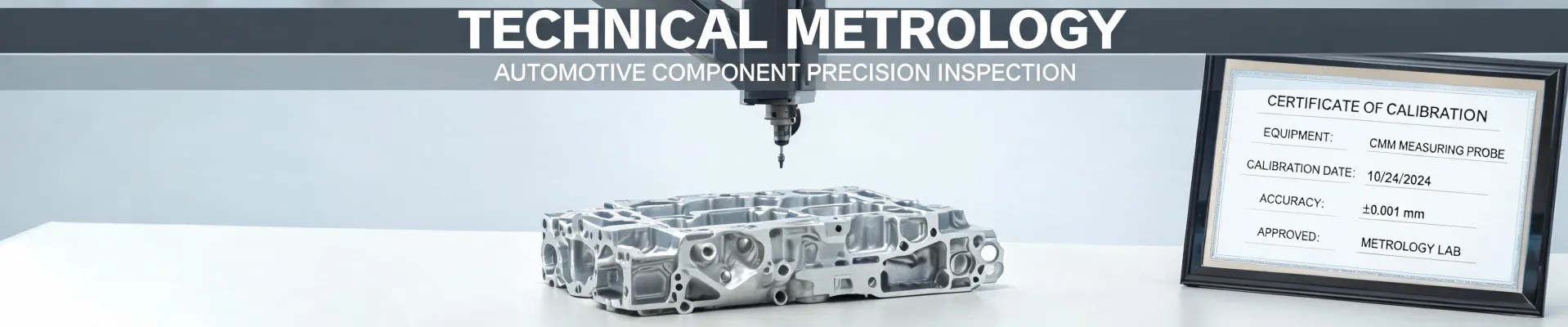
Ask for the last ISO 10360-2 acceptance report, not just a general calibration certificate. The report tells you how the machine performed under defined conditions. If it's missing, budget for a reverification before relying on any part that comes off that machine.
3. What is the Hexagon Portal, and why can't I find my products in it?
The Hexagon Portal is the customer-facing area used for Hexagon software and service entitlements. That's usually where you find software downloads, license activations, support cases, calibration certificates, and service requests. If you just bought a machine or instrument, the item may not appear until the serial number is registered.
According to Hexagon's support portal documentation, product access follows the email address used during registration. In 2021, I spent an afternoon chasing a software license that was sitting under a former employee's login. It wasn't lost. It was invisible to our shared account because the serial number had been registered with the wrong email address. That's a pretty common pattern.
Here's what to do:
- Log into the Hexagon Portal using the email address on the purchase order.
- Check the 'My Products' or 'My Assets' section after registering the serial number.
- If the product doesn't show, open a support case with the serial number and PO number.
Don't assume the order is missing. Most of the time, it's a registration or account permission issue, not a shipping issue.
4. Why does my digital caliper give inconsistent readings?
Most digital caliper problems are not the caliper. They're battery, measuring force, cleanliness, and zero-set. If readings jump around, clean the jaws and the scale. If they drift, replace the battery. If the measurement changes when you squeeze harder, you're dealing with measuring force, not the instrument.
Digital calipers are repeatable tools, but they are not CMMs. A good caliper should repeat within its rated tolerance when used properly. For me, that usually means using a gage block to check the caliper before I blame a production part. In 2020, I rejected a small batch of good parts because I trusted a caliper that had a bent jaw. The caliper was from a reputable brand—this can happen to any brand, including Hexagon's TESA digital caliper line. The fix was a new caliper and a gage block to verify it. Now every caliper in our tool crib gets measured against a certified block before going back into service.
5. How do I troubleshoot a Rice Lake load cell?
Start by deciding whether the problem is the load cell or the indicator. The fastest way to do that is to disconnect the cell from the indicator and measure resistances with a digital multimeter. Check input resistance, output resistance, and zero balance against the actual datasheet for that specific Rice Lake model, not against a generic memory.
If the resistance values are far from the datasheet, the bridge circuit may be damaged. If the resistance is fine but the weight reading is unstable, suspect cable damage, moisture, or a loose terminal in the junction box. I once spent half a day troubleshooting a tank scale and nearly ordered a replacement load cell. Before I paid for it, I checked the junction box and found a screw that had worked loose. It cost nothing to fix.
Rice Lake's load cell troubleshooting guide is available on their website and it's worth downloading before you order any parts. It lists the same checks I use, but it also gives the expected values for their specific product families.
6. Why do two calibrated instruments still disagree with each other?
This is the question that surprises most people. Calibration means the instrument's errors are known, not that the error is zero. A calibrated CMM and a calibrated digital caliper can still disagree by 0.01 to 0.03 mm on the same part if the measurement method, temperature, support, or measuring force is different.
People think expensive instruments agree better. Actually, agreement depends more on environment and process than on the price tag. In 2018, a customer rejected a $3,200 order because my CMM measurement and their caliper measurement didn't match. We measured the same part later at a controlled temperature with the same gage block as a reference. It matched. The original disagreement was caused by a warm part, not a bad instrument.
So before you issue a non-conformance report, ask four questions:
- Are both instruments calibrated within their stated tolerances?
- Was the part temperature controlled?
- Was the measurement method the same?
- Was the same reference used?
If you already know the answer to those, then you're ready to talk about uncertainty. If not, fix the environment before you fix the instrument.