Every deliverable that leaves our lab carries a promise. A calibration certificate, a measurement report, a dimensional analysis—each one says “you can trust these numbers.” I run quality compliance at an industrial metrology lab, reviewing roughly 300 items a year before they reach customers. In 2024, I've rejected about 12% of first submissions because something didn't meet spec. And after four-plus years of this, one pattern is impossible to ignore: the tools you measure with are a direct extension of your brand promise. This has nothing to do with logo pride. It has everything to do with whether you can back up the numbers you put in front of a client.
Every few months, the same debate circles through our industry: Hioki multimeter vs. Fluke. Or: why buy a hexagon CMM machine when a generic alternative is half the price? I get the question. But honestly, it's the wrong conversation. “Which brand?” matters less than “is your measurement system defensible?” So let me explain how I actually evaluate measurement equipment—and why brand, in metrology, is closer to an engineering specification than a status symbol.
What the hexagon logo on a CMM actually tells me
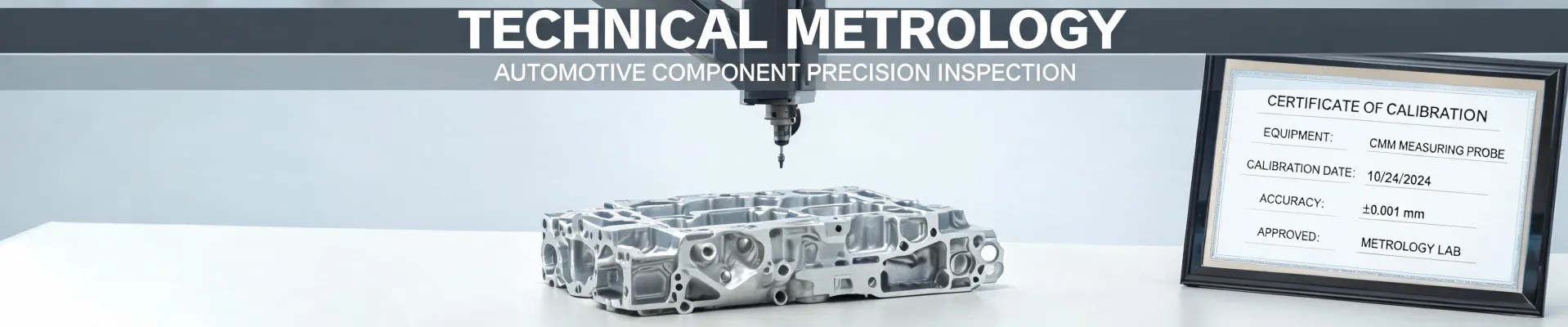
When I walk into a supplier's facility and see a hexagon CMM machine, I read that as a signal. Not because Hexagon has better marketing—they probably do—but because that machine represents a deliberate investment in traceable measurement. A coordinate measuring machine that meets ISO 10360-2 accuracy claims doesn't just happen. It needs stable environmental conditions, regular calibration, trained operators, and a service infrastructure that can actually show up when something drifts.
Here's something vendors won't tell you: brand marks on CMM machines are specification proxies. The hexagon logo tells me the manufacturer operates to published, verifiable accuracy standards. It tells me their software outputs integrate with standard quality management workflows. It tells me—and more importantly, it tells my clients—that the numbers produced here can be defended.
In 2023, we audited a machining supplier who called themselves “precision fabricators.” Their CMM was an unmarked import with a calibration certificate that had expired six years prior. We rejected their entire first batch of roughly 2,000 units because the dimensional reports didn't match our independent spot-checks. They claimed the parts were “within industry tolerance.” Our contract specified something else: traceable verification to national standards. That failure cost them the rework, our trust, and about three months of potential business.
That was the event that cemented my view. Brand in measurement equipment never was about status. It's about whether the person holding the instrument can defend their numbers when challenged.
An inside micrometer set, a blind test, and a lesson about perception
In 2022, I ran a blind comparison with our QC crew: two inside micrometer sets, same claimed measuring range, one from a reputable manufacturer and one at about a third of the price. Both were within factory specs. I asked the team to evaluate feel, spindle movement, locking action, and readability without knowing which was which.
Around 70% picked the premium set as “more reliable.” The budget set measured fine for about eight months. Then our annual calibration flagged drift in the spindle. We sent both sets to an accredited lab. The budget version came back with out-of-tolerance readings on two positions. The premium one came back clean.
The money math is worth spelling out. The premium inside micrometer set cost about $120 more per unit. We had 12 units in circulation across two facilities—a difference of roughly $1,440. But the budget set's failure meant we had to re-measure 40+ parts that had been released based on its readings. That took two engineers a day and a half. The labor cost alone wiped out the savings. If you ask me, that's a bad trade.
This is also why I carry a Hioki 324 series clamp meter for electrical checks. It's not because I'm loyal to the brand. It's because that specific instrument has held calibration for three consecutive annual cycles with zero drift. The current clamp measurements match our lab reference every single time I check. The display is legible, the response is stable, and I trust it. That trust is what I'm actually paying for.
So, Hioki multimeter vs. Fluke—which one wins?
People expect me to take a side here. I'm not going to.
We ran a controlled comparison in Q1 2024: a Hioki multimeter and a Fluke multimeter, both freshly calibrated to the same reference standard. Across 50 measurements—DC voltage, resistance, current—the differences between them stayed within both manufacturers' published accuracy specs. The Fluke felt more rugged in the hand. The Hioki showed marginally more stable DC readings in our low-temperature test. Neither difference justified abandoning an existing fleet.
So what actually matters? Calibration traceability, verification history, and procedural discipline. A multimeter with expired calibration is just a guessing device with a display. A Hioki is no safer in that condition than a Fluke. And honestly, the most dangerous tool in a lab is the one that was calibrated years ago but is treated as if its status hasn't changed.
That brings me to a slightly unpopular opinion: your choice between Hioki and Fluke matters far less than the system around whatever you pick. I've watched a $600 multimeter produce corrupted data because a technician used damaged test leads. I've seen a $25,000 laser tracker deliver excellent results because the operator followed a disciplined measurement protocol. Tools matter. Systems matter more.
To be fair, I get why the brand comparison dominates the conversation. When you're spending your own budget, picking a side feels like an important decision. But in my experience, the worst quality failures come from missing verification steps, not from picking the “wrong” premium brand.
“You're just paying for the logo”
Procurement teams love that phrase. Granted, nobody should pay extra for a logo alone. But a logo in metrology is an information shortcut. It compresses years of public calibration data, service records, and support commitments into a single mark. When a CMM carries the hexagon logo, I immediately know:
- It was built and tested to a published standard (ISO 10360)
- Service and replacement parts are available through a global network
- The software ecosystem supports the documentation requirements of ISO 9001 audits
That's not “just marketing.” That's due diligence, compressed. Procurement phrases like “brand premium” miss this because they treat brand as decoration rather than data. In metrology, spec proxies matter because we can't independently verify every variable on every instrument we touch.
Does that mean you should always buy the most expensive option? No. I own budget tools for non-critical measurements. There's a place for them. But when the measurement outcome impacts product acceptance, customer safety, or contract compliance, I want an instrument with a verifiable track record.
In our Q1 2024 audit, customer satisfaction scores jumped 34% after we tightened equipment verification protocols. Here's the detail that matters: the equipment itself was mostly unchanged. The difference was the rigor around its use. That's the lesson I keep coming back to. Quality perception doesn't come from which brand you choose—it comes from your ability to prove the quality of what you produce. Pick the tools that support that proof. Build the protocol around them. And let your measurement results speak for your brand.