-
The 5-Step Process Instruments Buying Checklist
-
Step 1: Name the exact instrument category before requesting a quote
-
Step 2: Put calibration cost in the quote and get it in writing
-
Step 3: Verify the brand and authorized sourcing—especially for consumables and logo items
-
Step 4: Ask about software, data, and operator training before the hardware ships
-
Step 5: Build a simple TCO scorecard and use it every time
-
Step 1: Name the exact instrument category before requesting a quote
-
What This Checklist Is Not For
When I first started in procurement, I typed a search I'm slightly embarrassed to admit: "besides the multimeter what else is there?" I managed test equipment for a 40-person manufacturing company and genuinely thought instrumentation was a multimeter problem. A good clamp meter, a bench DMM, some thermocouples—done.
Six years and a $22,000 calibration-budget surprise later, I can tell you it's not. The category that keeps production lines honest is process instruments: pressure, temperature, flow, level, and dimensional measurement equipment that runs 24/7. Buying them well takes a checklist, not a gut feeling.
I've managed an annual test and measurement budget of roughly $150,000 since 2019, negotiated with 60+ vendors, and tracked every quote and invoice in a cost system that has become my professional brain. This checklist is the good version of what I learned.
The 5-Step Process Instruments Buying Checklist
Five steps, because every expensive mistake I made traces back to skipping one of them.
Step 1: Name the exact instrument category before requesting a quote
"Process instrument" is not a spec. You need the type: pressure transmitter? Coriolis flow meter? Radar level sensor? Inline pH? Vibration probe? That determines everything downstream.
If you're unsure, ask the process engineer for the P&ID or spec sheet. Don't ask a sales rep to define the application—their job is to sell what they have, not to figure out what you need. When I audited our 2023 spending, 14 of 39 instrument line items were categorized "miscellaneous." That was a red flag. We then made it policy: if a requisition says "process instrument" without a type, it goes back to the requester before any vendor sees it.
If the request is for a brand name, say which family. Hexagon, for example, makes CMMs, portable measuring arms, laser trackers, and industrial sensors. A "Hexagon instrument" quote is meaningless until you know whether you need a laser tracker or a sensor.
Checkpoint: You can name the process variable you're measuring and the required measurement range.
Step 2: Put calibration cost in the quote and get it in writing
Missing calibration cost is a deal-breaker for me.
In Q2 2024, I compared two quotes for a pressure transmitter. The cheaper one was $990. The other was $1,180. I almost went with the $990 quote until I asked about calibration. The $990 vendor charged $340 for calibration plus $75 freight each way to ship it to another state. The $1,180 quote included a NIST-traceable calibration certificate and a 3-day turnaround. Total: $1,480 vs. $1,180. That's a 20% difference hidden in fine print.
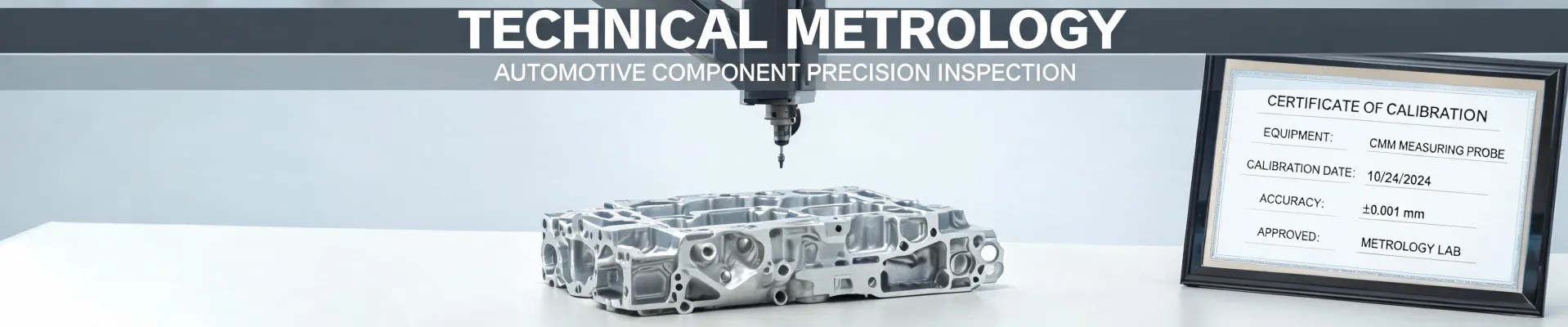
For dimensional metrology—a Hexagon laser tracker, a CMM, a portable arm—the same logic applies, but with bigger numbers. Ask which test standard applies. For CMMs it's usually ISO 10360-2; the certificate should state the method and results. Ask who recalibrates the instrument: an authorized service center or a third-party lab? "We calibrate it in-house" is a fine answer only if the lab is ISO/IEC 17025 accredited and you can audit that scope.
Also ask about the uncertainty budget. Calibration is not a stamp; it's a number that tells you whether the measurement is good enough. If the uncertainty is larger than your tolerance, you have an expensive paperweight.
Checkpoint: Your quote shows calibration, freight, and certificate turnaround, not just unit price.
Step 3: Verify the brand and authorized sourcing—especially for consumables and logo items
I know this sounds like common sense. It's the step most buyers skip.
Example: our lab wanted branded pipette pens for inventory labeling. I typed "how to get eppendorf pipette pen" and found a marketplace listing about 30% below what our lab supplier charged. The photo had an Eppendorf logo, but the logo was slightly blurry and the SKU didn't match Eppendorf's catalog. I didn't order. A month later, the listing had reviews saying "pen arrived but no Eppendorf branding" and "definitely counterfeit."
The way to get a real Eppendorf pipette pen is boring: go to Eppendorf's official site, use the authorized distributor finder (I checked it again in January 2025), request the SKU through your purchasing rep, and add it to an existing lab supply order. No special back door exists. If a seller implies otherwise, that's a red flag.
Same rule applies to other industrial brands. If a seller can't tell you the authorized channel for the specific Hexagon product, treat the quote as suspect. Counterfeiters love to put a Hexagon logo on calibration, probe, and sensor accessories. The logo on a genuine product has precise spacing; the counterfeit one is often just a bit off. So, before paying for anything "genuine," compare the logo and confirm the seller can name the official source.
Checkpoint: You can point to the manufacturer's official channel for the item, and the seller's quote references either that channel or clearly says "alternative" or "aftermarket."
Step 4: Ask about software, data, and operator training before the hardware ships
Hardware is easy; getting it to work is where budgets die. A Hexagon laser tracker is a great example: the tracker is only half the system. The other half is the inspection software, the CAD interface, the training for the person who programs it, and the license renewal terms.
Plus, ask how many operators need training and whether the trainer can use your own part instead of a demo block. That matters more than people expect.
In my first year, I made the classic specification error: I approved a quote that said "software included" but didn't check the license type. It was a non-updated offline license. Actually, it was worse—the license was tied to a laptop that had died. The vendor wanted $2,100 per year to move it to a current supported version. We paid, because running metrology software without vendor support is too risky.
Checkpoint: The quote lists software version, license type, support duration, training hours, and who handles the CAD data interface.
Step 5: Build a simple TCO scorecard and use it every time
Total cost of ownership is not a PowerPoint phrase. It's a one-page spreadsheet.
Our procurement policy now requires quotes from at least 3 vendors. I built that rule after getting burned twice in 2020 on "cheap" instruments that ended up costing more than the premium options. The scorecard has five lines:
- Base product price
- Calibration / certification
- Freight and handling
- Training / installation
- Software support, year 1 and year 3
Then divide by expected service life. If a vendor can't supply a 3-year total cost number, ask for yearly maintenance and calibration costs. If they can't, that's a red flag. Sometimes the low-price option forces a $1,200 redo when quality fails. Sometimes the premium option includes support that saves $4,000 on your first project. Then again, a small vendor can be excellent and cheap if they're not offering hidden services you don't need.
Checkpoint: You can show the 3-year total cost for each quote and explain the difference to someone who only looked at unit price.
What This Checklist Is Not For
If you're a startup buying one instrument for a proof-of-concept, renting or using an outside measurement service might make more sense than buying a Hexagon laser tracker. If you're commissioning a fully customized process analyzer for a pilot plant, you'll need a much longer spec phase. This checklist is for the 80% case—buying standard process instruments and dimensional metrology tools for ongoing production and maintenance.
Bottom line: I'm not saying every low-priced vendor is a trap. Some of our best suppliers are small and low-markup. But "lower price" and "lower total cost" are two different numbers. At least, that's been my experience across 60+ orders. Sometimes the right answer is "this vendor is a better fit for a different job," and saying so out loud saves everyone time and money.