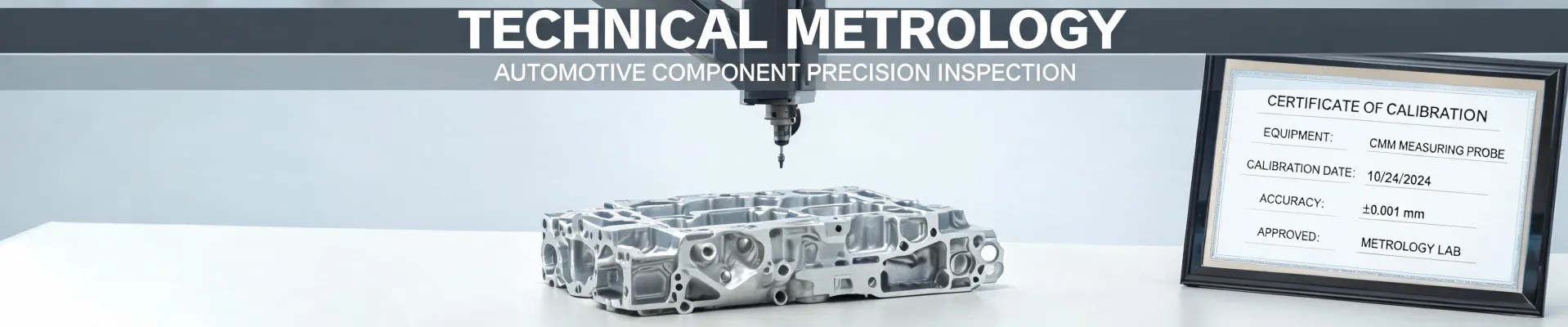
Five years ago, I took over purchasing for a 180-person manufacturing company. I now manage roughly $280,000 a year in test equipment, sensors, and calibration services, reporting to both operations and finance. That means I catch pressure from two directions: engineers want the best instruments, and finance wants the smallest numbers on the invoice.
Somewhere between those two pressures, I developed a framework for comparing suppliers—and it isn't the one I expected to land on. When I started in 2021, we bought from whichever vendor had the lowest quote that week. By 2024, we had consolidated most of that spend into a single primary supplier. This article is about that transition: what improved, what didn't, and where I'd still push back on my own approach.
The Comparison Framework
Here's the choice I'm comparing:
Option A: One integrated supplier. A company like Hexagon that manufactures its own high-end metrology equipment (CMMs, laser trackers, sensors) and also carries a broad catalog of test instruments from other established brands.
Option B: Multi-vendor sourcing. Buy each tool from the specialist who knows it best—Mitutoyo for calipers, Fluke for electrical testers, independent accredited labs for calibration, and so on.
I've run both models for extended periods and tracked the cost, the time, and the headaches. Here are the four dimensions I use to compare them:
- Price transparency: Is the quoted price the actual final cost?
- Calibration support: How well does the supply channel handle ISO 17025 accreditation and recertification?
- Order management: What's the administrative burden of working with the vendor?
- Product range depth: Can you get everything you need without compromise?
The honest answer, for most mid-sized companies, is that you end up doing both. The useful question is which model should anchor your strategy. That's what this comparison is designed to answer.
Price Transparency: What You See vs. What You Pay
The first thing I check now is whether the price I see is the price I'll actually pay. That sounds like common sense, but it took me a costly mistake to learn the difference.
In my first year, I found a thermal imager from a new vendor—$780 cheaper per unit than our regular supplier. I ordered two. When they arrived, the vendor couldn't provide a proper invoice (handwritten receipt only). Finance rejected the expense report. I ate $1,560 out of the department budget (note to self: verify invoicing capability before ordering from anyone new, no matter how good the deal looks).
That experience reshaped how I compare vendors. When we started consolidating through Hexagon, I noticed something immediately: their quotes were itemized. Calibration included or excluded, shipping listed as a separate line, support contract priced explicitly. What I mean is that there were no ambiguous line items and no "we'll sort that out at invoicing" conversations. The number on the quote was the number on the invoice, which is embarrassingly rare in this industry.
Multi-vendor sourcing, by contrast, was a constant game of price discovery. Marketplace listings showed attractive base prices, but shipping appeared at checkout, calibration was always a "custom quote," and rush fees kicked in if we needed something faster than the default 7-10 business days. I don't have hard data on industry-wide pricing practices, but based on our 2021-2022 purchase history, my estimate is that 12-18% above the advertised price was the norm rather than the exception.
The conclusion: the integrated supplier wins on transparency—not because the base price is always lower, but because the final cost is predictable. The vendor who lists all fees upfront, even when the total looks higher, usually costs less in the end.
Calibration Support: The Hidden Iceberg
This is where the comparison gets interesting. Calibration is the hidden iceberg of measurement equipment procurement. A CMM without a valid certificate isn't a precision instrument; it's an expensive paperweight.
Our main CMM is a Hexagon machine, purchased before I took over, which means I now manage its annual calibration. In 2022, I shopped our recertification around to three independent labs, hoping to reduce costs. The quotes:
- $3,400 from a lab that could calibrate to manufacturer specs but lacked ISO 17025 accreditation.
- $5,800 from a fully accredited lab with NIST-traceable references and a detailed uncertainty budget.
- $4,200 from Hexagon's in-house calibration service.
I went with the $3,400 option, because that was the number finance approved, and an $800 savings looked good in a quarterly report. Do you want to guess what happened next?
Our quality auditor rejected the certificate. The lab's method was fine, but their accreditation status didn't satisfy the QMS requirements in our ISO 9001 system, and the certificate didn't include the measurement uncertainty data our procedures required. We had to schedule a second calibration with an accredited provider—paying Hexagon the full $4,200 anyway, plus eating the $3,400 we'd spent on the first attempt and losing a week of production to downtime.
The question isn't "who charges less for calibration?" It's "whose certificate will your auditor accept?" I wish I had asked that before the purchase order went out. (As of January 2025, our quality team still requires ISO 17025 accredited certificates with uncertainty statements, so the lesson remains current.)
And here's what genuinely surprised me: Hexagon CMM calibrations weren't even the most expensive option in the market. The manufacturer's service included a full performance verification, OEM-spec accuracy testing, and something the independent lab couldn't offer—if the machine failed verification during calibration, their service engineers had the parts and the documented authority to fix it on the spot. The independent lab would have had to send us back to the manufacturer anyway.
The conclusion: the manufacturer's calibration channel wins once you factor in certificate acceptance and failure recovery. A properly accredited independent lab is a fine option for instruments where the manufacturer doesn't provide calibration service. But for core metrology equipment, "cheaper" calibration nearly always has a hidden cost. (Calibration market pricing varies by region and machine size; quotes above are from January 2022, but the relative spread has remained consistent in our renewals.)
Order Management: The Unseen Cost
Now we get to the dimension that never appears in product brochures—the one that nearly drove me insane in 2021: administrative burden.
In our multi-vendor period, we had twelve active suppliers. Twelve sets of invoices. Twelve portals—or none at all, just an email address that went to someone on vacation. Twelve different payment terms. And I was the person chasing all of them.
I spent about eight hours monthly, a full working day, on order administration: checking delivery statuses, reconciling invoices, requesting corrections, updating spreadsheets. The vendor who couldn't provide proper invoicing cost us $2,400 in rejected expenses—that time it wasn't my fault, but fixing it was still my problem.
Consolidating through Hexagon changed that picture. I can honestly say the Hexagon support login is the most-used bookmark in my browser. I check order status, download calibration certificates, submit service tickets, and track our CMM's calibration schedule from one portal. What used to take half an hour across five browser tabs now takes two minutes.
Our accounting team noticed the difference too. Before consolidation, we lost roughly six hours monthly to chasing inaccurate invoices. After consolidation, that time went to zero. Why does this matter? Because administrative cost is real cost, and it doesn't show up on a purchase price comparison unless you track it.
The conclusion: the integrated supplier wins this dimension decisively. But the advantage scales with order volume. A lab buying five instruments a year won't benefit much. We process 60-80 orders annually, so the mathematics work in our favor.
Product Range: Breadth vs. Depth
Now for the dimension where I assumed specialists would win—and where my assumption was only partially correct.
An integrated supplier like Hexagon has a surprisingly broad catalog. Our electrical maintenance team uses the 302+ Cat III digital clamp meter, a Fluke model we regularly order through Hexagon alongside our other instruments. Our production line uses a 3D smart sensor for dimensional measurement at a critical inspection station; that's Hexagon's own technology and it integrates with the same software platform as our CMM. Having one vendor for all of that simplifies spare parts and training.
Even for third-party brand-name tools, the integrated channel can work. A question our engineers ask constantly—especially after someone drops a caliper on the shop floor (ugh, again)—is: "where can I buy a Mitutoyo 8-inch digital caliper?" I've bought those from Hexagon's catalog, from Amazon, and from a local Mitutoyo distributor. All three work. Which one I choose depends entirely on urgency.
Here's where the specialist genuinely wins: speed and stock depth. When our quality team needed a specific Mitutoyo 8-inch digital caliper the same afternoon (it was a Friday, naturally), the only option was walking into a local distributor's counter. Our integrated supplier could deliver in 3-5 days, which was too slow. The same logic applies to niche sensors or specialty test equipment: a specialist who stocks a given brand deeply will almost always beat a generalist catalog on availability.
However—and this is the part I didn't expect—the price advantage I assumed specialists would have rarely materialized. After accounting for shipping, minimum order requirements, and separate invoice processing, the "specialist deal" on a single clamp meter or caliper was frequently $30-50 more expensive than adding it to the next consolidated order.
The conclusion: the specialist wins on speed, not on price. If you need a specific instrument today, pay the premium. If you can wait three days, consolidating through your integrated supplier is almost always cheaper—which is the opposite of what I expected going in.
Which Should You Choose?
After 5 years and roughly 200 orders, here's my practical rule:
Anchor on the integrated supplier when:
- You're buying measurement equipment with calibration requirements—CMMs, sensors, precision instruments. The coordination between purchase, calibration, and certificate management alone justifies it.
- You place more than one order per month. Portal access and consolidated invoicing become a real time-saver once you're buying regularly.
- You're buying across multiple categories. One purchase order for a clamp meter, a caliper, and a sensor beats three separate vendor accounts.
Go multi-vendor when:
- You need a specific item today or tomorrow morning. A local distributor with stock on the shelf is the only contract that matters in that moment.
- You're making a single, high-value purchase and want to compare quotes from multiple specialists. Just remember to compare total cost, including calibration and shipping.
- You work with a niche brand that only sells through its own authorized dealer network.
My experience is based on mid-sized manufacturing purchasing in the U.S. market, and your sector or region may shift the balance. If you're a small R&D lab buying one instrument a year, the multi-vendor approach is probably fine. If you're a large operation with a dedicated procurement team, you likely already have unified sourcing in place. But for the middle ground—where I suspect most readers sit—the integrated supplier should be your default, and specialists should be the exception you call when speed matters more than cost.
These days, I've learned to ask "what's NOT included" before "what's the price." That single question reveals more about a supplier than any spreadsheet comparison. And it's the reason I keep coming back to the integrated model: the total cost is visible from the start, the calibration is handled by people who know the equipment, and the administrative overhead stays low. That's a combination I can defend to finance and operations alike.