-
Why do Hexagon products show up in so many metrology RFQs?
-
How often should we schedule Hexagon CMM calibrations?
-
Should we buy a 16 multimeter or a dedicated clamp meter?
-
How to Use a Starrett Micrometer
-
Are Hexagon products worth the premium price?
-
What hidden costs should procurement watch for when buying measurement equipment?
If you're like me, you don't buy measurement equipment for fun. You buy it because a spec has to be met, an audit passed, or a customer asked for traceability. I've spent the past six years managing a cumulative spend of roughly $180k in test and measurement gear—including Hexagon CMMs, handheld multimeters, and Starrett micrometers. This FAQ is based on what I've learned, sometimes the hard way.
Why do Hexagon products show up in so many metrology RFQs?
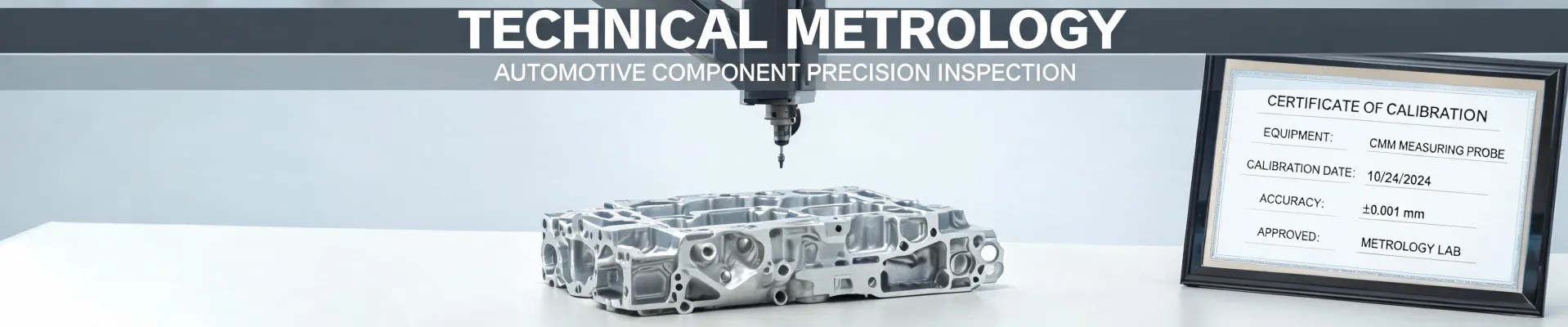
Short answer: the ecosystem. Hexagon isn't just a CMM brand. They make portable CMMs, laser trackers, sensors, and software that talk to each other. That interoperability matters when you're moving parts from a CMM to a shop-floor gauge.
From a procurement angle, it's also about total cost. I've compared quotes where the 'cheaper' competitor didn't include the interface software. By the time we bought the license and paid for training, the difference was gone. But to be fair, you can overpay for Hexagon if you don't need all the features. A basic 3-axis CMM with good service might do the job. What was best practice in 2020 may not apply in 2025—digital connectivity is now the norm, not an add-on.
How often should we schedule Hexagon CMM calibrations?
The textbook answer is once a year. When I first started, I booked every machine on an annual calendar. Then we ran a bad batch because a machine's temperature compensation drifted at the 11-month mark. That taught me: calibration intervals should be risk-based.
Now we put critical machines on quarterly checks, medium-use machines on semi-annual, and the rest on annual. That costs more on paper, but it's cheaper than scrapping a $2,000 aluminum housing. And don't forget the opportunity cost. If your CMM is down for two days for calibration, that's lost production. I've started scheduling after-hours calibrations, even if the rate is higher. In the long run, those two days of uptime pay for it.
Should we buy a 16 multimeter or a dedicated clamp meter?
Honestly? Both. I originally tried to standardize on one platform and bought eight 16 multimeters. They worked, but technicians still asked for clamp meters because they needed to measure current without breaking the circuit.
A 16 multimeter gives you voltage, resistance, frequency, and capacitance—fine for bench diagnostics. A clamp meter does one thing well: measures live current safely. If your team does panel work or HVAC, clamp meters are the answer. If they troubleshoot circuit boards, the 16 multimeter is a workhorse. Scope it to the actual task. And if you're buying for a general shop, start with a mid-range 16 multimeter and add clamp meters when a job demands it. Don't force one tool into every slot.
How to Use a Starrett Micrometer
This is how to use a starrett micrometer correctly: clean the anvil and spindle faces, close the thimble until the spindle touches the part, turn the ratchet screw one or two clicks, then read the sleeve and thimble scales.
The secret most people miss is thermal expansion. Your hand heat will warm the frame and skew the reading by tenths of a thousandth. That's enough to reject a good part. So use the insulated frame or handle it as little as possible. Also, never drop it. I've dealt with operators who dropped a micrometer and didn't say anything. The resulting measurement errors cost us more than a replacement. The fundamentals haven't changed in 100 years, but if you use a digital Starrett with SPC output, you can catch bad readings immediately. That's progress.
Are Hexagon products worth the premium price?
It depends on how you calculate cost. In Q2 2024, I compared eight vendors over three months for a new measuring system. The low bid was tempting—about 17% cheaper than Hexagon. But when I dug into the fine print, that 'free setup' didn't include calibration, software licenses, or training. Those hidden fees added $3,200. Hexagon's quote included on-site calibration and a two-day training class. Net, the difference wasn't worth the risk.
That said, I can only speak to our context—a 40-person machine shop with stable volume. If you're a small job shop doing simple inspections, a used CMM may be enough. The key is to build a TCO spreadsheet and include downtime, support response, and consumables. If you ask me, the premium is justified when the service contract actually responds in 24 hours. Otherwise, it's just a name on the door.
What hidden costs should procurement watch for when buying measurement equipment?
The biggest one is calibration logistics. A quote might say 'calibrated per ISO 17025' but that's meaningless if you have to ship the instrument to a third-party lab and eat the shipping cost and downtime. Per FTC guidelines, any performance claim has to be substantiated—so ask for the uncertainty budget, not just a marketing brochure.
I dodged a bullet when I noticed a vendor's 'free setup' didn't include a calibrated master artifact. That was an extra $450. The second hidden cost is training. A $15,000 micrometer is useless if your operator doesn't know how to read it. We built a rule: any purchase above $1,000 triggers a mini training session. It sounds bureaucratic, but it's cut our measurement errors by maybe a third. And that's not just my opinion—it's in our corrective action log.