If you are typing 'where to buy fluke multimeter' because you need one by Thursday, stop comparing prices. Find the supplier who can say 'yes, we have it', 'yes, it is calibrated', and 'yes, it will arrive on that date'. I coordinate equipment sourcing for a metrology distributor, and after 200+ rush orders in five years, the biggest risk I see is not cost. It is uncertainty. A guaranteed delivery date is worth more than a cheap invoice. It took me a while to learn that. (Should mention: I used to think 'rush order' meant 'really expensive order.' Not always. Sometimes the extra cost is just a courier fee and a phone call.)
People assume an emergency order is about speed. It is really about certainty. When I pay $200 for an overnight courier, I am not buying a faster truck. I am buying a promise that my client can walk into tomorrow morning with the tool in their hand.
In March 2024, a quality manager called at 4:13 PM. He needed a Fluke 435 Power Quality Analyzer before a utility inspection the next morning. Normal lead time from a standard reseller was seven business days. His inspection slot had been booked for four months. Postponing it meant losing the slot and delaying a $40,000 line verification. We had the 435 in a warehouse about 400 miles away. We paid $210 for an overnight courier, confirmed the calibration status, and had it at his dock before 9 AM. Even after paying the courier, I kept second-guessing. What if the warehouse sent the wrong unit? I did not relax until the delivery driver confirmed the package was opened. That extra $210 was less than 1% of the project he would have lost. Done.
That is the mindset behind every good rush order. Three things matter when the clock is running: inventory. Calibration. A phone number that picks up. In that order.
I only believed this after ignoring it once
I did not always think this way. Three years ago, a client tried to save money by buying a Fluke meter from a marketplace listing without checking the serial number with Fluke. The meter looked right. It even came in the same style of packaging. But when our calibration engineer put it through a basic check, it failed. It was a counterfeit. The error was small, about 2% on one range, but small errors in a measurement instrument are how bad parts ship. The client lost a full day of production line verification. The $72 they saved turned into about $1,400 in re-testing, overtime, and last-minute shipping.
That is when I started checking an instrument's pedigree before recommending any source. A calibration certificate is not paperwork. It is evidence. An ISO 17025 calibration certificate tells you that the instrument was tested against a standard that is NIST traceable. Without that, you are guessing.
So when someone asks 'where to buy fluke multimeter' online, the real question is not which store has the lowest price. It is which distributor can prove the serial number, provide a valid certificate, and stand behind the product when there is a problem. That is the difference between a purchase and a solution.
Hexagon support is not the same as a warranty
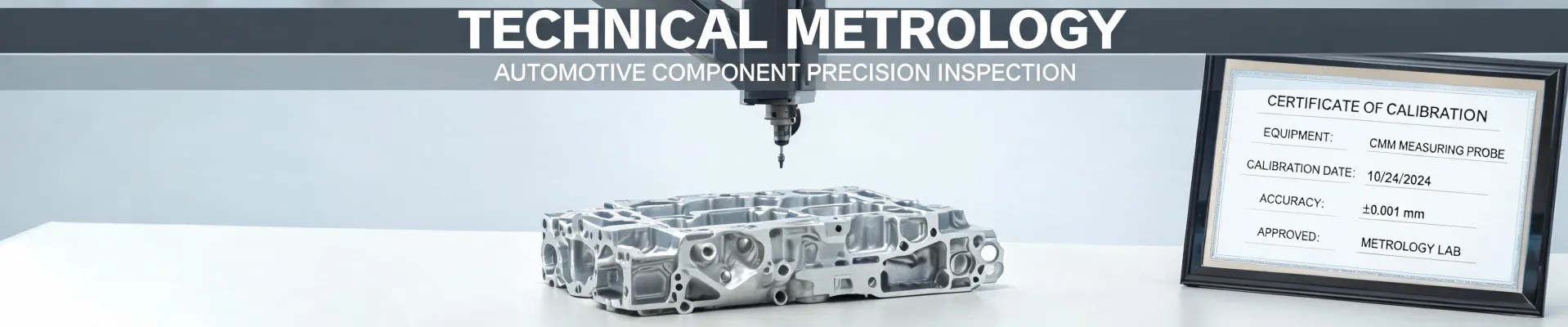
This principle scales. No one types 'where to buy hexagon coordinate measuring machine' casually. A Hexagon coordinate measuring machine is a six-figure investment that sits at the center of your measurement lab. The purchase decision should include the same certainty logic as a $400 multimeter, just with bigger numbers.
In 2024, a client's CMM lost accuracy in the middle of a night shift. They called us, not because we sold the machine, but because they knew we handle urgent metrology needs. We scheduled a remote diagnostic session for 6 AM. By 7:40, we saw a damaged scale reading. By 11 AM, we had a replacement scale on order through Hexagon's North American parts network. By Friday, the machine was recalibrated and running. The repair cost about $2,800. The downtime if we had waited for the standard service queue would have been at least four days. At $18,000 per day in halted production, the choice was not difficult.
When I say Hexagon support, I am not talking about a ticket system that answers in three business days. I mean an engineer who can dial into your machine, read the error code, and tell you whether that is a 20-minute fix or a part that needs to be flown in. That ability to separate a small problem from a big one is worth more than the spare part itself.
Even after approving that $2,800 repair, I had doubts. What if the scale was not the root cause? What if we burned the client's money and they were still down? I did not relax until the calibration run showed the CMM repeating within its original tolerance. The vendor's willingness to talk to us before sending the part is what made the difference.
The turbine flow meter that almost stopped a pipeline
Then there are the quiet instruments—the ones that never make it into a marketing brochure but must work when the plant is running. A turbine flow meter is one of them. It is usually bolted to a pipe, sending pulse signals that the control system turns into flow rate. When it drifts, process operators start missing numbers. When it disappears, they stop the line.
A client had an 8-inch turbine flow meter fail during a product changeover. The body dimensions were matched, but the critical piece was the K-factor. A new turbine flow meter is useless without a calibration curve. We got the replacement meter from our inventory, sent it to an accredited lab at 10 AM, received the corrected K-factor data at 4 PM, and delivered it to the site at 8 PM with a mounting bracket. The client had a 12-hour shutdown window. We hit it.
Notice what that took: inventory, an accredited lab, a courier who moved at the right hour, and someone who understood why the K-factor had to be entered before the meter went in. That is not a transaction. That is coordination.
What nobody mentions before you buy
In every one of these stories, the instrument itself was only half the answer. The other half was the supplier's ability to support it after the sale. The 435 Power Quality Analyzer needed a valid certificate. The Hexagon coordinate measuring machine needed remote diagnostics and spare parts. The turbine flow meter needed a calibration curve. None of that information shows up in the search results when you look for a product number.
This is also why I always ask about the manufacturer's service path before buying anything complex. If the company that sells a measurement device cannot describe how you get support when it fails, you are not really buying the device. You are buying a problem with a serial number.
So, where do you buy the Fluke multimeter?
If you are still asking 'where to buy fluke multimeter,' here is the practical answer: buy from a distributor who stocks the item, can provide an ISO 17025 calibration certificate, and can promise a delivery day instead of an estimate. That might be a local calibration house, an authorized distribution partner, or a supplier like Hexagon with a broader industrial metrology portfolio. The name matters less than the answer to three questions: Do you have it? Can you prove it is genuine? Can you get it here by the date I need?
If a supplier answers all three clearly, pay the rush fee. If the supplier starts with 'probably,' keep looking. In an emergency, a probable delivery date is the most expensive phrase in the language.
When this advice does not apply
Of course, this approach has limits. At least, it has limits in my experience with standard products and working within one region. If you need a custom-built system, or an instrument that has to be configured to a plant's specific protocol, no amount of expedited shipping replaces engineering time. In that case, 'fast' means 'you should have started last week.' I won't pretend otherwise.
That is my experience after years of last-minute calls. I trust it. But I also know that every urgent order is a little different, so a checklist works better than a guarantee. Use the checklist, ask the questions, and only then decide whether the rush fee is worth it. In most cases, it is. The exceptions are rare—but the exceptions are usually where you lose more than money.