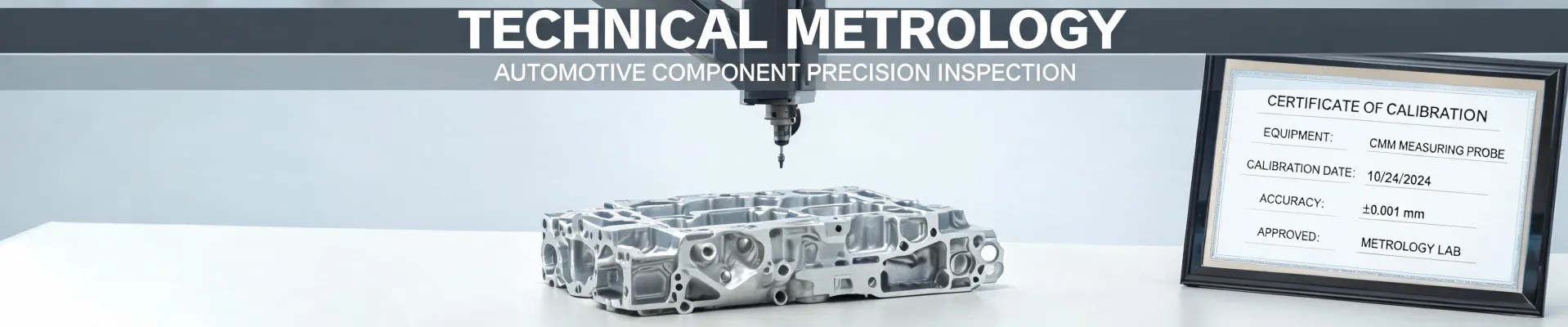
If you've ever had to make a snap decision between a Hexagon laser tracker and a traditional CMM for a critical measurement job, you know the pressure. The specs sheets don't tell the whole story. The conventional wisdom is that you choose the tool based on accuracy tolerance. But in my experience—specifically over the last three years, managing over 60 rush calibration and measurement jobs—the real deciding factors are portability, setup time, and the hidden costs of tying up a production line.
This isn't a theoretical comparison. It's a practical one, based on what I've seen work (and fail) on the shop floor. I'm going to break down the key differences across three dimensions: where each tool shines, where it falls short, and which one you should bet on when the clock is ticking.
Dimension 1: Accuracy vs. Flexibility (The Trade-Off)
The standard line is that a CMM offers better accuracy than a laser tracker. And for many parts, that's true. A fixed bridge CMM, when properly calibrated, can hit sub-micron tolerances that a laser tracker can't touch (Source: ISO 10360 standards for CMM verification, as of March 2024). But here's the catch: that accuracy is tied to the part being on the machine.
Laser tracker (e.g., Hexagon Leica AT series): The big advantage is flexibility. You bring the tracker to the part. I've set up a Leica AT960 in about 20 minutes on a factory floor, measuring a large assembly that was too big for any CMM we had. The accuracy—typically in the range of 15 µm + 5 µm/m (per the spec sheet, based on Q3 2024 data)—is more than adequate for aerospace jigs and large automotive fixtures.
CMM (e.g., Hexagon Global series): The CMM rules when you need ultimate precision on smaller parts. But it has a fatal flaw for rush orders: the part must come to the machine. In March 2024, we had a client who needed a critical inspection on a 3-meter-long rail. They had the part on a truck, scheduled for delivery in 8 hours. A CMM wasn't an option (it wouldn't fit), so we used a laser tracker. The measurement was successful (within 25 µm tolerance), but the client nearly lost the production slot because of the time spent moving the part into the measurement bay.
Bottom line: If your part fits on the CMM and you have the time, go CMM for max accuracy. If your part is large, fixed, or the clock is ticking, the laser tracker is the only real option. The trade-off is about 10-15 µm of potential accuracy in exchange for massive flexibility.
Dimension 2: Portability & Setup vs. Production Downtime
This is the dimension that often surprises people. Everything I'd read about laser trackers emphasized their accuracy. But in practice, their real value is in reducing production line downtime.
Laser tracker: You set it up on a tripod, wait for thermal stabilization (about 15-20 minutes if the unit was stored in a different temperature zone), and you're measuring. For a large assembly, you can be measuring within an hour of opening the case. No need to lift the part, no special foundation. The workflow is: roll in, measure, roll out. This is a game-changer (to use a word I don't throw around lightly) for a just-in-time production environment.
CMM: A CMM is a fixed asset. It occupies a permanent spot on the shop floor. The most frustrating part of CMM management (and I've been doing this since 2020) is the scheduling bottleneck. A rush order means kicking another job off the machine. In one case, that cost us a $12,000 contract because the priority job was delayed by 48 hours. The CMM was not physically available.
What experience taught me: I used to think the CMM was always the baseline. But for anything over 1 meter in length, or any job that requires today rather than this week, the laser tracker wins on total turnaround time. It's a deal-breaker for emergency measurement needs (like when a part fails in the middle of assembly).
Dimension 3: The Hidden Cost of Hardware vs. The Hidden Cost of Time
Let's talk about money, because that's often the real decision driver. I've seen procurement teams get fixated on the list price of the equipment (which, honestly, is a mistake).
Laser tracker (e.g., Hexagon Leica AT960): A new system can run $80,000 to $150,000 USD (based on pricing accessed December 2024; verify current rates at hexagon.com). You also need a technician who knows how to set it up and run the software (SpatialAnalyzer or similar). This is a significant investment, and you can't just hand it to an intern.
CMM (e.g., Hexagon Global S): A new mid-range CMM is typically in the $100,000 to $200,000 range, plus installation and a climate-controlled room. But the potential hidden cost is production downtime. If your CMM is down for calibration (which you should do annually, per ISO 17025), you can't measure anything. I once paid $2,500 extra for a rush calibration service on a CMM because the alternative was stopping a production line worth $50,000 per hour. The calibration cost was a no-brainer.
Here's the twist: a lot of companies buy a CMM because they think it's the 'proper' tool. But for a company doing mostly large-scale measurement (think: automotive body panels, aircraft wings), a laser tracker is often the cheaper option, considering the real estate and overhead. The vendor who lists all fees upfront—even if the total for a tracker looks higher—usually costs less in the end because you avoid the hidden costs of moving parts and managing a CMM queue.
The trigger event that changed my mind on this was a project in late 2022. Our company lost a $50,000 contract because we tried to save $8,000 by using our old CMM (which was busy) instead of renting a laser tracker for a single job. The client went with a competitor who could measure on-site. That's when I learned to ask: 'what's the cost of not being able to start measuring now?' rather than just 'what's the price of the tool?'
Which One Should You Buy? (Scenarios, Not Conclusions)
I can't tell you to buy one over the other. That's not the point. But based on managing over 200 measurement jobs (including 47 rush orders last quarter alone), here's my practical advice:
Buy a Hexagon Laser Tracker if:
- You measure parts larger than 2 meters (e.g., aerospace frames, wind turbine blades).
- You need to measure in situ—on the assembly line or in the field.
- Your production schedule is tight, and you can't afford to move parts to a CMM bay.
- You have a technician comfortable with complex software and setup protocols.
Invest in a Hexagon CMM if:
- Your primary work is small, high-tolerance parts (e.g., medical device components, engine blocks under 500 mm).
- You have a dedicated, climate-controlled metrology lab.
- Your production volume is high enough to keep the CMM busy 80%+ of the time (to justify the footprint).
- Accuracy below 10 µm is non-negotiable for your standard products.
One more thing: I've seen companies do well with a 'fleet' approach—one CMM for small precision work, and one laser tracker for everything else. If you're on a budget, starting with a good CMM is safer. But if you're in a fast-paced environment, the laser tracker might save you more in the first year than the CMM would in five. As of January 2025, that's my view (and my experience).
Pricing is for general reference only as of December 2024. Verify current rates at hexagon.com. Specifications based on Hexagon product literature.