Look, I'm not going to tell you that you should always buy the most expensive thing on the shelf. That'd be ridiculous. But over the past 6 years of tracking every invoice and auditing our $180,000 in cumulative test equipment spending, I've learned one hard truth: the lowest quote is a trap more often than not.
There's no single answer to "what should I buy." It depends entirely on what you're measuring, how often, and what happens if you get it wrong. Here are three common scenarios I've seen play out, and the math behind each.
Scenario A: The High-Stakes Production Line
You're running a critical QC check on a part for an aerospace supplier. If that bearing housing is 0.01mm out of spec, you're looking at a $10,000 re-machining cost and a delayed shipment. You're measuring it five times a day.
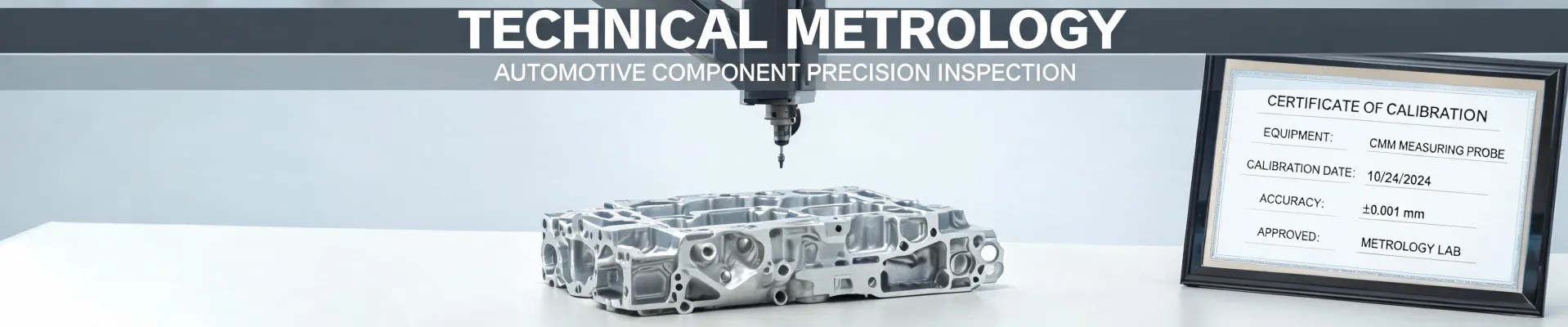
In my experience, this is where a flagship system like a Hexagon CMM machine or a high-end laser tracker pays for itself. The 'cheaper' alternative might save you $4,000 upfront. But if it drifts by even a micron every third measurement, and you catch it on the final audit? You've just spent that $4,000 on scrap and overtime.
"In 2022, I almost greenlit a quote for a 'budget' portable CMM that was 35% cheaper than the Hexagon. Then I calculated the TCO. The cheaper unit needed calibration every 6 months (vs. annual), had a proprietary software license that cost $1,200/year, and the sensor had a documented drift issue. The Hexagon quote was higher. The total cost over 3 years? The 'cheap' option was actually 12% more expensive."
My advice for high-stakes scenarios: Don't look at the price. Look at the cost of failure. If the penalty for a bad measurement is high, invest in the equipment with the best repeatability, calibration stability, and support. That's why you see Hexagon, Mitutoyo, and Zeiss on every shop floor that can't afford mistakes. You're not buying a box; you're buying measurement confidence.
Scenario B: The General Shop Tool Box
You need a reliable set of basic tools for a machine shop that makes general parts—nothing for the space station. You need a few good micrometers, a set of calipers, and a solid clamp meter for the electrical panel. The budget is tight, and the parts are forgiving to +/- 0.1mm.
Here's the thing: buying a brand-new Mitutoyo digital micrometer for every station might be overkill. But buying the cheapest no-name caliper from an online marketplace is a recipe for disaster. I learned this the hard way in my first year. I bought 15 'value' calipers to save $600. Within 6 months, 4 of them had sticky slides, and 2 had batteries that died in the case. The constant 'are we sure this is right?' questions slowed the shop down.
This is where a mixed strategy works. For the main inspection tools, I'd still go with a trusted brand like Mitutoyo or Starrett. But for the day-to-day rough measurement tools on the shop floor? A mid-range brand with a known quality baseline is fine. The key is interchangeability. If one tool fails, can you grab another and trust the reading immediately? If not, you've got a bottleneck.
Also, how to turn off Mitutoyo digital micrometer is a legit question—it auto-off after 5 minutes, but if you need to force it off for a test, it's a simple long-press of the ON/OFF button. Knowing these small features saves everyone time.
Scenario C: The Do-It-All Lab & Field Service
Your team needs a portable solution. One day they're measuring a weld seam in a shipyard with a sensors for motion control setup, the next they're checking the temperature of a motor bearing with a Flir thermal imager, and later they need to certify a circuit with a 376 true rms clamp meter. The equipment needs to be versatile, rugged, and traceable.
This is where the purchasing decision gets complicated. You can't buy a Heavy-duty lab CMM and a separate set of portable tools. You need a platform that works together. This is actually where the Hexagon app and the broader Hexagon official website become incredibly useful for research. They don't just sell a CMM; they sell a measurement ecosystem. A laser tracker can talk to a handheld scanner. The data from a portable CMM can be processed in the same software as the fixed system.
The mistake here is buying isolated tools from different vendors to save a few hundred bucks on each item. I did this once. We had a Fluke meter for electrical, a generic brand for temp, and a different brand for the motion sensor. The data was siloed. The calibration schedule was a mess (three different vendors, three different due dates, three different invoice cycles).
"That 'saved' $200 on a temperature sensor turned into a $1,500 problem when its calibration certificate wasn't accepted by a client's auditor. We had to re-do the work with a Flir unit. The lesson: buying the standard brand for the category saves you audit headaches."
My advice for the mixed-use scenario: Standardize on a core brand for each category. For high-accuracy metrology, that's often Hexagon. For electrical testing, it's Fluke. For thermal, it's Flir. Don't mix and match for the sake of saving 5%. The cost of managing the chaos is higher than you think.
How to Decide: Your 3-Step Checklist
I built a simple cost calculator after getting burned on hidden fees twice. Here's how to use it:
- Identify the Risk Level: If a bad measurement causes a part to be scrapped or a safety issue, you are in Scenario A. Invest in the premium solution (e.g., a Hexagon CMM). Do not compromise.
- Identify the Frequency: If you use the tool once a week for a rough check, you are probably in Scenario B. Save money on the tool, but spend time on the process. Build a 5-minute daily check routine with a gauge block.
- Identify the Integration Need: If your tools need to share data with a central quality system, you are in Scenario C. Buy from a vendor whose software ecosystem works. This is where the Hexagon app and their software suite gives you a structural advantage over buying five single-tool vendors.
The bottom line? Stop asking "which one is cheaper?" Start asking "which one fails cheaper?" The answer will save you more money than any discounted price tag ever will.