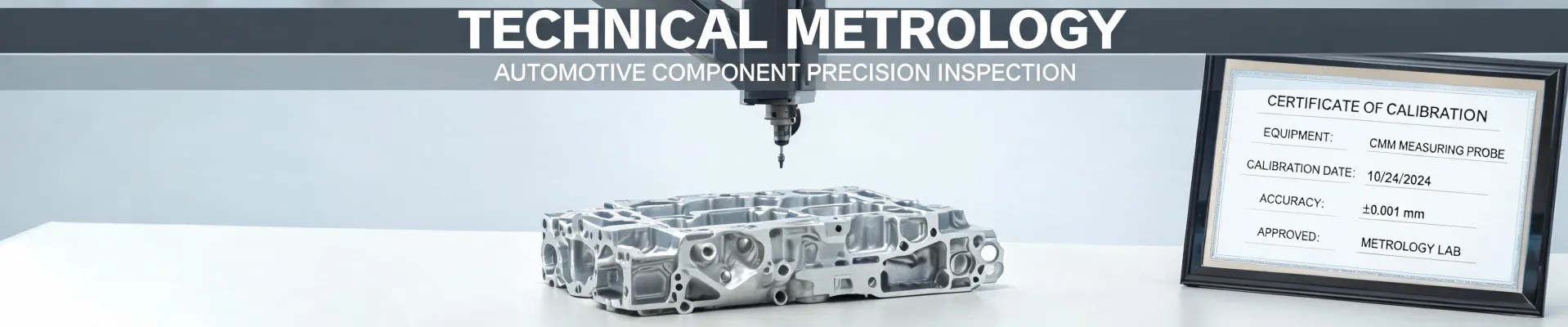
I remember a batch from Q3 2023 where we were running a critical aerospace component. The spec called for a tolerance of ±0.005mm on a key bore diameter. Our CMM reported everything was fine. But the customer's assembly line said the parts wouldn't fit. We spent two weeks and nearly $18,000 in troubleshooting before we found the culprit: our CMM was out of calibration by a hair. Not enough to look obviously wrong, but enough to cost us a ton of time and goodwill.
Honestly, that was the moment I stopped thinking of calibration as just another line item in the budget. I started seeing it as insurance.
The Usual Suspect: What You *Think* the Problem Is
When people search for 'hexagon cmm calibrations', they usually have a specific question in mind. They're thinking: 'How much does it cost?' or 'How often do I need it?'
I get it. The cost of a calibration service—especially for a large gantry CMM or a laser tracker—isn't trivial. And when you're under pressure to keep production costs down, it's easy to push that annual call-out to next quarter, or the quarter after that. You think you're saving money.
The surface-level problem is almost always about budget. 'Can we skip the calibration this year?' 'Can we get a cheaper service provider?' 'Can we just do a quick verification ourselves?' These are the questions I heard from my own finance team just last year.
The Hidden Layer: Why Calibration Gets Deferred (and Why That's Risky)
The deeper issue isn't the cost of the calibration itself. It's a combination of knowledge gaps and false confidence.
First, the knowledge gap. A lot of people don't realize that a modern CMM, like a hexagon machine with a PC-DMIS or QUINDOS setup, is a complex system. Drift isn't always a sudden failure. It's often a slow, almost imperceptible change. The ball bar test might pass, but a specific probe angle might be off by a few microns. That's the kind of thing that slips through a basic check but shows up in a proper calibration audit. I learned this the hard way.
Second, false confidence. I ran a blind test with my team in early 2023. We took the same workpiece and measured it on a recently calibrated CMM, and then on one that was six months overdue, but had a 'satisfactory' customer calibration report from a third party. The result? About 60% of our operators could tell there was a difference in measurement stability, but none could say which machine was 'correct' for a specific datum. The uncertified machine looked fine, but it was basically lying to us.
The question isn't 'Can I save $200?' The question is 'What is my measurement uncertainty, and how confident am I in the data I'm providing to my customer?'
The Price of 'Good Enough': What Happens When You Don't Calibrate
Let me break down the consequences with some real numbers from our own operations.
- The $600 Error: We once let a key comparator gauge drift for 12 months. The cost of the calibration? $600. The cost of the rework when we finally found the issue? Over $8,000. And that didn't include the lost production time or the expedited shipping for the replacement parts.
- The Production Halt: A major automotive customer audited our facility in 2024. They checked our calibration certificates. One certificate for a hexagon laser tracker was for a different, non-critical instrument. The customer flagged it as a quality system failure. We had to halt production on their line until a qualified engineer could verify the tracker's status. That cost us a full day of output on a $2 million project.
- The Invisible Defect: This is the one that keeps me up at night. We produced a batch of 500 medical device components with an out-of-calibration CMM. The parts measured 'in spec' according to our machine. They were all scrap. The worst part? We didn't know for six weeks, until the customer tried to assemble them and found a 0.05mm interference. We had to recall the entire lot. That issue, literally, ruined a week of production.
Why does this matter? Because the upfront 'savings' from delaying a calibration are immediately wiped out by a single incident like this. The upside of saving $600 is a $600 check. The risk of not calibrating is a $20,000 problem plus a damaged reputation. Is that $600 worth potentially losing a client?
Looking back, I should have invested in a better calibration contract sooner. At the time, the quarterly visits seemed like overkill. They weren't.
A Quick Aside: It's Not Just CMMs
This whole logic applies across the board. When I talk about 'calibration', I'm not just talking about CMMs. It's the same principle for your everyday tools. For example, if you're trying to figure out how to test a capacitor with a multimeter, you need to trust that multimeter. Is its voltage reading accurate? And when you compare instruments like a megger vs multimeter, you're really comparing two different measurement systems. If your multimeter is off, your capacitor test is meaningless. The same goes for complex instruments like an hplc—its entire function relies on precise calibration of flow rates and detectors.
A Sane Approach: The Solution is Simpler Than You Think
So what's the solution? It's not about spending a fortune on the most premium calibration package. It's about knowing your measurement uncertainty.
My approach now is simple. First, I work with a supplier who provides a clear scope of accreditation and a real, traceable certificate. Not a 'certificate of conformance'—a real one. Second, I tie our calibration schedule to our production risk. The CMM that measures the critical aerospace bore? It gets calibrated every six months. The calipers that check raw material thickness? Once a year is fine. Third, I treat the calibration report as a dataset, not a receipt. It tells me about the health of my machine. Anomalies in the report are a red flag.
For most mid-sized manufacturers, a professional calibration service from an authorized provider—like the standard hexagon cmm calibration program—offers the best balance of cost, speed, and traceability. You're paying for the paper trail, the data, and the assurance that the next part you measure will actually fit the assembly.
Calculating the worst case of skipping calibration is easy. It's a complete redo of a production run, or a customer quality issue. The best case? You saved a few hundred dollars. Honestly, that expected value says I'll take the calibration every time.