-
1. Is hexagon coordinate measuring machine calibration really that critical, or can I skip a cycle?
-
2. What does a hexagon CMM calibration actually involve? I hear different things.
-
3. We have an absolute encoder atm60 on a critical motion axis. It started giving intermittent position errors. Is it the encoder or the cabling?
-
4. I need a function generator for a basic R&D bench test. Do I really need a high-end model, or will a $200 one work?
-
5. Is balluff a good brand for sensors? We're standardizing and need a reliable partner.
-
6. What was your single biggest mistake in ordering industrial instruments?
-
7. How do I choose between portable CMM and laser tracker for field measurements?
-
8. I'm new to all this. What's the one piece of advice you wish you'd heard on day one?
Quick note before we dive in: I'm the guy who handles calibration and instrument orders for our QA lab. For the past 5 years, I've made—and documented—enough mistakes to fill a small binder. A $3,200 order scrapped because I approved the wrong specs. A 3-day production delay because I assumed a sensor was compatible. I now maintain our lab's pre-purchase checklist. These are the questions I wish someone had answered for me back in 2019.
1. Is hexagon coordinate measuring machine calibration really that critical, or can I skip a cycle?
I've been asked this by every new production manager I've worked with. The short answer: Don't skip it. I learned this the expensive way.
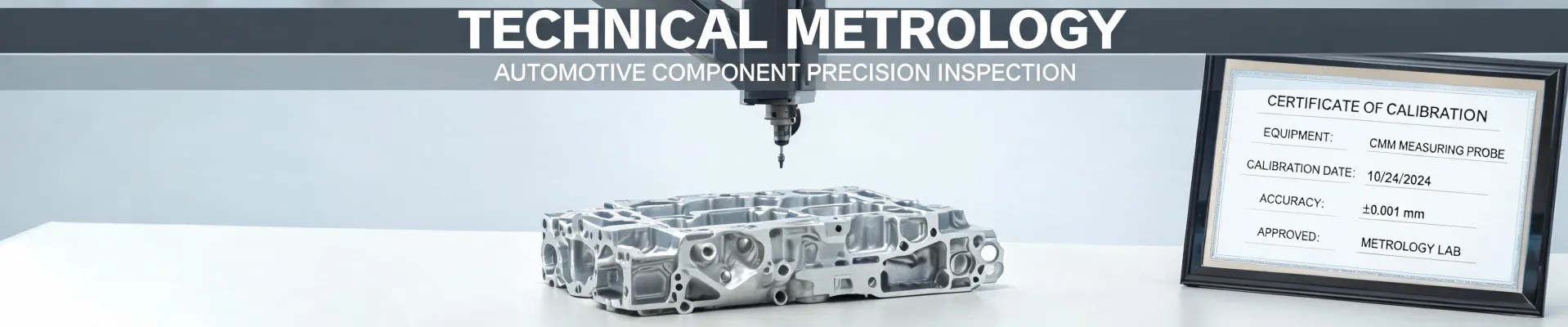
In September 2022, I approved a six-month deferral on our Hexagon CMM calibration to save about $1,800 and free up a week of downtime. We ran parts for a major aerospace client for four months before a routine quality audit caught a 0.012mm drift in the Z-axis probe. Every part measured in that window was suspect. We had to recertify 47 pieces. The rework cost us $4,200 and a black mark in the client's vendor scorecard.
Calibration isn't just about accuracy—it's about certainty. The cost of a calibration cycle is the insurance premium against that kind of discovery.
2. What does a hexagon CMM calibration actually involve? I hear different things.
Honestly, I thought it was just a software check until I actually watched one. A proper calibration (traceable to NIST or equivalent standards) typically includes:
- Geometric accuracy verification using calibrated artifacts (step gauges, ball bars).
- Probe qualification and error mapping.
- Software compensation updates (if applicable).
- Performance verification against the manufacturer's original specs (e.g., ISO 10360-2).
I should add: not all calibration providers are equal. We've used Hexagon's own service, and we've used an independent ISO 17025 accredited lab. Both work, but the level of documentation provided varies. For regulated industries (medical devices, aerospace), the paperwork is as important as the measurement.
3. We have an absolute encoder atm60 on a critical motion axis. It started giving intermittent position errors. Is it the encoder or the cabling?
This is the classic 'encoder or cable?' dance. I've chased this ghost twice. My rule of thumb: check the cabling and connectors first.
In 2023, I spent two weeks troubleshooting an ATM60 encoder on a packaging line. Replaced the encoder (about $900). Same issue. Finally, I traced the problem to a slightly corroded pin in the M12 connector where it entered the junction box. Cleaned it, problem solved. The old encoder was perfectly fine.
Here's the checklist I use now:
- Check for continuity and shorts in the cable (especially where it flexes).
- Inspect connectors for corrosion or bent pins.
- Verify the shield grounding is correct (floating grounds cause weird intermittent issues).
- If the cable is more than 10 meters, re-check the voltage drop at the encoder.
4. I need a function generator for a basic R&D bench test. Do I really need a high-end model, or will a $200 one work?
People think you need an expensive function generator for 'better quality.' The assumption is that price equals performance. Actually, the question isn't cost—it's signal integrity for your specific test.
For basic sine/square waves at under 10 MHz, a $200 generator is often fine. We have an old Siglent unit on our bench that's been running for 4 years without issue. But here's where it bites you: if you need low distortion, stable amplitude, or precise frequency accuracy (e.g., for filter characterization or ADC testing), the cheap ones introduce artifacts that can lead you to wrong conclusions. I've seen a team chase a noise problem for a month because they were using a function generator with 3% THD. Switched to a proper 1% THD unit, the problem vanished.
Bottom line: Match the generator to the test's noise floor. If you don't know, lean toward the mid-range models with published specs you can trust.
5. Is balluff a good brand for sensors? We're standardizing and need a reliable partner.
This question came up during a vendor consolidation project in 2024. I'll tell you what I told our procurement team: Balluff is solid, particularly for their inductive proximity sensors and IO-Link solutions.
We use their BES series prox sensors on a lot of our automated assembly stations. Out of about 300 installed, we've seen maybe 4 failures in 3 years—and two of those were likely due to physical damage (forklift incident, operator error). Their IO-Link masters are also very reliable for data collection.
That said (and I should qualify this), their photoelectric sensors are good but not best-in-class for long-range applications. If you need a 20-meter through-beam for a warehouse door, I'd also look at Banner or SICK. For standard presence sensing, proximity, and industrial connectivity? Balluff is a safe bet.
6. What was your single biggest mistake in ordering industrial instruments?
Easy. January 2023. I ordered 15 function generators for a lab expansion. Identical units, quantity discount, seemed perfect. I checked the price, the delivery date, the basic specs. Approved it myself. The units arrived and they were the wrong output connector type (BNC was correct, but the impedance was 75 Ohms instead of 50 Ohms). Incompatible with our entire test setup. $4,500 worth of gear that needed adapters or returns. A $250 mistake in restocking fees plus a 2-week delay.
Lesson: Check the connector impedance before you click buy. It's the detail that'll get you every time. (I should add: we now have a 'connector checklist' as step zero of any RF or signal generator order.)
7. How do I choose between portable CMM and laser tracker for field measurements?
This isn't a 'which is better' question—it's a 'which is better for your specific job' question. Here's how I break it down:
- Portable CMM (articulated arm): Best for complex, medium-sized parts (e.g., a car door, an engine block) where you need to probe individual features from multiple angles. Accuracy is typically higher than a tracker for one-meter-range measurements.
- Laser Tracker: Best for large-volume measurements (e.g., an aircraft wing, a wind turbine base, aligning a production line). It excels at long distances (10-80 meters) but can be less practical for hundreds of close-proximity points.
I made the mistake of renting a laser tracker for a job that needed detailed surface inspection of 40 small castings. It was overkill and slow. Should have used our arm CMM.
8. I'm new to all this. What's the one piece of advice you wish you'd heard on day one?
Don't trust the model number alone. When you're ordering a Hexang CMM or any precision instrument, verify the specifications against your actual application. The MPE (maximum permissible error) listed in the brochure is usually under ideal conditions. Real performance depends on:
- Environmental temperature control (your lab vs. the factory floor).
- Operator skill (a poorly trained operator can ruin a $100k CMM's value).
- Probe configuration (different probes = different uncertainty budgets).
In my first year (2017), I selected a CMM based solely on a spec sheet. The accuracy was perfect on paper. In our un-airconditioned QA room, it drifted by 5 microns every 2 hours. We spent $15k on retrofits to stabilize the environment. Context is everything. So glad someone finally told me that.
—I'm still maintaining that checklist. Hopefully, this saves you a few of the mistakes I've already made.