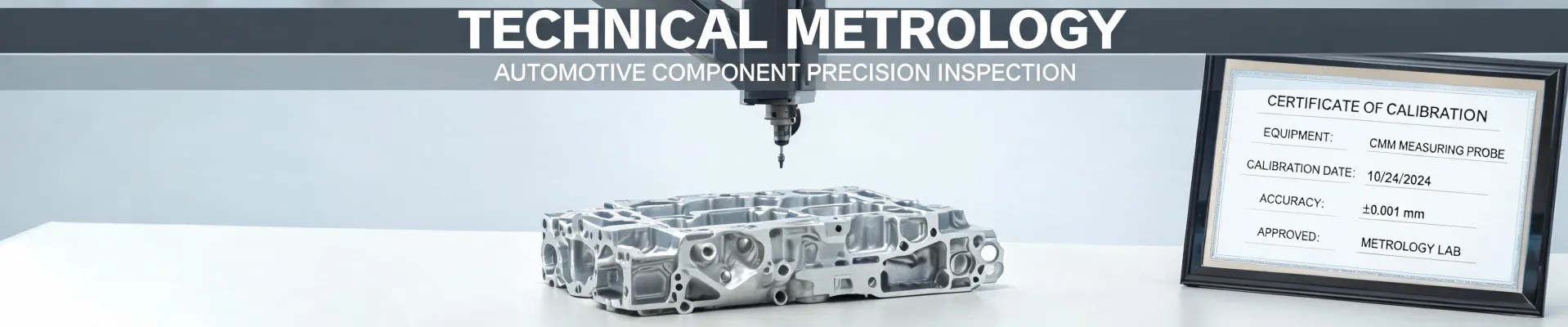
Buy the machine you need, but budget for the training before you send the PO. That is the short version. In the last two years, I've ordered a Hexagon CMM, a Hexagon laser tracker, and dozens of smaller test instruments—including a 179 multimeter, a digital microscope, and an insulation tester that half the staff still calls a megger. The equipment itself was about 60% of the total project cost. The other 40% was training, cables, software licenses, calibration, shipping, and the time nobody put in the first quote. If I had only compared list prices, we would have been in trouble.
Why This Is Not My First Procurement Rodeo
I'm an office administrator for a 120-person testing and calibration company. I manage all lab equipment ordering—roughly $350,000 annually across eight vendors. I report to both operations and finance. When I took over purchasing in 2020, I processed maybe 60-80 orders in my first year. By the end of 2024, I had consolidated equipment orders across three locations and learned exactly where money disappears.
Training Is a Line Item, Not a Suggestion
The biggest mistake I almost made was treating Hexagon CMM training as an add-on. The quote for the CMM looked great. The price of training made it look less great. My first reaction was, we have an operator with 10 years of experience, we do not need the vendor's training. My gut said the same. The numbers said something else: without training, we would have had one machine sitting idle while we learned the controller and software by trial and error. The training cost was about $12,000—maybe $12,500, I'd have to check the final PO—and a single missed week of calibration work would have cost more than that.
So we went with training. It was the right call. The trainer found two things on day one that would have taken us weeks to figure out: a probe calibration sequence and a temperature compensation setting that was off by default. What I mean is that training is not a PowerPoint. For a Hexagon CMM, training includes machine-specific setup, probe configuration, basic programming, and the chance to ask someone who has seen the failure modes. Put another way: you are paying for the person who knows why the machine crashes on a Tuesday morning.
Same for the Hexagon laser tracker. The laser tracker is a high-performance measurement system for large-part verification, alignment, and rotor inspection. But it is not plug-and-play. It is a system: tracker, controller, software, target mounting, and a person who understands line-of-sight measurement and the compensation routine. The quote I approved included a day of operator training. Honestly, I'm not sure the training cost made sense on paper—it was about 15% of the hardware cost, maybe 18%—but it saved us from two weeks of trial and error.
Even after choosing the training package, I kept second-guessing. What if our people could learn from YouTube? The first week until the onsite trainer arrived was stressful. I did not relax until the trainer had us measuring a known artifact to within a few ten-thousandths of an inch, and one of our technicians ran the program solo.
Smaller Instruments, Same Hidden Costs
Because the CMM and laser tracker consumed so much attention, I almost under-planned the rest of the order. The lab request list included a 179 multimeter, a digital microscope, and an insulation tester for the electrical maintenance group. These are much smaller purchases, but they showed the same pattern.
Take the 179 multimeter (the Fluke 179, if you see it listed that way). The base price usually included a set of basic test leads and maybe a holster. The total cost of the unit we needed included a magnetic hanger, a spare fuse kit, and an extra set of probes. None of those were in the base SKU. We bought them in the same order, and the total was $40-to-60 more than the base price. That is not a big number, but a quote that only lists the meter would have been misleading.
The digital microscope was a similar story. We bought one for solder joint inspection and failure analysis. The magnification number is easy to compare—10x, 250x, 3000x—but the software is the real product. A digital microscope with good optics and bad software is worse than a cheap stereo microscope. The one we landed on has a measurement function and a live-image overlay that makes our inspectors' jobs noticeably easier. That is because the vendor included a software demo before purchase. I would not order another digital microscope without seeing the software first.
Insulation Tester vs Megger: The Name Is a Trap
We also added an insulation tester. I kept seeing insulation tester vs megger in comparison searches, and the first thing to understand is that Megger is a brand name that became a generic term, like Kleenex or Xerox. A megger is simply an insulation resistance tester. Some people use megger to mean the instrument, and others use it to mean the act of testing, as in we'll megger the cable.
The practical question is not insulation tester vs megger. The practical question is what test voltage and resistance range do you need. For motor windings, we use a 500V or 1000V DC tester. For low-voltage control electronics, we need a lower-voltage megohmmeter with a smaller range. If you buy a megger that is designed for high-voltage power cables, it may not be sensitive enough for the small circuits we work on. If you buy an insulation tester with only one test voltage, you cannot perform a step-voltage test. Compare test voltage, resistance range, and category rating. The brand name matters less than the spec sheet.
I've never fully understood why calibration quotes for these small instruments vary so much between vendors. My best guess is that each vendor bundles labor, shipping, and turnaround differently. That is exactly why I ask for a line-item quote before buying any tester.
The Pricing Rule That Changed How I Buy
If there is one piece of advice from this whole experience, it is this: ask what is NOT included before asking what is included. The vendor who lists all fees upfront—even if the total looks higher—usually costs less in the end, at least in my experience. It is not about one vendor being evil and another being clean. It is about how a quote is structured. Once a budget number is in someone's head, every add-on feels like an attack.
For our 2024 project, one vendor quote showed a lower hardware line than a competitor, but did not include shipping, calibration certificates, setup, or training. The second quote was $5,700 more on the first line, but included those items. The second total was actually $2,300 lower. That is the whole transparency story.
I am not naming vendors because this is not about a specific company—it is about how anyone should read a quote. I apply the same test to every claim. When a manufacturer says a feature improves uptime or accuracy, I ask for documentation. According to FTC guidance (ftc.gov), advertising claims must be truthful and substantiated. I do not need to be a quality engineer; I just need to ask, show me the data, and then check that the data matches what we do with the tool.
Real talk: I almost skipped the transparency question on smaller items like the 179 multimeter because I was focused on the CMM. That would have been a mistake. A bad small-tool purchase doesn't cost as much as a bad CMM purchase, but it happens more often, and the operational drag adds up.
When My Advice Doesn't Apply
To be clear, this is from a mid-size testing company, not a high-volume manufacturing plant. If you have one CMM and one operator who has used the same software for 15 years, you may not need the vendor's full training course. And if you are buying a 179 multimeter for personal use, you probably do not need a magnetic hanger or spare fuses; you can buy them when you actually need them.
Prices change. The numbers I mentioned reflect what we saw in late 2024 and early 2025. Tariffs, freight costs, and component availability have moved prices on similar orders before, so verify current quotes before repeating this plan.
One last thing: the decision between insulation tester vs megger is not the reason to choose a product. The reason is the voltage, the range, and what your maintenance team is comfortable using. I almost specified a heavy-duty high-voltage insulation tester because I thought megger meant heavy-duty. Turns out we needed two testers at different voltage levels. That was an expensive assumption. We have since made a simple rule: if a product is described with a brand-name generic, find the actual spec wording before you buy.