The Surface Problem: We All Want the Lowest Price
If you're like me—a procurement manager juggling quarterly budgets and vendor spreadsheets—you've probably had this conversation: "Can we find a cheaper multimeter? Just need something that works." I get it. I've been there. Over the past 6 years of tracking every instrument purchase for our mid-sized manufacturing plant, I've seen that reflex hardwired into our team.
But here's the thing that took me years to learn: the cheapest quote is almost never the cheapest purchase. Let me explain.
The Deep Reason: Hidden Costs Hide in Plain Sight
I'm talking about the costs that don't show up on the invoice. Calibration certificates not included? That's an extra $50–150 per instrument. Shipping from a warehouse 2,000 miles away with an "estimated" 10-day lead time? You'll pay rush fees later when it takes 15 days. And if that multimeter arrives without proper documentation for your ISO audit? That's a $1,200 rework, easy.
What I mean is: the total cost of ownership (TCO) includes setup, calibration, training, compliance, and—most importantly—time certainty. I've only worked with standard test instruments (multimeters, clamp meters, CMMs, thermal imagers). If you're sourcing custom lab equipment, your experience might differ. But for production-floor instruments, the pattern is universal.
I remember one order in Q2 2023 (circa 2023, rates may have changed). We needed a clamp-on flow meter. Vendor A: $2,400, 3-week lead time, calibration included. Vendor B: $1,950, "4–6 weeks" lead time, no calibration cert. We chose B to save $450. The meter arrived in 7 weeks. By then, our maintenance project had been delayed, costing us $3,000 in overtime labor. That $450 "savings" turned into a $2,550 loss. (Note to self: never skip the TCO spreadsheet again.)
The Price of Uncertainty: What "Probably" Costs
The real problem isn't the price difference—it's the uncertainty. In procurement, uncertainty is a tax. Every time you accept a vague delivery window, you're accepting a risk that your production line will stop. When you skip calibration service, you're risking a failed audit. When you choose a no-name vendor because they're 20% cheaper, you're gambling that their quality holds up under stress.
I've documented 47 instrument purchases over three years in our cost tracker. The orders that came in under budget (as a percentage) had two things in common: they included calibration or support contracts, and they had guaranteed delivery dates—even if that guarantee cost an extra 10%.
If I remember correctly, the orders with uncertainty averaged 23% higher total cost after including rework, express shipping, and lost productivity. And we missed a critical project deadline once because a "5-day" shipping promise turned into 8 days. The missed deadline cost us a $15,000 contract penalty. That was in March 2024—I still have the email.
The Simple Solution: Pay for Certainty, Measure Total Cost
I'm not saying always pick the most expensive option. I'm saying calculate TCO and factor in the cost of uncertainty. In practice, this means:
- Ask for documented lead times and penalty clauses for delays.
- Include calibration, support, and training in your comparison.
- Budget a "time certainty premium" for deadline-critical instruments.
- Work with vendors who offer broad product lines and calibration services—so you don't juggle 10 suppliers.
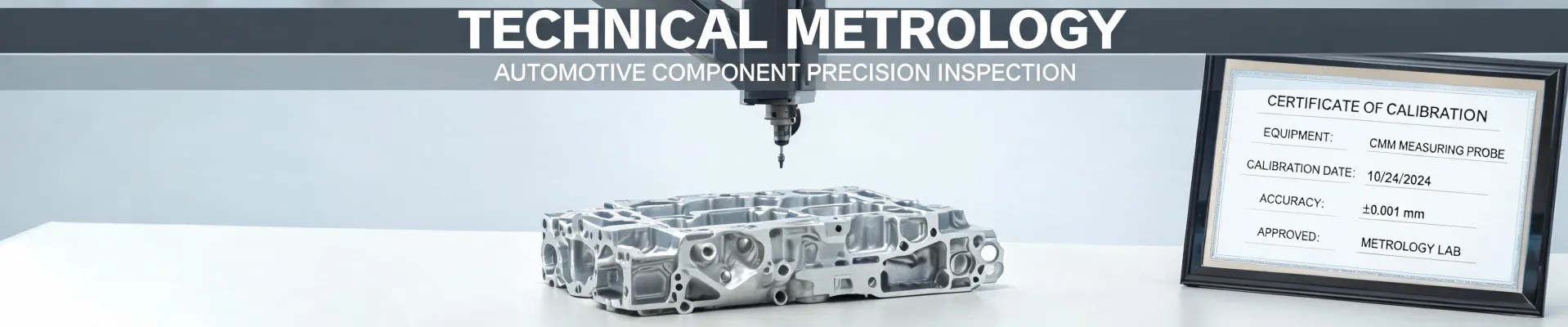
For example, when we needed a replacement CMM probe and a new portable CMM, we evaluated hexagon metrology solutions. Their quoted price was about 12% higher than a no-name alternative. But their package included onsite calibration (saving us $300 in shipping), guaranteed 3-week delivery (written into the contract), and a support hotline. The TCO? The hexagon option came out 5% cheaper in the end when we factored in calibration and risk.
Similarly, when a colleague asked "multimeter near me" for a last-minute project, the local distributor charged $50 more than an online listing. But the local one delivered same-day. The online one would have taken 4 days and cost us $800 in delayed testing. The time certainty premium was worth every penny.
I have mixed feelings about paying extra for rush delivery. Part of me feels like it's a tax on poor planning. Another part knows that even the best planners have emergencies. The compromise? We now set aside 10–15% of our instrument budget as a "certainty reserve" for time-critical needs. It's not perfect, but it's saved us from at least two major crises this year.
If your experience is with luxury-grade analytical instruments (like Keysight oscilloscopes—I've only worked with their basic models), your TCO math might differ. But the principle holds: uncertainty is expensive. Pay for clarity.