-
7 Hexagon Questions Everyone Asks (But Some Are Embarrassing to Admit)
-
1. Which Hexagon CMM probe should I actually buy for general inspection?
-
2. Does Hexagon support cost extra after the first year?
-
3. Can I get help with calibration and training without a huge contract?
-
4. What about Hexagon pressure transmitters—any tips?
-
5. How do I choose an inside micrometer set without buying the wrong size?
-
6. How do I calibrate an Extech pH meter (without losing my mind)?
-
7. Can I get good service if I'm a small customer ordering once?
-
1. Which Hexagon CMM probe should I actually buy for general inspection?
7 Hexagon Questions Everyone Asks (But Some Are Embarrassing to Admit)
I've been handling service orders for Hexagon equipment for about six years now. I also personally made (and documented) about ten pretty stupid mistakes, totaling roughly $5,200 in wasted budget. That's why I now maintain our team's checklist—so nobody else repeats my nonsense.
These are the questions I hear most often, and the answers I wish someone had given me back in 2018.
1. Which Hexagon CMM probe should I actually buy for general inspection?
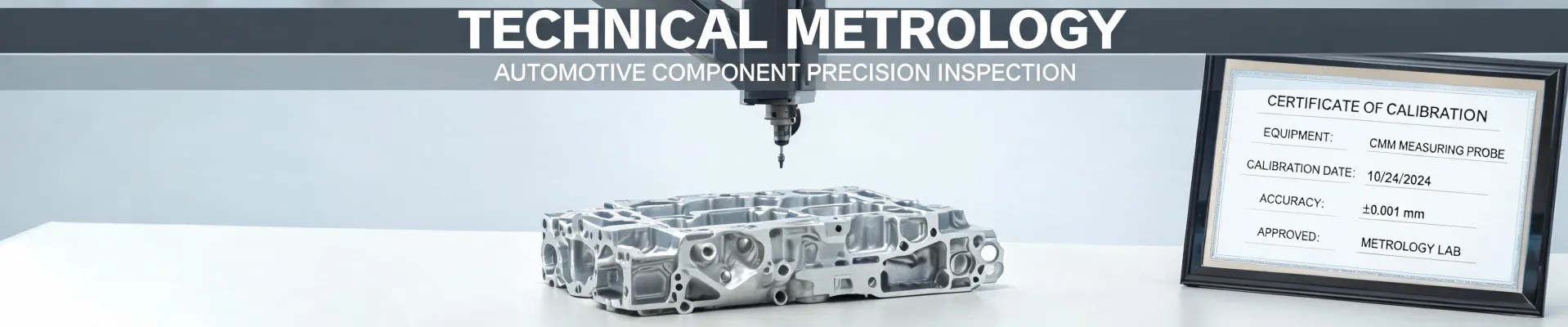
This is probably the most common question, and honestly, I overcomplicated it for years. For 90% of general inspection work, go with a standard touch-trigger probe (like the TP20 or its variants). Don't overthink it.
I still kick myself for buying a high-end scanning probe for our first CMM back in 2021. I'd read all these forum posts about scanning being "the future." Then I spent the next six months calibrating it and barely using its full capability for our basic dimensional checks. If I'd just gotten a standard TP20, we'd have saved $2,000 and been productive from day one.
The scanning probe made sense later, sure. But for starting out? Yeah, no. Start simple. Upgrade when you actually hit a wall.
2. Does Hexagon support cost extra after the first year?
Had to decide on this in a hurry once (literally had 2 hours before the renewal deadline). Normally I'd review every line item with my team, but the deadline was looming. Went with the standard renewal based on trust alone. Then I spent the next week thinking, "Did I just sign up for something I don't need?"
Here's the thing: Hexagon support contracts are not mandatory after the first year on most equipment. But here's what you lose if you don't renew:
- Software updates (which can be critical for new probe compatibility)
- Phone and remote troubleshooting
- Priority scheduling for on-site service
- Calibration certificate management
Our contract costs about $3,200/year for a CMM setup. We've used it maybe 4 times in real emergencies. But each time? It paid for itself compared to the cost of downtime. Just don't expect discounts for small shops—that's not really how it works.
3. Can I get help with calibration and training without a huge contract?
I was worried about this when I first started ordering Hexagon support. The official training courses are good, but they're also kinda pricey (like $1,500+ per person for a 2-day course) and usually in specific cities.
What I've found: Hexagon's regional support teams actually offer pretty flexible options now. You can get a half-day on-site session for around $600-800 depending on location. They'll also set up remote training sessions if that's easier.
The calibration services (per ISO 17025, which is the standard people ask about) are separate from support. You don't need a support contract to get your CMM calibrated by them, but you might get a small discount if you bundle it.
4. What about Hexagon pressure transmitters—any tips?
Okay, so this one's not about CMMs, but people ask about it. Hexagon makes a range of pressure transmitters for industrial applications. The mistake I made: assuming they're all compatible with the same fittings and electrical connections.
They aren't. I ordered a $200 transmitter once and realized it needed a specific connector (M12 vs. DIN plug) that I didn't have. Check the datasheet carefully—like, actually read the fine print—before you order. The product number suffixes matter.
5. How do I choose an inside micrometer set without buying the wrong size?
This might sound basic, but I've seen people mess it up (myself included). An inside micrometer set isn't just one tool—it's a set of rods and a measuring head. The range depends on the combination of rods you select.
The standard mistake is buying a set that covers 50-300mm without checking if your actual measurement range falls in the middle of that span. Calibration of each rod position takes time, and if you're constantly at the extremes, it's less accurate.
When I was starting out, the vendors who treated my $200 orders seriously are the ones I still use for $2,000 orders. So if you're buying your first set and the vendor seems annoyed you're not ordering a full calibration lab... maybe go somewhere else.
6. How do I calibrate an Extech pH meter (without losing my mind)?
This question pops up a lot because Extech meters are reliable but the calibration process isn't super intuitive the first time. Here's what I learned from ruining about $80 worth of calibration solution on my first attempt:
- You need fresh buffer solutions (pH 4, 7, and 10 usually). Old buffer = bad calibration.
- Rinse the probe between each buffer. Don't just wipe it—actually rinse with distilled water.
- The meter usually does auto-calibration if you use the right buttons. Check your specific model's manual (yes, read it, don't just wing it like I did).
The most common issue I see: people try to calibrate with expired buffer. The solution is cheap (like $10-15 a bottle), so just replace it if you can't remember when you bought it. Trust me.
7. Can I get good service if I'm a small customer ordering once?
Small doesn't mean unimportant. It means potential. I've had vendors treat my single-probe orders like they were doing me a favor. And I've had others treat them like the beginning of a long relationship. Guess which ones I still call?
If you're ordering a $100 probe or a used pressure transmitter and the salesperson makes you feel like you're wasting their time, move on. There's always someone else who understands that today's small order could be tomorrow's production line upgrade.
Prices as of early 2025, obviously—verify current rates before ordering anything. But don't let anyone make you feel bad for asking honest questions.