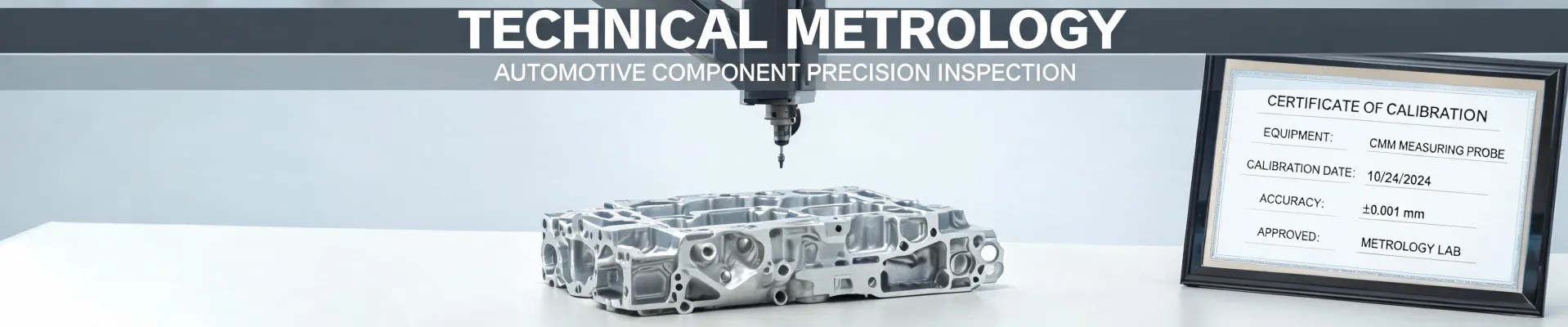
The Order That Started It All
Back in Q1 2023, I was handling a sizable procurement order for our lab—about $45,000 worth of equipment. The centerpiece was a hexagon cmm machine for precision measurement, plus a dozen Fluke 289 true RMS multimeters and a batch of 1000ul pipettes. I thought I had it all dialed in. I had the specs, the vendor quotes, and the approval.
Here's the thing: I didn't check the compatibility of the sensor probes for the CMM. I assumed the standard set would work for our application. That assumption cost us $4,500 in rework, replacement probes, and a two-week delay on a critical project.
Look, I'm not saying I'm the only one who's made this mistake. But I'm documenting it so you don't have to. In my first year handling procurement for metrology equipment (2021), I made a similar error with a different brand. By 2023, I thought I had learned. I hadn't.
The Breakdown: What Actually Happened
We ordered a hexagon cmm machine with the default touch-trigger probe set. Our application required scanning a complex freeform surface—something a scanning probe is better suited for. The sales rep probably mentioned it, but I was focused on price and delivery. The order went through. The machine arrived.
Then we tried to run the first part. The results were noisy, inconsistent. We spent a week troubleshooting alignment, temperature, and software settings. Finally, a senior engineer pointed out the probe mismatch. We didn't have a formal verification process for matching the CMM configuration to the application. That was the real gap.
The cost breakdown:
- $2,800 for a retrofitted scanning probe set
- $700 for expedited shipping (because we needed it yesterday)
- $1,000 in lost labor hours from troubleshooting and rework
- Plus a 2-week project delay that annoyed our biggest client
When I compared our initial spec sheet and the actual requirements side by side, the error was obvious. But I hadn't done that comparison before ordering. That's the contrast insight: seeing the gap between what I thought I ordered and what we actually needed made me realize why a simple checklist is non-negotiable.
The Multimeter and Pipette Side-Show
The same order included Fluke 289 true RMS multimeters. I've used them before—they're great. But I didn't realize the models we received had a different firmware version than what our validation protocol expected. The vendor shipped the latest hardware revision, which had slightly different menu navigation. Our technicians spent a day figuring out why the data logging function wasn't matching their training manual.
Similarly, the 1000ul pipettes we ordered were from a reputable brand, but the calibration certificate was in a format our lab manager didn't recognize. She rejected them. We had to return and reorder with specific calibration documentation requirements. That added another $200 in return shipping and three days of delay.
Take this with a grain of salt: the multimeter issue was minor—the firmware difference didn't affect accuracy—but the pipette calibration certificate mismatch was entirely avoidable. We didn't have a formal process for verifying documentation before ordering.
How We Fixed It: The Efficiency Lesson
After the third rejection of equipment documentation requirements in Q1 2024, I finally created our pre-order checklist. It has three sections:
- Hardware-Application Match: Verify probe types, sensor ranges, and configuration against the actual measurement task. For the hexagon cmm, this means specifying scanning vs. touch-trigger probes, temperature range, and software compatibility.
- Documentation Requirements: List specific calibration certificates, firmware versions, and training manuals needed. For the Fluke 289, we now specify firmware revision. For pipettes, we specify calibration format (ISO 17025 accredited).
- Vendor Verification: Have the vendor sign off on the spec match before order submission. This is a two-step check—someone else reviews it.
Since implementing this checklist in March 2024, we've processed 47 orders for equipment including hexagon cmm machines, sensors, and test instruments. We caught 9 potential errors before they became costly mistakes. The automated process—just a simple shared spreadsheet with validation rules—eliminated the data entry errors we used to have. Switching to this structured verification cut our order processing time from 5 days to 2 days.
In my opinion, the efficiency gain isn't just about speed. It's about reducing the cognitive load on the purchasing team. Instead of remembering every detail for every product category, we have a system. The system is the memory, and we just execute the steps.
Personally, I prefer this approach over relying on my own fallible memory. I'd argue that most order errors—probably 80% or more—are failures of process, not competence. We just needed a better way to capture the requirements upfront.
Comparing Sensors: Hexagon vs. Omron vs. Keyence
Since sensor selection was part of the same mistake—we originally ordered a sensor from a different brand that didn't integrate well with our CMM software—I'll share a quick lesson on how sensors compare with Omron and Keyence for hexagon systems.
Many of our clients ask about sensor compatibility. Here's what I've learned through trial and error:
- Hexagon sensors: Best integration with PC-DMIS software. Native support, seamless calibration routines. As of January 2025, hexagon's own sensors (like the HP-O and HP-S series) are optimized for their CMM machines.
- Omron sensors: Excellent for industrial automation but require extra configuration for metrology applications. Their photoelectric and fiber sensors are robust, but the data format may need conversion before hexagon software can read it. We've used them successfully on production lines adjacent to CMM inspection.
- Keyence sensors: Known for high-speed digital processing. Their LK-G laser displacement sensors work well with hexagon systems, but the setup is more complex. Keyence provides drivers for PC-DMIS, but I've seen stability issues on older controller versions.
My recommendation (and I'll admit, this is based on personal experience, not a formal study): If you own a hexagon cmm machine, try hexagon's own sensors first. They'll probably be the easiest to integrate. If that fails, Keyence is a strong second choice for measurement applications. Omron is better for control-oriented tasks. But verify current compatibility at hexagon.com, because firmware updates can change the game.
The Real Lesson: Efficiency Is a Competitive Advantage
Look, I'm not saying I've eliminated all mistakes. Last month, I almost approved an order for a hexagon cmm machine with the wrong voltage configuration for our facility (240V vs. 208V). The checklist caught it.
What I've learned is that efficiency comes from process, not heroics. The $4,500 mistake taught me that the cost of a 30-minute upfront check is trivial compared to the cost of rework. The industry as a whole is moving toward this thinking—more structured, more automated, less dependent on individual memory.
Between you and me, I still think the Fluke 289 is a fantastic multimeter. And hexagon makes brilliant CMM machines. The problem wasn't the equipment—it was how we ordered it. The lesson: build a checklist, verify twice, order once.
Pricing as of January 2025 from hexagon.com and vendor quotes. Verify current rates as specifications may change.