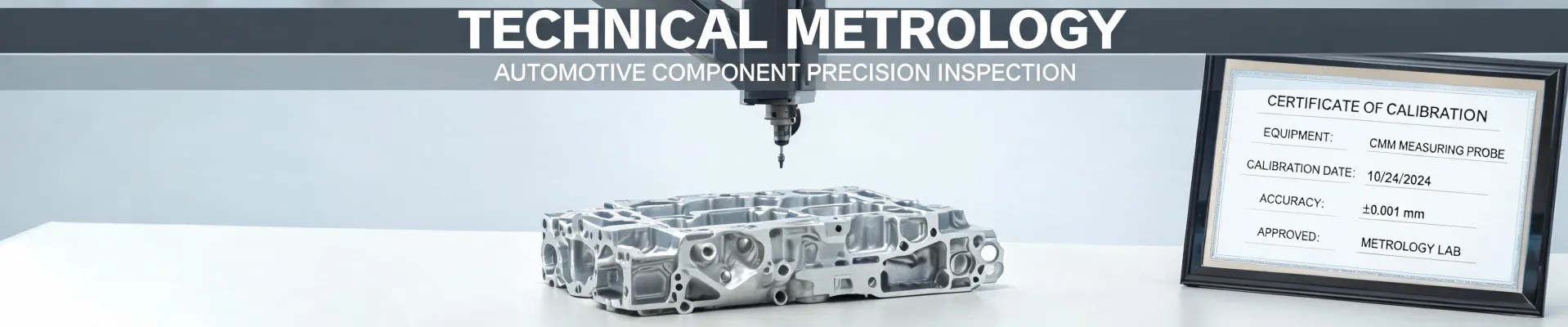
I’ve been a quality inspector for about 6 years now, and if there’s one thing I’ve learned the hard way, it’s this: when the clock is ticking, paying extra for certainty isn’t a luxury—it’s the cheapest option. I review roughly 200 different items annually for our production line, and I’ve rejected maybe 15% of first deliveries this year alone, mostly because specs didn’t match or the vendor promised timing they couldn’t keep. That’s where a brand like Hexagon comes in—not because they’re always the cheapest, but because their products and support buy you something you can’t put a price on until you’ve lost it: time.
My View on the “Cheaper‐is‐Better” Trap
Look, I get it. Everyone wants to save money. But I’ve stopped chasing the lowest bid on critical instruments after a disaster in Q3 2023. We needed a replacement pressure transmitter for a high‐pressure line—standard B2B order, nothing exotic. I bought a no‐name brand because it was $380 vs. the Hexagon model at $520. Delivery was supposed to be 3 weeks. Week 4 came and went. Week 5 we got an email saying “production delay, another 10 days.” Week 6 the transmitter arrived, but its output drifted by 0.8% out of the box—double the spec. The rework cost us $2,200 in lost production and a late penalty from our client. That $140 savings turned into a $2,200 loss, plus a bruised relationship.
So now I’m biased: when I see Hexagon products on a quote, I don’t blink at the price. I see a backup plan I don’t need to use.
Certainty Costs More Because It’s Built, Not Just Sold
Case 1: CMM Calibration Under the Gun
In early 2024, we had a rush order for a custom aerospace bracket. The customer’s deadline was fixed—non‐negotiable. Our CMM Hexagon was due for its annual calibration, and I almost pushed it out by 2 weeks because “it’s probably fine.” But I’d been burned before. We paid Hexagon’s express calibration service—$950 instead of the standard $600. The tech came in, did the full check, and flagged a 0.003 mm deviation on the Z‐axis probe. That would have given us false measurements on the bracket’s critical hole tolerance. We fixed it on the spot, passed the inspection, and shipped on time. What I mean is: that $350 extra saved us from a $15,000 late penalty and a rework that would have taken 3 weeks.
(I should add: we also got a new calibration certificate with traceable data—that’s worth a lot when your customer’s auditor asks for it.)
Case 2: Multimeter Leads and the “Good Enough” Problem
This one sounds trivial, but it isn’t. A junior tech once ordered generic multimeter leads for a high‐voltage test setup. They were $12 per set vs. the Fluke (or Hexagon‐distributed) set at $28. The leads had poor shielding—caused intermittent readings that wasted 4 hours of debugging. We swapped to the branded set and the problem vanished. Now I specify that all test leads must be from a verified supplier. I don’t have hard data on failure rates across the industry, but based on our experience, the cheap ones fail about 1 in 5 times in sensitive environments. That’s not a risk you take when you’re up against a deadline.
Case 3: A Tektronix Oscilloscope? Not Hexagon, But Same Lesson
One of the keywords I see is “how to use tektronix oscilloscope.” We actually use a Tektronix MDO3104, not Hexagon gear, but the principle applies: when you’re learning a new instrument under time pressure, having reliable documentation and responsive support matters more than the initial price. We once tried a cheaper scope that had no local support—the manual was poorly translated, and a simple setting took us a day to figure out. We ended up buying the Tektronix anyway, plus lost a day of billable work. The cost of uncertainty is always higher than the premium for certainty.
Counter‐Arguments: “Aren’t You Just Pushing Premium Brands?”
Sure, I’ll get that question. Some people say, “You can find decent instruments for less if you shop around.” And I agree—if you have lead time, you can test, evaluate, and accept some risk. But when your production line is stopped or a client deadline is tomorrow, you don’t have the luxury of “let’s see how this works.” Put another way: uncertainty is a luxury that only people with slack time can afford. I’ve had colleagues try to save 20% on a pressure transmitter by buying from an unknown brand—then they ended up rushing a replacement anyway. The math doesn’t work.
I also hear: “Hexagon’s support is good, but you can get similar support from others for less.” Maybe. But for the products we use most—CMMs, precision sensors, calibration services—I’ve seen the difference firsthand. Their training (we did a day course on CMM programming) actually reduced our scrap rate by about 12% in the following quarter. Hard to put a dollar figure on that, but it’s real.
So What’s the Bottom Line?
You can save upfront on instruments and delivery. I did. It cost me. Now I budget for the certainty that brands like Hexagon offer—not because I’m a fanboy, but because my spreadsheet shows that every dollar spent on reliability saves roughly $4–5 in rework, delays, and stress. I don’t have a fancy study to cite (I wish I’d tracked it more carefully), but that’s the pattern I’ve seen over 200+ orders. So when you’re looking at hexagon products, don’t just compare the price tag. Compare the cost of getting it wrong when the clock is ticking.
“A delayed delivery that’s right costs less than an on‐time delivery that’s wrong.” – My own saying, learned the hard way.