The Spec Sheet That Cost Us Time and Trust
Back in 2019, I was handed my first major equipment purchase. The task? Get us a coordinate measuring machine. My boss, a busy plant manager, threw a budget number at me and said, "Get the best specs you can find."
I dove in. I read every spec sheet I could find—accuracy, repeatability, max workpiece size. I was confident I'd come back with the perfect machine. I didn't.
What I came back with was a textbook mistake that cost us roughly $12,000 in rework, delays, and lost credibility. I'm going to walk you through it, because if you're looking at a hexagon cmm or any other system, I'd rather you learn from my errors than repeat them.
(This is the story of a specific order, circa late 2019. Names and some details are blurred, but the lessons are real.)
The Background: A Production Line Bottleneck
We were a mid-sized precision engineering shop. Our quality team was bottlenecked, using hand tools and surface plates. We needed a CMM. The budget was around $45,000, but my boss hinted we could stretch to $50,000 if it meant a major improvement.
The conventional wisdom I'd heard was: "Get the highest accuracy you can afford." It seemed logical. Who wouldn't want a more precise tool? I focused on a manufacturer known for its metrology-grade equipment. I'll be frank—I was looking at a specific model from a well-known brand, but after reading endless forums, I was also drawn to the capabilities of a hexagon cmms system, particularly the 424d laser distance meter integration I saw in a demo. It promised incredible field measurement capability.
Everything I'd read about CMMs said that higher accuracy was always better. In practice, I found the opposite was true for our specific context—and I only discovered that after making a costly choice.
The Process: Speed, Specs, and a Missed Calibration
Had roughly two weeks to decide. Normally, I'd have more time for vendor evaluations, but we had a major contract coming in. I was under the gun.
I zeroed in on a hexagon cmm model. The specs were impressive. The sales rep was knowledgeable. I was ready to sign. Then, in my rush, I made the classic error: I compared the base machine price.
I got a quote for $48,000. It was under budget! I was thrilled. But I didn't ask about the full package.
The $48,000 quote turned into a $60,000 reality after shipping, a custom foundation work, and the first-year calibration service. That $12,000 difference? It wasn't a surprise to the rep—it was standard. But I hadn't asked the right questions (note to self: always ask for a full TCO list).
The Error (and How I Found It)
The machine arrived. It was beautiful. We had it installed. The operator training was good. And then we ran our first batch of critical parts.
The results were all over the place. Not the machine's fault—the hexagon cmm was accurate. But we hadn't accounted for the environmental controls. The room fluctuated by 5 degrees. Our production floor wasn't ready for a precision instrument. The CMM's internal compensation could only do so much.
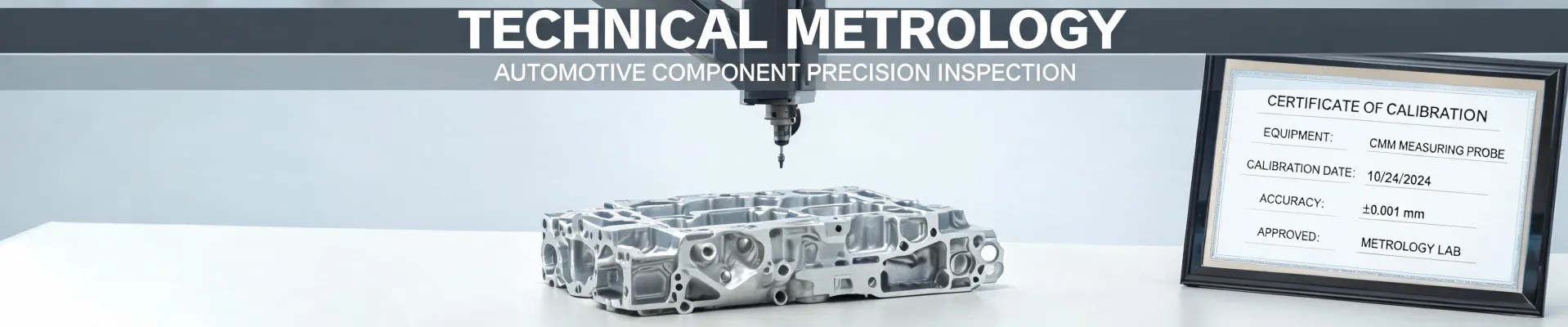
Worse, I had ignored the hexagon cmm calibration schedule. The machine needed a re-certification after the move. I'd assumed it was pre-calibrated. It was, but we'd moved it and the environment changed. The first post-install audit was a disaster. We spent a week re-measuring everything.
That's when I learned: the base price is just the entry fee. The real cost is the operational readiness.
The Result: A Painful, $12,000 Lesson
In total, the rushed purchase cost us:
- $3,200 for emergency environmental stabilizers.
- $4,500 for a rush calibration and on-site support.
- ~$4,300 in lost production time and re-measured parts.
Plus, the credibility hit with our new client when we missed a delivery deadline. That's harder to quantify, but it stung.
The $500 quote for the base machine? It was a mirage. The all-inclusive, properly planned solution was actually cheaper in the long run. I now calculate TCO before comparing any vendor quotes.
A Moment of Clarity
I remember standing in the QC room, watching the technician run a five-hour program to re-verify a batch of parts. I felt like an idiot. But in that moment, I also realized something: the hexagon cmm itself wasn't the problem. It was my decision-making framework.
Take this with a grain of salt: Most of these issues are preventable with proper specs and planning. But I had to learn it the hard way.
The Reckoning: A Checklist is Born
After the third rejection in Q1 2020, I created a pre-purchase checklist. It's now our standard. Every significant instrument purchase goes through this.
Key items on the list?
- Full TCO, not just base price. Include installation, training, re-calibration, environmental, and software costs.
- Environmental assessment. Is your shop ready for the tool it's buying?
- Calibration contract. Never skip this. A re-certification is non-negotiable for critical measurements.
- Operator readiness. Do you have the right people trained? A week of training isn't enough for a complex system.
I now maintain this checklist myself. We've caught 47 potential errors using it in the past 18 months. It's saved us far more than the $12,000 mistake.
The Enduring Lesson: Think in TCO, Not Price
When you're looking at a hexagon cmm or a handheld cmm or even a simple fluke multimeter, resist the urge to compare only the purchase price. The $500 multimeter might need a special probe, a calibration sticker, and a certification. That $200 model might be the better deal.
For example, when someone asks, "Which fluke multimeter should i buy?" the answer isn't just about specs. It's about what you'll use it for, what accessories you need, and whether you need that certified calibration report (which adds $50-$100 to the price).
The lowest-cost vendor may have the highest TCO. It's a tough lesson, but it's one I only had to learn once.
So, before you sign on the dotted line for that new CMM, take my advice: don't just buy the specs. Buy the readiness. Buy the support. Buy the peace of mind. It's cheaper in the long run.