We can do everything is not a value proposition. It's a warning.
I'm a quality and compliance manager at a mid-size precision manufacturing company. I review every calibration certificate, incoming inspection report, and test instrument before it reaches the production floor. That's roughly 300 items a month. In 2024, I rejected about 11% of first deliveries. The reasons were boring: wrong documentation, missing uncertainty budgets, products that didn't match the approved spec. The underlying cause was not boring at all. Too many suppliers were saying yes to things they didn't truly understand.
Honestly, I used to be the buyer who loved one huge catalog. One login, one PO, one accounts payable contact. It felt efficient. It is efficient, until it isn't. When I first started managing supplier qualifications, a long product list looked like a sign of competence. More SKUs meant more capability, right? Five years later, I've learned the opposite. Expertise is specific. The supplier who says 'this isn't our core strength, and here is who does it better' earns my trust for everything else. The supplier who says 'we can handle that too' makes me reach for the contract terms.
Why I Stopped Trusting Product Lists
When I order a replacement stylus from the Hexagon shop, I get a specific answer. Not a product family overview, but a part number that works with my probe head and my measuring routine. When I ask a generalist supplier about the same stylus, I get a question about my machine model. That's not a criticism of generalists. It's a sign of where their attention goes.
Measurement instruments are not like office supplies. The difference between a correct reading and a wrong one often hides in second-order details: temperature coefficients, probe qualification, input loading, calibration traceability. A specialist knows that. A product list doesn't.
The 500ml Centrifuge Tube Test
Here's a test I use with procurement. Before buying laboratory plasticware, ask the supplier to explain why a 500ml centrifuge tube is rated for a certain maximum RCF. If they can tell you the resin type, the wall thickness, and the temperature range, you can trust them. If they quote only the price and the pack size, that's a red flag.
A 500ml centrifuge tube looks like a commodity. But if it fails under load, the cost isn't the tube. It's the lost sample, the downtime, and the cleanup. I've seen it happen. A lot of product specs list 'sterile' but skip the maximum RCF. If you see that, ask for the test method. The supplier should be able to answer.
Multimeter Input Impedance: The Question Everyone Skips
Most buyers choose a multimeter by display counts, accuracy, and safety rating. Those matter. But the question I ask first is: what is the multimeter input impedance? For general-purpose digital multimeters, 10 MΩ is common. That's fine for many circuits. But if you're measuring a high-impedance source, say a 40 MΩ resistive circuit, a 10 MΩ input will load the circuit and drag the reading down. You're not measuring the circuit anymore. You're measuring the meter's effect on it.
I saw this show up in a real fault. A few years ago, a tech was chasing an intermittent voltage drop on a sensor circuit. The sensor output was high impedance. His meter was a good brand, but its input impedance was too low for that circuit. The meter was loading the circuit and showing lower voltage. We switched to a high-impedance instrument, and the 'intermittent' problem disappeared. The reading changed because the meter changed the circuit. That's a metrology issue, not a wiring issue.
So when I evaluate a multimeter, I want the supplier to discuss input impedance without me having to pull the datasheet. The safety side also matters. The meter should meet IEC 61010-1 for the measurement category you're working in. If your supplier can't explain the relationship between input impedance and measurement uncertainty, they're not a metrology partner. They're a box shipper.
Hexagon CMM Calibrations Taught Me About Specialists
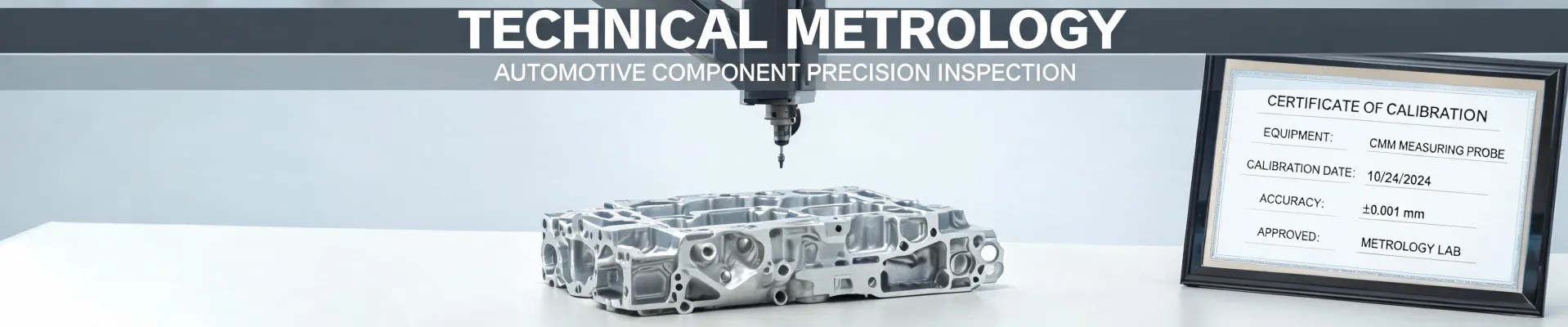
I've used Hexagon CMMs at two plants. I schedule Hexagon CMM calibrations the way I schedule preventive maintenance on a press: before the machine tells me to, not after. A CMM is not a tool that stays accurate by wishing. It drifts. The drift comes from temperature, from heavy probing, from contamination on the scales, and from the probe head itself.
The relevant standard is ISO 10360-2, which covers acceptance and reverification tests for CMMs used for linear measurements. When I receive a calibration report, I want to see the test method, the measurement uncertainty, and traceability. If a calibration lab cannot quote uncertainty or cannot claim ISO/IEC 17025 accreditation for that specific test, I don't accept it. I learned this the hard way after accepting a report that looked official but didn't state uncertainty. The next validation run failed.
The first time I saw a CMM calibration report that didn't mention ambient temperature range, I didn't know enough to reject it. Now I do. Temperature is not a footnote. It's the story. Here's what I didn't expect when I first started: the best CMM support conversations are not about the machine. They're about the measuring strategy. How do you qualify the stylus? How do you compensate for part temperature? How often should you run an interim check with a reference artifact? That's depth. You can't get it from a catalog page.
And Yes, Technique Still Matters
On the handheld side, the same logic applies. During a training audit last year, I watched an operator measure a ground shaft with a micrometer. He zeroed the tool correctly. He used the ratchet. But he didn't measure at multiple positions, and he didn't account for the heat from his hand. The tool was a quality instrument, and the mistake was not the equipment's fault.
This is why I value suppliers who explain how to use a Starrett micrometer, or any precision tool, with the same seriousness they give to selling it. A micrometer is not a caliper with a fancy dial. It has flatness, parallelism, and temperature constraints. If you don't understand the technique, you don't understand the measurement. Good suppliers train. Great suppliers train and then check that you got it.
But What About Consolidation?
I have mixed feelings about consolidation. On one hand, fewer vendors means less procurement overhead, simpler invoices, and better pricing. On the other hand, broad-line vendors often lack application depth across every category. When I need a lab specialist for a 500ml centrifuge tube, a metrology specialist for a CMM, and an electrical specialist for a multimeter, I am willing to manage three relationships if that gives me three people who actually know their field.
That's not a romantic idea. It's risk management. A few years ago, we tried consolidating test equipment and lab consumables with one distributor. The purchasing dashboard looked great. Then a batch of centrifuge tubes failed under load. The distributor didn't have an engineer who could answer the second question. We lost two weeks, and the project slipped. The cost of that slip was more than any discount.
I'm not saying all broad-line suppliers are bad. Some have real depth in multiple categories. But when I hear 'we can do everything,' I want examples, not promises. Show me the engineer who has actually run the test. Show me the calibration report. Show me the method.
The Real Reason I Trust a Supplier Who Knows Their Limits
When a supplier says 'we can do everything,' what they're really saying is 'we haven't tested our limits.' I don't want to be the first customer to find out where those limits are. I want a supplier who has already drawn the boundary and can tell me when to go elsewhere.
I also want a supplier who tells me when I need less. Last month, I called the Hexagon shop for a replacement stylus. The person on the other end asked what I was measuring, at what temperature, and with which controller. She then told me I might not need the more expensive stylus. That conversation saved me money and made me trust the brand more than any ad.
So my position hasn't changed: specialist over generalist, within reason. In measurement, expertise is the product. Everything else is just a transaction. I know that now. I wish I had known it five years ago.