After five years of buying and renting test equipment for an engineering group, the conclusion I keep coming back to is simple: the cheapest quote is rarely the cheapest project. In 2023, I watched a $600 apparent saving turn into a $7,800 delay, and a support question no one answered for three weeks. Before you order anything from a CMM manufacturer, a sensor supplier, or a rental vendor, spend ten minutes checking their support process. It'll save you more than any discount.
Why does this matter? Because a support gap always shows up after the return window closes. This is also why one of the first questions I ask now is "where does support actually live?" When we buy through Hexagon Shop, for example, the support records and calibration docs are attached to the order. That might sound trivial—until finance asks for a three-year-old certificate. In 2024 that happened to us. Our quality manager needed the calibration history for a customer audit, and I pulled it up in minutes because the order history included the certificate. (Thankfully.)
Before you decide I'm just promoting one brand, let me explain the bias in my sample. My background: I'm an office administrator for a 90-person company, and I've managed equipment purchasing since 2020. That's roughly 60-80 orders per year, about $250,000 in spend, across eight vendors. I report to both operations and finance. I'm not an applications engineer, so I focus on process, documentation, and whether the vendor will pick up the phone.
The rental trap: Raman microscopes aren't an exception
One of my clearest lessons happened in Q2 2024, when a lab manager asked me to arrange a Raman microscope rental for a polymer contamination study. The initial quotes were:
One quote was $4,800/month, no training, no calibration certificate. Another was $6,800/month, included two days of training and a 48-hour support response SLA.
Every spreadsheet said the cheaper option. The "specs" were identical. My gut said something was off, because the cheaper vendor couldn't provide the unit's service history. I went with the more expensive one. Even after choosing it, I second-guessed the extra $6,000 over three months. The first week of clean data ended that doubt. (And it confirmed that the cheaper quote would have been a project killer.)
Now, for any rental—Raman microscope, CMM, thermal camera—I ask four questions: What is the exact model year and usage history? Is calibration certification included? What is the support SLA during business hours? And who pays if the instrument arrives damaged? These four questions expose most "too good to be true" quotes.
Magnetic cylinder sensors: small parts, real costs
Another area where I used to treat small parts as commodities is magnetic cylinder sensors. They look simple: a sensor, a cable, a switch. But I once bought 20 of them at $8 each to replace the $22 version for a machine builder's prototype. Six failed within three months. The cable strain relief cracked on two, one shorted from coolant, and three wouldn't trigger because the cylinder's magnetic field wasn't strong enough for that sensor's threshold. Replacing them cost about $1,400 in labor and shipping. (Ugh.)
Now I order one sample first, verify it with the actual cylinder, and reorder from a supplier that provides a datasheet with electrical ratings and IP rating. The $14 difference per sensor is cheap insurance. Small parts can cause big delays, and big delays are never in the budget.
Hexagon support and the value of order history
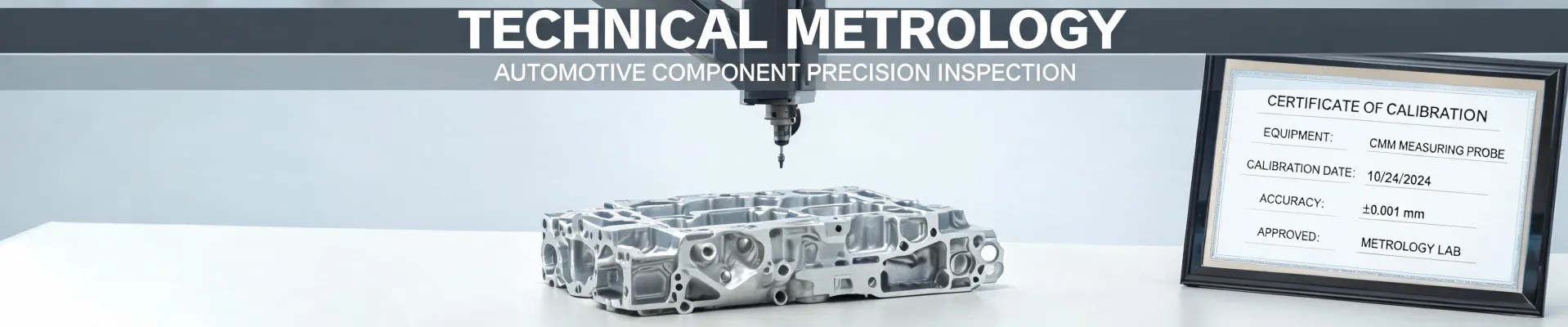
Hexagon support is a bit of a mystery until you use it. Our engineering group owns a Hexagon CMM, so I've interacted with their service team and with the online ordering portal. I used to buy replacement parts through whatever distributor had the lowest price. That ended when a distributor sent what looked like a genuine touch-trigger probe but came with no warranty and no calibration report. Our quality manager wouldn't accept it. The right part from Hexagon Shop cost 12% more, but it arrived with a proper calibration certificate and an updated warranty registration. The calibration certificate matters because it's the documentation of traceability under ISO 10360. In the end, the 12% was a rounding error compared to the cost of explaining a missing document to a customer auditor.
If you buy a major CMM or sensor system, I'd also test Hexagon support before you sign. Call the support line with a simple question and see how long it takes to reach a human. If that experience is painful, the rest of the relationship will be too.
How to use a Tektronix oscilloscope (if your job is buying them, not operating them)
People often email me asking "how to use Tektronix oscilloscope?" because they found a good price on one and want to know if it's worth it. Here's my practical answer: start with the entry-level TBS series, and don't buy a high-end MDO for someone who has never turned a scope on. The basic procedure isn't complicated:
- Connect the probe to Channel 1.
- Attach the ground clip.
- Press Auto Set.
- Adjust vertical scale (volts/div) and horizontal scale (time/div).
- Set the trigger source to the same channel and turn the level dial until the waveform stops rolling.
The last step is the one people miss. According to Tektronix's own educational materials, triggering is what gives you a stable display; without it, the trace looks like it's moving even though the signal isn't. I learned this from listening to one of our techs, but it matches what I've watched in training sessions.
The counterintuitive part is that a bigger, more expensive scope can be harder to use. An advanced MDO with deep menus is overwhelming for a beginner. The TBS2000 is less flashy but much better for training. If you don't have an experienced engineer on staff, buy for the new hire, not the fantasy version of your lab.
When my advice doesn't apply
Fair warning: my experience covers mid-size R&D and manufacturing support, not pharmaceutical GMP or aerospace certification labs. If a regulated inspector requires a certain accreditation, your purchasing process will be different. My sample is limited to U.S.-based vendors, so international import/export issues are outside my lane. And if you're buying a basic tool for a one-off project, you don't need the same level of support. The key is to decide before you order: is a delay a minor annoyance or a project killer? If it's a project killer, pay for the support process, not just the hardware. I do not mean to say that you should always choose the expensive option. I mean you should know the actual cost of getting stuck.
Pricing and rental terms I mention (like the Raman microscope quotes) were accurate as of Q2 2024. The equipment market changes fast, so verify current terms and support SLAs before budgeting.