-
The 'Everything' Trap
-
The Positive Displacement Pipette Lesson
-
Fluke vs Klein Multimeter: Because 'Better' Depends on the Job
-
The One Pro Thermal Camera for Android and the Shortcut Trap
-
Hexagon CMM Training: Boundaries Are a Feature
-
But Isn't 'Wide Range' the Same as 'Specialized'?
-
The Word 'No' Is a Quality Signal
Six years ago, I became the person who handles instrument procurement and service orders for a small quality laboratory. It sounded straightforward. It wasn't. In that time, I've personally made eleven significant mistakes that cost roughly $28,000 in wasted budget and delays. I documented all of them because I was tired of making the same ones.
The lesson that came out of all those mistakes? In my opinion, the most dangerous phrase in the instrument supply business is: 'We do everything.'
The 'Everything' Trap
This is an opinion piece, not a neutral buyer's guide. I'm not saying that every broad-line supplier is bad. I am saying that when a supplier claims to be excellent at everything, they stop evaluating your application. That's a problem. Precision measurement is not about having the most products. It's about knowing which product is the right tool for a specific job.
I used to believe that 'one-stop shop' meant 'one less headache.' Now I treat it as a request for more information. If a vendor says 'we can handle that,' the next question is always: 'What specifically have you handled before? Show me the documentation.' (Note to self: ask this before the purchase order, not after.)
The Positive Displacement Pipette Lesson
In 2019, I submitted an order for 48 positive displacement pipettes. I specified the model number. The salesperson said, 'Yes, we carry pipettes.' I assumed they understood the specification. They didn't. The boxes arrived with standard air-displacement pipettes. They looked similar unless you compared the tip design.
It's tempting to think a pipette is a pipette. But the 'one pipette fits all' advice ignores the chemistry of the liquid and the tolerance of the test. A positive displacement pipette uses a disposable tip-piston that contacts the sample directly. For viscous, volatile, or foaming liquids, it is usually a much safer choice than an air-displacement pipette. Standards like ISO 8655 cover the performance testing of these instruments, but they assume you've selected the right type first.
The order failed our validation because the reagent was too viscous. We returned the entire lot. The restock fee was $890, and the expedited shipping for the correct units added another $2,200. That's $3,100 that wouldn't have been wasted if the vendor had said 'this specific pipette type isn't our specialty.' Instead, they said 'yes' and let me take the risk.
Fluke vs Klein Multimeter: Because 'Better' Depends on the Job
Another example comes from the most common question I hear: 'Fluke vs Klein multimeter—which is better?' My old answer was an oversimplification. I used to say 'Fluke' and walk away. Now I ask what the person is measuring.
A Fluke multimeter is usually my first choice when I need stable long-term readings and a calibration history that an auditor will accept. Klein multimeters are often a better fit for daily electrical service work, where you need a rugged meter with the right fuses and a form factor that works well in a gloved hand. Neither brand is universally superior. What matters is the category rating, the accuracy class, and whether the meter's range matches your environment.
What most people don't realize is that many distributors sell both brands. Their recommendation often depends on which product they know better, not which one is better for you. I'd argue that brand loyalty without an application is just a comfort blanket.
The One Pro Thermal Camera for Android and the Shortcut Trap
I like portable thermal tools. When a technician wanted to scan motor bearings with his Android phone, I recommended the One Pro thermal camera Android model. For a quick survey, it's a useful screening tool.
The boundary appeared when he wanted to use it to verify a temperature calibration. I had to say no. A phone-based thermal camera is usually not a substitute for a calibrated thermal imager with a documented uncertainty budget. The upside of using the phone attachment was avoiding a $3,500 service call. The risk was missing a small temperature error that could take a furnace out of tolerance. I kept asking myself: is the savings worth the downside? It wasn't.
The surprise wasn't that the camera could show hot spots. It was how easy it is to confuse 'good image' with 'accurate measurement.' Those are two different things.
Hexagon CMM Training: Boundaries Are a Feature
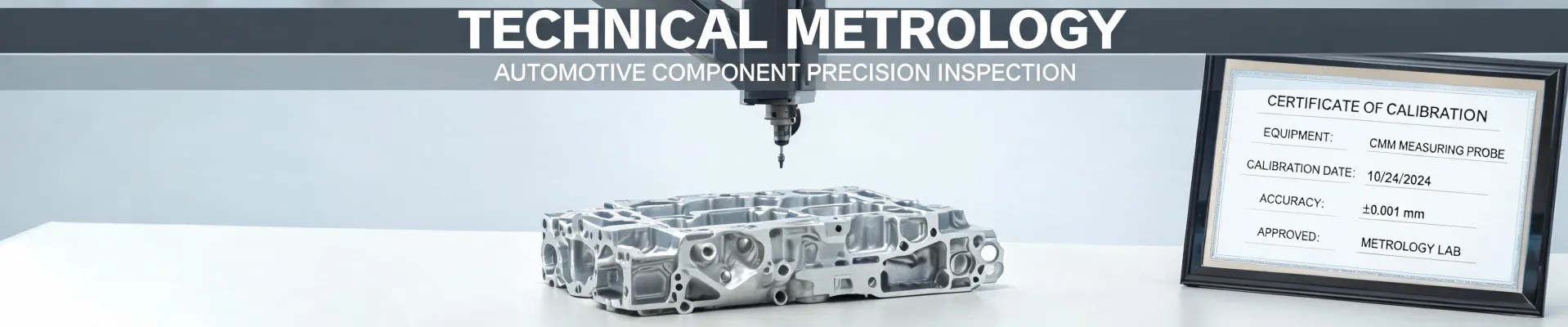
The experience that changed my approach was with a coordinate measuring machine. Our team had a used CMM, and a self-installed calibration failed badly. I signed up for Hexagon CMM training expecting software shortcuts. The first thing the instructor did was explain when a CMM is the wrong tool. That surprised me, and it made me trust everything else they taught.
The training covered ISO 10360 acceptance testing and the difference between advertised accuracy and real-world performance. The most practical advice came at the end: 'For genuine stylus kits, fixturing, and service parts, order through the Hexagon shop or an authorized distributor. Non-genuine parts can work, but they may not have the same material properties. You won't know that until the measurement drifts.'
That's a boundary I now apply to almost every purchase. The lowest-cost part is rarely the lowest total cost. (Mental note: add this to the procurement checklist.)
But Isn't 'Wide Range' the Same as 'Specialized'?
Some broad-line suppliers are excellent. Hexagon, for example, offers a wide portfolio: CMMs, sensors, thermal imaging, and more. The problem is not the size of the catalog. The problem is pretending that every product in that catalog gets the same level of internal expertise.
I've met salespeople who could explain the difference between positive displacement pipettes and air-displacement pipettes for twenty minutes. I've also met salespeople who just forwarded my email to a warehouse. The first one earned my trust even when the quote was higher. The second one saved me money once and cost me much more later.
In my opinion, 'expertise boundary' is not a limitation. It's a commitment to being honest about what you know. The vendor who says 'this isn't our strength—here's who does it better' earns my trust for everything else. The vendor who says 'we do everything' is asking me to take the risk.
The Word 'No' Is a Quality Signal
Before I order any instrument now, I ask three questions. Who has the specialist knowledge? What is their stated boundary? Are they willing to tell me when I should buy elsewhere? If a vendor answers the third question with 'you don't need to look elsewhere,' I treat that as a warning (which, honestly, sounds harsh but has saved me twice).
That sounds counterintuitive. But in a market where every email says 'yes,' the word 'no' is a rare and valuable signal. I'd rather work with someone who knows their limits than someone who is trying to ignore them. I didn't learn this from a textbook. I learned it by losing $28,000 and getting a little more honest with myself.
Now the checklist starts with a question that used to sound negative: 'What is this vendor not good at?' If they can't answer it, I order elsewhere. That's not a problem. That's the point.