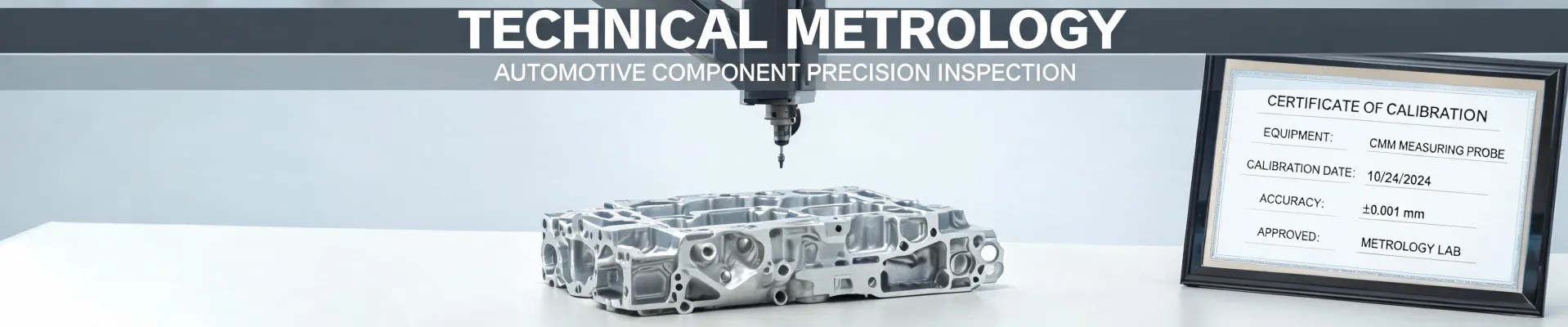
I've Changed My Mind About “One-Stop Shops”
I manage purchasing for a 40-person engineering and inspection company. Around $200,000 a year in tools, calibration, and lab supplies—sixty to eighty orders, eight vendors, and more follow-up emails than I can count. Maybe 90 orders during calibration season; I'd have to check. I report to both operations and finance, so I see the cost of a bad decision twice.
Here's my opinion, and it's not the popular one: the best measurement tools aren't sold by companies that promise to do everything. They're sold by specialists who know exactly what problem they solve. Good enough isn't good enough. Period.
A CMM Rewired My Buying Brain
When I took over purchasing in 2020, I thought all vendors were more or less the same: send a spec, get a quote, pick the lowest number. Then we bought our first hexagon metrology cmm. It changed how I think about every piece of test equipment, including a $100 multimeter.
The sales engineer didn't try to sell me a “general inspection solution.” He asked about our parts, our tolerances, our temperature range, and our operators' skill level. He told me one item we were considering didn't make sense for our shop. At the time, I thought he was leaving money on the table. Now I realize he was drawing a boundary—and that's exactly why I trusted him.
Our acceptance criteria followed ISO 10360, the standard for coordinate measuring machine verification. No machine gets signed off without the report. I learned that keyword because it appears on every calibration record. It's a good reminder: “good” isn't an opinion; it's a measurement.
Meanwhile, I had a bad experience with a general lab supplier who claimed to offer a “complete CMM setup.” They forgot the calibration artifacts and operator training. The quote looked 15% cheaper until every add-on appeared. I only believed in specialist boundaries after ignoring them and watching a “cheaper” quote balloon by 22%. The specialist's final cost came in lower. That's how I learned the difference between price and cost.
What Makes a Multimeter “Best” for Electricians
So when our electricians asked me to find the best multimeter for electricians, I didn't start with “which brand is biggest?” I started with the actual jobs: checking variable frequency drives, verifying 24V control circuits, chasing intermittent signals on packaging lines. The meter has to read accurately in noisy environments and fit into tight panels.
In my first year, I made the classic rookie mistake: I bought a multimeter because it said “industrial” on the box. It couldn't read a 4-20 mA signal properly. We paid a technician to verify with a second meter. That's when I started asking about ranges and inputs, not just brand reputation.
I found that the 233 remote display multimeter solves a specific problem a standard meter doesn't: you can take a reading with the display separated from the leads. That matters when you're working alone near a live panel. The display stays outside, the leads stay on the connection, and you're not twisting your neck to read a tiny screen. Is it the cheapest? No. Is it the right tool for certain work? Absolutely.
But I'll say the other side too: the 233 isn't the best choice for every electrician. If you're mostly checking standard branch circuits, a simpler meter plus a little training gets the job done. Buy the meter for the work you actually do, not the work you admire.
Portability Taught Me the Same Lesson Again
Our hexagon portable cmm reinforced this. We needed to inspect a large weldment that didn't fit on the fixed CMM table. A portable arm got us a solid result in hours, not days. The principle carries: a remote display multimeter is the portable CMM of electrical work. Same idea—take the instrument to the problem, not the problem to the instrument.
The Search Behind “How to Use an Extech Multimeter”
A lot of our techs don't search for specs. They search “how to use extech multimeter” because they have one in their bag and they're not sure why readings look wrong. Most multimeter mistakes aren't the meter's fault. It's the user setting: wrong input jack for current, or AC mode selected when measuring DC. With the Extech meters we've bought, the manual explains those steps clearly. That counts.
Check the leads, check the jack, check the range, then question the reading.
I keep that sentence on a laminated card in the tool crib. It's saved us more time than any upgrade.
But What About One-Stop Shopping?
You might say, “I thought you wanted fewer vendors and consolidation.” I do. We have four main suppliers instead of nine. But consolidation doesn't mean every purchase should come from the same catalog. It means fewer relationships, each one deeper. I'd rather have one calibration lab that knows our CMM and our meters than a mega-distributor who treats a torque wrench and a thermal imager as the same line item.
And when a vendor can't produce an ISO 17025 calibration certificate, they don't make our approved list. I'm not flexible on that. Please don't hear “buy from a specialist at any price.” Hear this: a good vendor will tell you when they're not the best fit. The vendor who said “this isn't our strength—here's who does it better” earned my trust for everything else. That's what I mean by professional boundaries.
And yes, I'm an administrator, not an electrician or a metrology engineer. I don't claim to be either. What I do have is the purchase history, the calibration records, and the invoice pile. I've seen cheap meters get returned, specialty meters get calibrated, and the “good enough” option cost us a morning of troubleshooting because it read a 24V supply as 26V. That's real money.
The Bottom Line
The best tool is the one that matches the measurement problem. Sometimes that's a hexagon metrology cmm, sometimes it's a hexagon portable cmm, and sometimes it's a 233 remote display multimeter hanging on a panel. The brand matters less than the fit. The specialist matters more than the inventory. And a vendor who knows their own boundaries is the one I want on our purchase order.