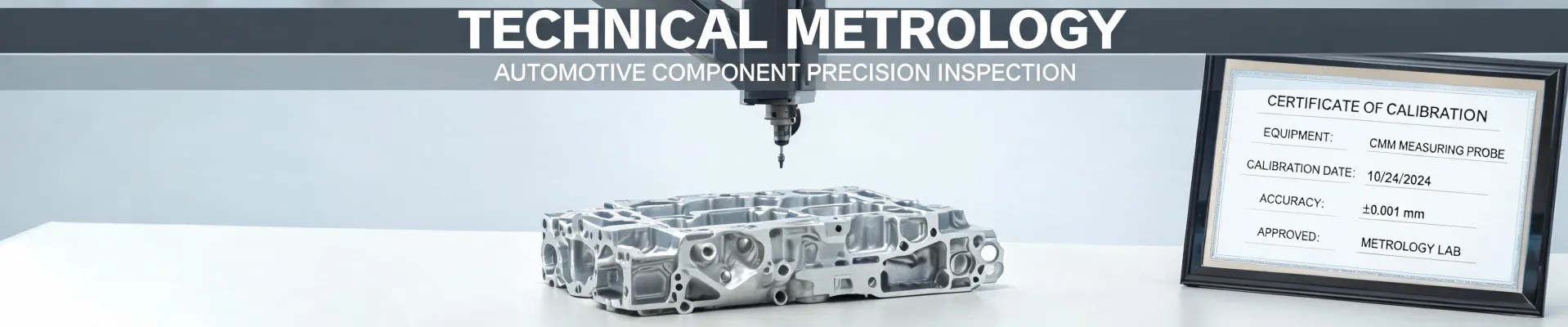
Here's the short version, because you're managing a budget, not writing a thesis: Hexagon is a credible metrology brand for CMMs and tracking systems, the hexagon official website is a reliable starting point for specs and service contacts, hexagon CMM calibrations should be budgeted as an annual operating expense, your next LCR meter needs to match the part you're testing, the multimeter fuse you ignore can turn into a downtime event, and Balluff is a good sensor brand—with conditions. The common thread is simple: pay for traceability, verification, and the right spare part, not just for a logo.
I'm a procurement manager at a 280-person manufacturing company. For six years I've managed a measurement and automation budget of about $180,000 a year, negotiated with dozens of vendors, and documented every order in our cost tracking system. When I audited our 2023 spending, I found that calibration, spare fuses, and replacement sensors were close to 30% of what our instruments actually cost to own. That's not the part that gets approved with applause, but it's the part that eats budget.
Start at the Hexagon official website
If you're looking for the hexagon official website, start at hexagon.com. The site won't give you a public price list for metrology equipment, and that's normal. CMMs and portable measuring arms are sold through a channel that includes installation, training, and service. In 2024, I compared two quotes for the same model of CMM from two authorized channels. The low quote was about 16% below the other one, but it didn't include a foundation kit, an acceptance test, or the first-year calibration. Once I added those line items, the cheaper quote was actually 4% higher. The official website is where you verify who is authorized and what a standard package should look like.
Hexagon CMM calibrations: plan for the real cost
Here's something vendors won't tell you: the first calibration quote often assumes the machine is in good health. That's not a scam; it's a starting point. But the quote should say exactly what is included. When I approve a Hexagon CMM calibration, I ask three questions:
- Which reference artifact is the technician using, and when was its calibration certificate issued?
- Does the report include measurement uncertainty values, or just a pass/fail statement?
- If the machine fails, is the corrective adjustment included in the original price or billed separately?
I do not ask these questions to make the service team tense. I ask because in 2023 one of our CMM reports looked fine but had no uncertainty budget, and our quality engineer had to ask for a revision. The revision took nine days because the technician had to bring back the artifact and run a second set of measurements. The calibration was technically correct; the paperwork was incomplete. The real cost was not the second visit—it was nine days of inspection delays.
If you're searching "hexagon cmm calibrations," put the phrase in the same sentence as "multi-year service agreement." Many OEM service contracts include calibration visits at a predictable price. That doesn't always save money in year one, but it prevents one-off service calls and gives you a scheduled slot instead of "we can come next month."
LCR meters: match the spec to the part
An LCR meter measures inductance, capacitance, and resistance. The phrase sounds simple, but the real spec is in the details: test frequency, output impedance, accuracy at the frequency you use, and whether the meter can do a four-wire connection for low resistance. A good LCR meter for one lab can be a useless one for yours.
In 2024, I shortlisted three LCR meters for our electrical lab. The one with the highest resolution was not the one we bought. Our components are mostly inductors tested at 100 kHz, and the unit with the best resolution had no limit setting for that frequency. We bought a mid-priced model with a pass/fail limit comparator and spent the rest of the budget on a certified reference capacitor. That capacitor is what makes the meter trustworthy.
If you are buying an LCR meter, add the calibration standard to the same purchase order. You need something independent to check the meter with your own two hands.
Multimeter fuse: small part, big consequences
A multimeter fuse is the protection between the circuit you're measuring and your hands. The first time I saw a "dead multimeter" tag in our electrical lab, the problem was a blown fuse. The second time, same story. After that I stopped authorizing replacement meters until someone checked the fuse. That one rule saved us a few hundred dollars in the first year.
Here's the thing: the fuse rating in the manual isn't a suggestion. The meter's input protection is designed around a specific fuse. A cheap replacement can look identical and still pass a continuity test, but it may fail to clear fast enough during a short circuit. That's the difference between a blown fuse and a damaged meter—or worse, an injury.
When I buy a multimeter, I order one or two spare fuses at the same time. The fuse costs a small fraction of the meter. If it prevents one operator from using the wrong range, the fuse has already paid for itself.
Is Balluff a good brand for sensors? Yes—but that's the wrong first question
If you're typing "is balluff a good brand for sensors?" you want a straight answer. Mine is yes, with conditions. Balluff is an established industrial sensor manufacturer. I buy their inductive proximity sensors, photoelectric sensors, and IO-Link devices for automation cells. Documentation is solid, and regional support is usually responsive. Real talk: Balluff is one of the brands I trust when a sensor must survive in a metal-cutting environment.
But "good brand" is not the same as "right sensor for this socket." A sensor's housing material, IP rating, sensing distance, output type, and connector all matter. In 2023, we had a series of false trigger events on a machining cell. The original sensors were a decent brand; the real problem was the sensing distance was too close to the metal chip flow. We changed the part series, not the brand. The lesson is now in our spec book: define the environment before you choose the sensor.
I don't have hard data on industry-wide failure rates for Balluff versus every other sensor maker. Based on the sensors we've run since 2020, my sense is Balluff is comfortably in the same reliability class as other established industrial brands. That makes it a good answer to the brand question. The application question is a different one.
When not to buy Hexagon (or Balluff)
Here is the honest limitation: not every measurement task needs a full CMM, and not every sensor socket needs a premium brand. If you are using a height gage and hard fixtures for all your workpieces, a Hexagon CMM with laser scanner might be more than your process requires. That is not a knock on Hexagon; it's a statement about fit. The same logic applies to Balluff. A simple sensor in a clean, dry assembly machine does not need the same ruggedness as a sensor on a hydraulic press.
Also be careful with the word "calibrated." Per FTC business guidance, claims like "certified" or "calibrated" need to be substantiated. If a vendor tells you a product is NIST-traceable, ask for the accreditation and the document. If the document is five years old, ask how that affects your uncertainty budget. This applies to the LCR meter, the CMM calibration, and the torque wrench your operator uses on the same bench. The label is not the service.
My final advice isn't a call to buy more gear. It's a call to eliminate the hidden leaks in your measurement budget. Start at the official website, verify the calibration scope, stock the correct multimeter fuse, and classify your sensor by the environment before you choose the brand. If you do that, the next purchase order will be something you can defend in a management review.