Tuesday, 3:47 PM. The phone rang, and the voice on the other end was somewhere between urgent and panicked.
"Our QC manager just dropped our only calibrated caliper on the concrete floor. Display's cracked. We've got 5,000 pieces going out Friday, and we can't release them without inspection. Can you get us a replacement by tomorrow?"
That's how I met Dave, a production supervisor at a precision machining shop. What started as a simple rush order turned into a conversation that changed how he thinks about measurement equipment budgets entirely.
The Question Everyone Asks First
The first thing Dave asked me—and I get this one more often than you'd think—was where are Starrett calipers made? He'd heard Starrett was an American brand, and he figured buying direct from the factory might save him money.
The honest answer isn't as simple as most people hope. The L.S. Starrett Company was founded in Athol, Massachusetts back in 1880, and they still make precision tools there today. A lot of their calipers come out of their Jedburgh, Scotland facility. Some of their entry-level products are manufactured elsewhere. So the real answer is: it depends on the specific model and production line.
But here's the thing I told Dave—where the caliper is made was the least important question he was asking.
Then He Found a $40 Caliper Online
Like most people in his situation, Dave went straight to price. He found a no-name digital caliper for $40. His logic: "It measures to 0.01mm. The Starrett is $180. What am I actually paying extra for?"
It's tempting to think a caliper is a caliper. That 0.01mm of resolution on the display makes them look identical. But resolution isn't accuracy. And accuracy is what he was actually paying for.
I asked Dave one question: "What's your inspection tolerance on those 5,000 parts?"
"±0.01mm."
I let that sit for a second. A $40 caliper with a resolution of 0.01mm typically has an accuracy somewhere in the range of ±0.03mm to ±0.05mm. Meaning the tool itself couldn't measure within the tolerance it was supposedly checking.
(Not that the spec sheet would clearly tell him that. Most listings just say "digital caliper, 0.01mm resolution." The accuracy rating is buried in fine print—if it's there at all.)
Buying that $40 caliper to check ±0.01mm tolerances would be like using a tape measure to check a machined surface. The measurement would be meaningless. And a meaningless measurement on a 5,000-piece lot is a risk that compounds quickly.
The TCO Math Nobody Does
This is where the conversation shifted from "what's the cheapest option" to "what does this actually cost?"
Here's what I laid out for Dave:
- Base price: $40 for the import caliper, with no certified calibration. The Starrett was $180 with proper documentation.
- Calibration: An uncertified tool is a liability. Even if it comes with a "calibration certificate," is it accredited? NIST-traceable? Or just a piece of paper from the factory? Per FTC guidelines (ftc.gov), accuracy claims need to be substantiated—but that doesn't mean every claim online holds up. You have to ask.
- The cost of being wrong: Dave's shop had a contract that included a $50,000 penalty clause for rejected shipments. A customer-side QC finding out-of-tolerance parts would have triggered that clause instantly.
- Rework: Even if the penalty wasn't triggered, they'd have to re-inspect or re-machine 5,000 parts. That's labor, machine time, and material—easily $10,000 to $20,000.
- Schedule: Missing Friday's shipment meant rescheduling, expedited shipping on the next available slot, and a customer relationship strain that's harder to quantify.
Add it up and the $40 caliper was a gamble with $70,000+ on the table. That is not an exaggeration. The $180 Starrett was insurance. (Which, honestly, is how I frame most measurement purchases: you're not buying a tool, you're buying certainty.)
Dave got quiet for a moment. Then he said: "So what do you actually recommend?"
Where Hexagon Fits In
It wasn't just about the caliper. Dave's shop had just won a contract that required full documentation of their inspection process—and they had a coordinate measuring machine sitting in their quality lab that nobody really knew how to use.
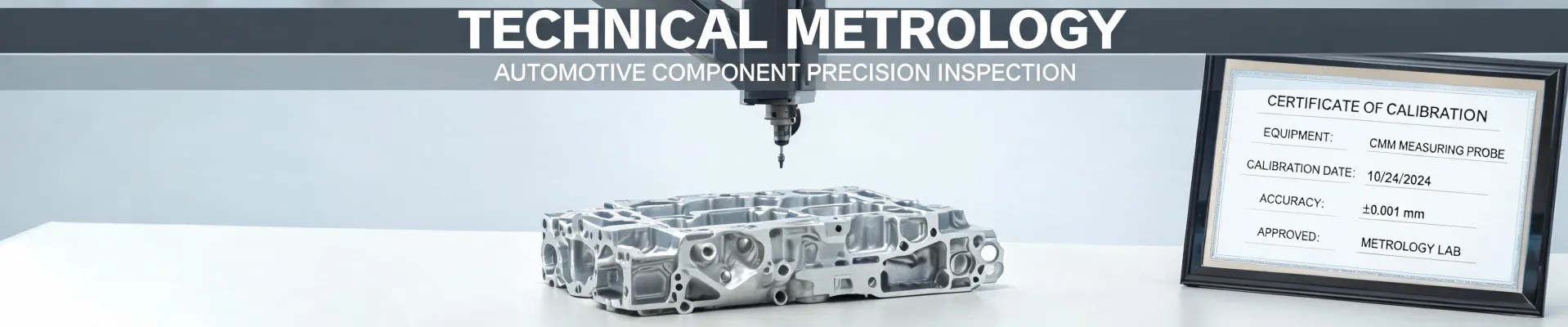
I pointed him to the hexagon official website to start browsing the metrology resources there. Hexagon is a big name in precision measurement—their CMM machines are all over manufacturing floors. But owning a CMM is not the same as using it well. I've seen shops drop $200,000 on a CMM and then leave it idle because the operators didn't have the confidence to write programs for it.
That's why I specifically recommended hexagon CMM training for his lead inspector. The ROI on that training is almost always faster than people expect—weeks, not months. (I should add: I've seen a trained inspector take a CMM inspection routine from 3 hours down to 45 minutes. That's not unusual; that's typical.)
We also talked about their broader inspection toolkit. Their facility had an older thermal camera that was due for an upgrade, and I mentioned the E86 advanced thermal imaging camera as a strong option. It's a Flir model with 320×240 thermal resolution (76,800 pixels), built for industrial electrical and mechanical inspections. For what Dave's shop was doing—checking panels, motors, gearboxes—it was a meaningful step up from what they had.
Then he brought up the bigger question: an x ray machine. They'd been dealing with internal voids in cast parts, and cutting parts open to inspect them was destroying product. Industrial X-ray or CT inspection would let them see inside without destroying anything. That's a bigger investment—$150,000 and up depending on the system—but the logic was the same as the caliper. The cost of not seeing a defect is a failed part reaching a customer. And that cost recurs on every bad part you ship.
What Happened on Friday
Dave didn't buy the $40 caliper. He ordered the Starrett, paid for overnight shipping, and had it on the QC bench by Wednesday morning.
(For what it's worth: per USPS pricing effective January 2025, Priority Mail Express starts at $31.90 for a flat-rate envelope. A small box with a caliper ran closer to $40–$50. Either way, it beat the alternative—no inspection tool at all on Thursday.)
He had maybe 24 hours to make the call. Normally he'd want to comparison shop, but there wasn't time. He went with our recommendation based on trust.
In hindsight? He should have asked these questions a week earlier. But given the constraint, he made the best call with the information he had. And it worked out.
The 5,000 parts shipped Friday afternoon. The customer's incoming inspection passed without a single non-conformance. No penalty clause triggered.
Even after approving the order, Dave told me later, he kept second-guessing. "What if the Starrett didn't arrive in time? What if I just wasted the money?" He didn't relax until the caliper was on his bench, battery in, reading the calibration standard correctly.
I've seen that pattern a lot. The few extra dollars for the right tool always feel risky in the moment. They're not.
What I've Learned After 200-Plus Rush Orders
I've coordinated maybe 200 emergency equipment orders over the past 8 years. Maybe 180 that were genuinely urgent—I'd have to check the system. The specifics change, but the pattern doesn't.
1. The cheapest tool is the most expensive one you'll ever own. It might be fine. But if it isn't, the cost of discovering that in the middle of a production deadline is an order of magnitude more than what you "saved." At least, that's been my experience with deadline-critical inspection equipment.
2. Calibration documentation matters. This was true 20 years ago, and it's true today. A tool without an accredited calibration certificate isn't a measurement tool—it's a guess with a digital display.
3. Training is part of the equipment cost. If you buy a CMM but don't budget for hexagon CMM training, you're not getting the full capability of the machine. You're getting a very expensive doorstop with a probe on it.
4. Think in total cost, not unit price. When you're comparing a $40 caliper to a $180 one, or a $200,000 X-ray system to not buying one, you're not comparing prices. You're comparing certainty levels. And certainty is worth paying for.
Dave's shop upgraded their thermal inspection capability with the E86 a few weeks later. They're still evaluating the X-ray CT route—that decision takes time, and it should. But the caliper is still on the bench, still certified, still accurate.
And the CMM training? His lead inspector is now writing inspection programs that check parts in a fraction of the time they used to. They're not just meeting the new contract requirements. They're exceeding them.
That's what TCO actually looks like in practice. The right equipment, the right training, the right certifications—they all cost something upfront. But the return on that investment shows up in every shipment that goes out on time, every audit that passes with no findings, every customer that doesn't send back a rejection notice.
And in my line of work, that's the whole point.