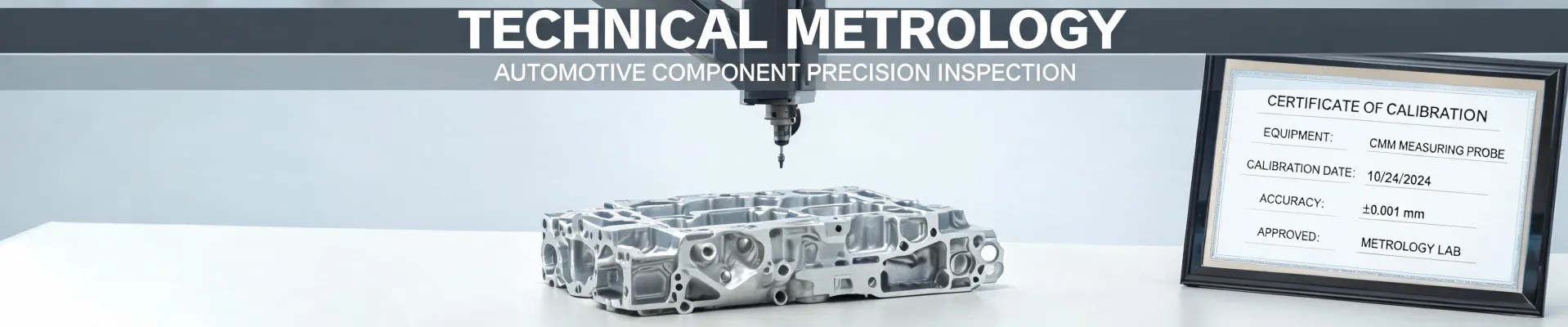
Last April, our quality lab manager walked into my office with a one-line request: "We need a new CMM." I almost laughed. In six years of managing procurement for a 120-person precision manufacturing company, I've learned that the shorter the request, the more hidden work it contains.
I oversee a metrology equipment budget of about $240,000 a year. That covers calibration, small instruments, service contracts, and occasionally a big capital purchase. A CMM is a big capital purchase. Before this was over, I'd compared 11 line items, found $14,000 in costs that weren't in the original quote, and answered a question that still makes me smile: "How do you turn on a Mitutoyo micrometer?"
The request that looked simple
The lab needed a second CMM because the first one was booked solid. The engineering manager wanted to measure more incoming parts on the floor rather than sending them out to a metrology lab. That sounds straightforward. But a CMM is not a handheld caliper. It needs a temperature-stable room, a vibration-isolated foundation, and people who know how to program it. If I bought a machine without accounting for those things, I'd be buying a very expensive doorstop.
I'm not a metrology engineer. I can't tell you which probe is best for a deep bore or how the software handles freeform surfaces. What I can tell you from a procurement perspective is this: the quote you sign is not the cost you pay. The line item labeled "CMM" is just the beginning.
The spreadsheet that kept growing
Three vendors made it to the final round. I'll call them A, B, and Hexagon. Vendor A came in 18% lower than the Hexagon CMM quote. Vendor B was about 8% lower. My first reaction, honestly, was to use A's price as leverage. That's how I'd been trained.
Then I spent an afternoon on the Hexagon official website. I wasn't browsing for marketing videos. I wanted installation specifications, environmental requirements, and calibration documents. That changed the conversation. The Hexagon quote had more detail from day one. It listed "foundation pad," "rigging," and "on-site training" as actual line items. The other quotes just said "CMM" and "shipping."
When I asked A if they could provide a similar breakdown, the project manager said, "We usually handle that with the customer later." That "later" is where money goes to die.
The hidden math
I built a total cost sheet. Not for the purchase price, but for the next five years. Under that test, the ranking changed. The 18% price gap shrank once I added the things that weren't in the first round of quotes:
- Floor preparation and vibration isolation, which A didn't include
- Rigging through our doorway, which required a small enlargement
- Training for four people, not two, because of shift coverage
- A service contract with a guaranteed response time
- Calibration artifacts and a Gage R&R study
Using rounded numbers for privacy: A's quote was about $100,000 and Hexagon's was about $118,000. After adding the missing items, A's total was about $114,000. Hexagon's total was about $121,000. The gap was now $7,000, not $18,000. And the Hexagon number included deliverables that A didn't even list. I also confirmed that the Hexagon machine would be accepted under ISO 10360-2, the standard for CMM length measurement accuracy. That mattered for our quality system.
My experience here is based on maybe 40 capital equipment purchases, mostly mid-range instruments. If you're buying a $2,000 benchtop meter, you can afford to be more casual. For a CMM, the uncertainty gets expensive fast.
The turning point
The real turning point happened before the machines arrived. Hexagon's installation team asked me to send a photo of our electrical panel near the lab. In that photo, they spotted a potential voltage drop issue and recommended a dedicated circuit. Vendor A had never asked. If we'd bought A's machine, we probably would have spent a week chasing intermittent measurement errors and blaming the wrong thing.
I'm not saying A's machine would have been bad. I'm saying A didn't have enough information to help us make a good decision. That's the value of a vendor who has done this many times.
The centrifuge and the micrometer
While the CMM drama was happening, the same principle showed up in smaller purchases.
A lab manager requested a 5810R refrigerated centrifuge. The first quote looked reasonable until I asked whether the rotor was included. It was not. The vendor said, "You don't need the rotor if you already have one." We didn't. The second quote included the rotor and a calibration certificate, and it was $3,400 higher. To someone who only looked at the base number, the first quote looked better. To us, it was a quote for a machine that couldn't do the job.
The 5810R refrigerated centrifuge now sits in our analytical lab with a rotor that was selected for the specific sample tubes we use. The certificate was NIST-traceable and included the expanded uncertainty. That phrase was worth the extra money.
Then there was the No. 436 micrometer. It had been sitting in a drawer behind the calibration certificates for years. An intern found it while cleaning the lab and asked if it was still in service. It wasn't on the calibration schedule. Nobody knew when it was last calibrated. The cost to calibrate it was higher than replacing it with a new basic micrometer. My first instinct was to buy new.
Then I called the calibration lab. They explained that the No. 436 had a known history—we had records of its drift over the last several calibrations. That history is valuable. A brand-new micrometer would have no history, which means you don't know if it's measuring correctly until you calibrate it. For a precision lab, an unknown instrument is riskier than an old one with documented behavior. We paid for the calibration. The micrometer went back into service with a fresh sticker.
That experience reinforced what the CMM purchase was already teaching me: the cheapest replacement is not always the lowest-risk choice.
Yes, the Mitutoyo micrometer question
A new technician sent me an email: "how to turn on Mitutoyo micrometer?" The display on the digital model was blank. She thought it was broken. It wasn't. On most digital Mitutoyo micrometers, you press the ON/OFF button to wake the display, and if that doesn't work, you check the battery. I walked over, pressed the button, and the numbers appeared. She laughed. I laughed. Then we spent twenty minutes creating a drawer for manuals.
That moment taught me more than the obvious. When someone asks a "silly" question, it's often a sign that information isn't where they can find it. That's a documentation problem, not a people problem. For procurement, it means the supplier who makes it easy to find the answer—even for a basic question—is often the one who saves you time in the long run.
What I learned
The CMM arrived, was installed, and passed its acceptance test. The training went well. There's something satisfying about watching a machine that cost a significant chunk of my annual budget produce clean measurement data without drama. The Hexagon CMM has been running for seven months now. I don't think about it much, which is the best thing I can say about a capital purchase.
But I also think about the process that got us here. If I had bought based on the lowest quote, the savings would have disappeared in rigging, training, and troubleshooting. Total cost of ownership is not a buzzword. It's a tool.
A few things I'd tell any cost controller:
- Ask every vendor for a line-item breakdown. If they can't give one, that's a red flag.
- Add every missing item to the quote before comparing, including installation, shipping, training, and downtime.
- Do not replace a calibrated instrument with a new one just because the calibration costs money. History is an asset.
- Write down the small answers, like how to turn on a micrometer. Those save time and build trust.
I'm not saying the most expensive option is always right. I'm saying the lowest price is not a complete answer. That's true for a $20 phone charger and true for a $120,000 CMM.
If you're in the middle of a similar decision, start with total cost. Look at the installation manual before you look at the brochure. Talk to the people who will use the machine, not just the people who approve the budget. And when a technician asks you a simple question, don't make them feel foolish. That question might be the clue that your documentation needs work.
Trust me on that one. I learned it the week I was trying to pick a CMM.