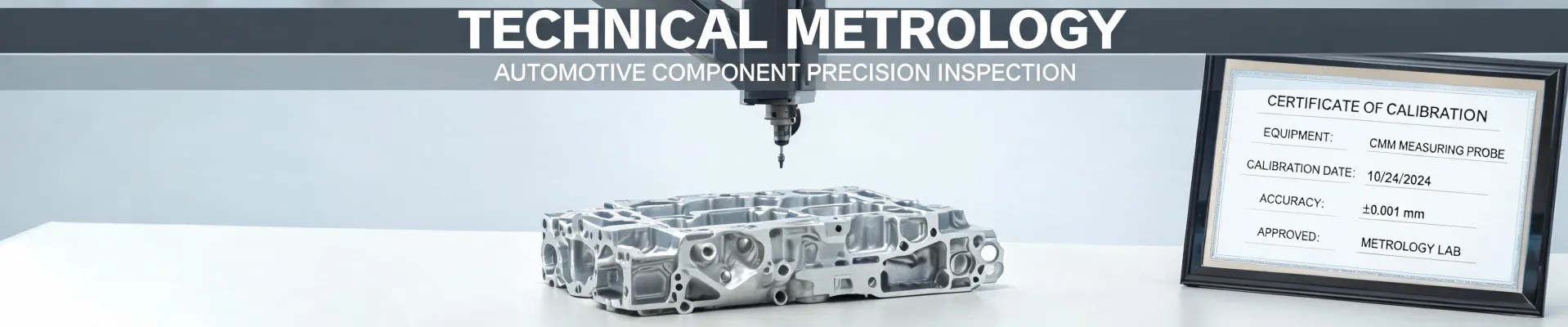
In March 2024, at 4:15 on a Tuesday afternoon, my phone rang with the kind of call that makes me switch into triage mode before I even say hello. A quality manager at a pharmaceutical-packaging plant didn't bother with pleasantries. “FDA audit is Friday morning. The calibration certificate on our Hexagon CMM machine expires Thursday night, and I'm looking at a dimensional report that doesn't match my reference sphere.”
I'm not a calibration engineer, and I'm not an FDA specialist. I'm the person who coordinates emergency instrument service and replacement parts. In my role, I've handled more than 200 rush orders over six years—some for $300 sensors needed overnight, others for $15,000 CMM calibration visits. My job isn't to do the metrology. My job is to make sure the right person, right part, and right paperwork show up before someone else's deadline does.
The machine on that plant floor was a Hexagon CMM machine, which should have told the quality manager that service would be fast. But he was worried about the normal two-week lead time. The standard calibration route for a floor CMM usually means sending the machine to a lab or waiting for a technician's next opening. Neither would work for a Thursday deadline.
My first move was the obvious one: I called our account manager and left a voicemail. Then I did what I should have done first. I logged into the hexagon portal from my laptop and looked for an urgent service slot.
Why the Portal Beat the Phone Call
The hexagon portal gave me something a phone call couldn't: a machine-readable trail. I could check the next available appointment, upload the recent probe qualification logs from the client, and submit a service request with a required completion date. Within an hour, the portal came back with a confirmation for Thursday morning at 8:30. Not a “we'll try,” but a scheduled visit from a qualified technician.
That confirmation changed the whole tone of the prep. The quality manager could now focus on the other audit items instead of panicking about the expiry date. I won't pretend the portal does the technician's job. It doesn't. It just removes the phone-tag uncertainty that can kill a rush order before it starts.
The 117 Multimeter and an Unexpected Audit Finding
While we waited, the plant's test engineer started checking the environmental logger that sits beside the CMM. The logger's readings seemed okay, but he wanted to confirm the outlet was ground-true. He grabbed a 117 multimeter—the model that gets referenced in electrical troubleshooting threads more than almost any other handheld meter. If you've ever used one, you know its low-impedance mode is the reason people pay four times as much as they would for a basic budget meter.
The 117 multimeter found a ghost voltage on the outlet's neutral wire. Not enough to blow a fuse, but enough to be a documented wiring deficiency if an auditor decided to inspect the inspection-room environment. That would have been a minor finding on the audit report—and in a pharma audit, even minor can trigger a corrective-action plan that eats weeks of everyone's time.
So now we had two issues: one stale calibration certificate, plus an ungrounded outlet we hadn't planned for. Both were fixable before Friday. But neither could be fixed with a vague probably.
One Audit Turned Into Three Subplots
Then the lab sent over a list of remaining gaps, and I realized this was not a one-problem day.
- The temperature-controlled stability chamber had two sensors that had drifted out of tolerance. They needed replacements with fresh calibration certificates.
- The HPLC system's columns were leaking because the only fittings in the supply cabinet were from a generic kit, not the manufacturer-specified fittings.
For the sensors, I called two sensors distributors I trust. The first one said, “We can probably ship Thursday, maybe.” That wasn't enough. The second distributor checked live inventory while I stayed on the phone, confirmed two calibrated sensors in stock, and made the same-day shipping cutoff with 20 minutes to spare. I paid $140 for overnight freight on a $190 sensor order. The look on my finance director's face wasn't great, but a missed stability-chamber accuracy check would have been far more expensive.
Looking back, I should have advised the client to stock spare sensors from the beginning. At the time, they were trying to reduce inventory costs, and that made sense. The lesson from that week is that a $190 sensor becomes the most expensive part of the whole event when it forces a $140 freight charge and two hours of coordination. The cheapest way to buy rush parts is to have the right part on the shelf before you need it.
The HPLC fittings were the moment I felt the whole plan could fall apart. If you've ever asked how Agilent fittings for HPLC columns work, the answer is not just in the threads. The ferrule has to seat against the column end at the right angle and at the right depth. A so-called compatible fitting can look perfect and still leak under pressure. The lab had once bought a box of universal fittings because they cost less than half the price. After we replaced them with the manufacturer-specified Agilent fittings, the pressure held steady and the leak disappeared.
That is the exact opposite of what people expect in a rush. They expect to save time by choosing a cheaper substitute that happens to be in stock. I've learned to stop that instinct. If the manual says Agilent fittings, ordering any other fitting is a false saving. The time you think you're buying by grabbing the generic part is the time you lose when it doesn't work.
The Result and the Part That Still Matters
Thursday morning, the Hexagon technician arrived at 8:30, ran the calibration with a portable reference artifact, and had the new certificate ready by 2:45 p.m. The bad outlet was fixed Wednesday night. The replacement sensors arrived Wednesday afternoon and passed calibration verification. The Agilent fittings were installed Wednesday evening, and the lab ran a full system suitability check that night. Friday's audit closed with zero major findings.
There is something satisfying about watching a properly executed rush order land. Not because it's exciting, but because it's the payoff for a lot of boring decisions: check availability in the portal, call distributors with live inventory, refuse to accept maybe as an answer. Per FTC guidelines (ftc.gov), a claim like guaranteed zero uncertainty has to be substantiated. No calibration house can honestly make that promise, so I ask for the next best thing: a certificate that states what was measured, with which artifact, and under what temperature range.
I also know my sample size here is specific. My experience is mostly with mid-sized manufacturers and regulated labs; if you're in a less strict environment, you might get away with looser timelines. And I'm not a logistics expert, so I can't speak to optimizing every carrier route or warehouse location. What I can tell you is this: when someone's audit or production deadline is on the line, the best tool isn't the cheapest vendor. It's a vendor who can give you a confirmed time instead of a hopeful estimate.
Bottom line: rush fees buy certainty, not just speed. That's why I paid for same-day inventory checks, overnight freight, and the Hexagon service slot. The time certainty premium is real.