I almost signed a $17,475.50 purchase order because the number at the top of the quote said $14,350.
That gap is why I’m telling this story. After six years of managing purchasing, I still almost fell for a lower number — until I asked the right question.
Everything Landed on My Desk in 72 Hours
I’m the office administrator at a 140-person contract manufacturer just outside Cleveland, Ohio. I handle purchasing for the production floor, the quality lab, and the facilities team. In a normal year, that’s roughly $400,000 in orders spread across eleven vendors. I report to both operations and finance, which is a polite way of saying everyone can complain to me.
The week of June 3, 2024, was supposed to be quiet. Then four requests landed within 72 hours:
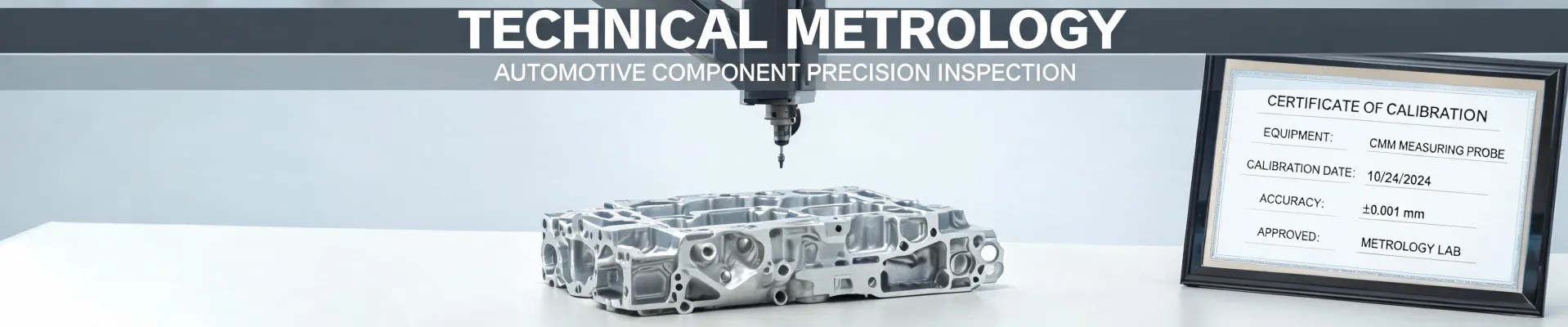
- Andre in quality asked for replacement Hexagon CMM probes for our coordinate measuring machine. He included part numbers, so that part was easy.
- Tom in facilities asked for an inline flow meter for the new chilled-water loop. “I need a totalizer and a 4–20 mA output,” he wrote. I copied that into the RFQ.
- Priya in the lab asked if we could source replacement illumination parts for the Carl surgical microscope used in one of our customers’ assembly labs.
- Mike in service asked whether I knew of a clear explanation of how to use a Fluke multimeter. He said his online searches kept turning up forum threads written by people way too excited about diodes.
Four product categories, four different specification sheets. For me, that was a normal week.
The Quote That Looked Like an Easy Win
I sent the request out to three vendors. One was our regular test-and-measurement distributor, who has handled our calibration and metrology needs since 2019. Another was a national supplier we use for shop supplies; they passed on the instruments. The third was a newer industrial distributor that had been trying to get our attention for months. They said they could quote all of it.
Our regular distributor came back two days later with a proposal for $15,890. It listed every component, the calibration documentation, the freight, and the flow meter’s output module. The newer supplier came back at $14,350 with one line per item and a lot of white space.
A $1,540 difference. Who ignores a saving like that?
What I Ask Before I Forward a PO
I have one question that goes out with every RFQ now: “What is NOT included?” I didn’t always ask it.
In early 2022, a different vendor’s low quote did not include the calibration certificates our quality system requires. Finance pushed back on a $2,400 portion of the invoice because it was not on the approved purchase order. I got the blame, and honestly, I deserved it. Our quality system requires NIST-traceable documentation for anything used in a measurement decision. The vendor said, “You didn’t order that.” He was right. The quote said “equipment only” in small print at the bottom. I stopped signing anything without a complete breakdown.
So after the new supplier’s quote arrived, I sent a short email: “Please itemize the price. I need to see shipping, handling, calibration documentation, and any fees that apply.”
Three days later, I received this reply:
“Price is firm on the equipment. Additional items for your approval:
- Calibration documentation, NIST-traceable: $1,150
- Freight: $480
- Sourcing fee: $750
- Handling charge (3%): $430.50
- Flow meter output module: $315
Let us know if you would like to proceed.”
I read the email three times. The calibration documentation cost more than one of the CMM probe kits we were ordering. The flow meter output module was missing from the original quote even though I had put it in the specifications. And the “firm” price was not actually the price.
I did the arithmetic: $14,350 plus $3,125.50 came to $17,475.50. The vendor that looked $1,540 cheaper than our regular distributor would have been $1,585.50 more expensive.
The number at the top of the page told me nothing. Not one useful thing.
The Flow Meter, the Microscope, and the Multimeter
The quote comparison was the main event, but the other requests drove the lesson home.
The flow meter was the clearest example. Tom asked for a 4–20 mA output. The new supplier’s quote was for the base instrument only. The output module was buried in an optional list we would have found after placing the order. Our regular distributor included that module and the mounting bracket in the original itemized quote.
Then there was Priya’s Carl surgical microscope request. The newer supplier said, “Yes, we cover those,” and produced a generic-looking quote. The distributor we ended up using responded differently: “We need the serial number and a photo of the existing illumination pack. Carl scopes are extremely config-dependent.” That answer felt slower, but it was honest. They refused to guess at a price. The generic quote from the other supplier never mentioned a manufacturer, a model, or a serial number—for a piece of equipment that can cost more than a compact car. That was not a serious answer.
Mike’s question was the simplest one: how to use a Fluke multimeter. He did not need me to hold his hand; he needed a source he could trust. Mike came from an automotive background where his old multimeter had maybe three functions. The new one had more icons on the dial than his car had on the dashboard. Our regular distributor’s application engineer sent over a short video and a one-page quick reference from the manufacturer’s support site, then offered a 15-minute phone walkthrough.
None of that appeared on a quote. But it is the kind of support that determines whether a $600 tool actually gets used properly or sits in a drawer.
What Changed After That Week
The order went to our regular distributor. The approved PO amount was $15,890, and the invoice arrived at exactly that number. There’s a quiet satisfaction in that.
I also updated our RFQ template. Every vendor now has to confirm three things in writing: whether calibration documentation is included, whether shipping and handling are included in the unit price, and whether any other fee can apply before delivery.
If they cannot answer those three questions in a sentence, I do not add them to our approved vendor list.
The Part I Keep Relearning
Everything I’d read about vendor management says to get multiple quotes and compare them. I still do that. But comparing the top-line number is almost useless unless the scope underneath it is identical.
The accuracy claims on measurement instruments are a good example. Per FTC advertising guidance (ftc.gov), claims have to be truthful and substantiated. A calibration certificate is what makes an accuracy claim real. If a supplier treats that certificate as an optional add-on, they are not selling you the same instrument you priced.
We use a lot of Hexagon products on the shop floor—CMM probes, portable arms, software—and I will keep buying them. But the brand is not what earned that order. The transparent quote did.
Look, I still buy on price. I just make it a point to find the real price before hidden extras arrive in a follow-up email.
So ask the question early: “What’s NOT included?” The supplier who answers it completely, even when it makes their total look worse, is the one you can trust.