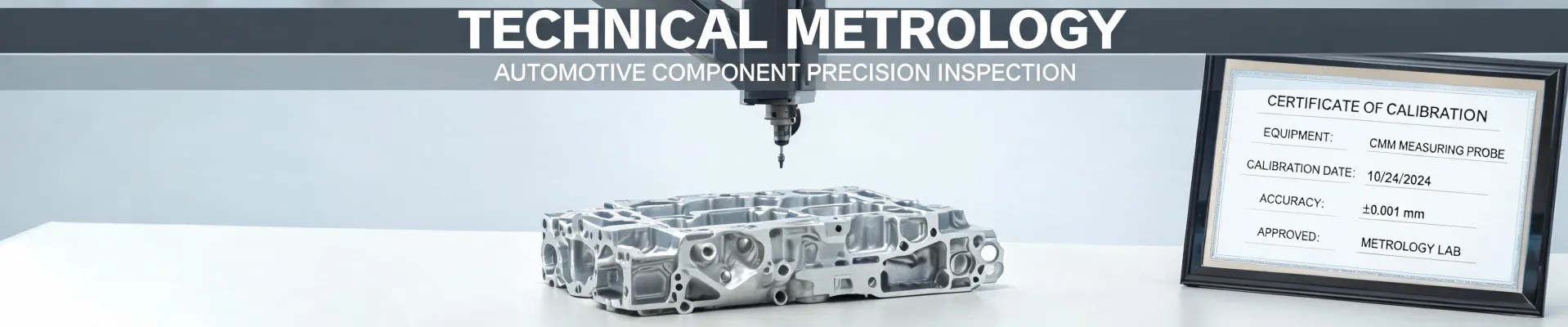
Most People Buy the Wrong Thing
Here's my unpopular opinion: most measurement equipment purchasing is backwards. Basically, we compare resolution, accuracy, and price. We read spec sheets like they're legal contracts. Then the instrument arrives, sits in the lab for three months, and somehow still doesn't solve the problem we bought it for.
I'm a quality inspector. I review incoming equipment, verify calibration paperwork, and sign off before anything gets used in production. In 2025, I've already rejected 12% of first deliveries just because of documentation and support gaps—not hardware failures. That pattern is hard to ignore.
The Support Spec Nobody Quotes
It took me about six years and roughly 1,200 acceptance records to understand what actually separates a good measurement tool from a bad one. It's not the number after the plus-minus sign. It's the support behind it.
Take Hexagon CMMs. On paper, they are strong performers. But the difference for us wasn't the rated accuracy in the brochure—it was the Hexagon support we got during installation, calibration, and software troubleshooting. We asked basic questions. Their people answered. That sounds like table stakes, but you'd be surprised how many vendors disappear after the quote is signed.
According to ISO 10360-2, CMM performance is evaluated under specific, controlled conditions. That's useful, but those conditions rarely match a real shop floor. A machine can measure beautifully at 20°C in a lab and drift at 29°C in a production bay. The support team is what helps you understand and handle that drift. Hexagon support doesn't change the physics, but it tells you what to do about it.
What 115 RMS Digital Multimeter Reviews Taught Me
Because I also handle handheld test equipment, I read a lot of user reviews. The 115 RMS digital multimeter reviews—the ones with four stars and a dozen comments—keep showing the same pattern.
People complain about the probes. They lose the manual. They can't find calibration certificates. They rarely mention the true RMS accuracy, because honestly, most users don't need it. They need a stable reading and a vendor that answers email.
The Klein vs Fluke multimeter debate is the perfect example. I went back and forth between them for two weeks. One had a better price. The other had a recognizable name. On paper, both were fine. But the real question wasn't which meter had better specs; it was which supplier would support me when something went wrong. I eventually chose based on support, not the datasheet.
That decision kept me up at night because I thought support was a soft excuse. Then I realized: in 2025, almost every handheld meter is good enough. Support is pretty much the only hard differentiator left.
The TG268 spot thermal camera is another example. It's a point-and-read tool, kind of a crowd favorite. But thermal readings are only as good as your emissivity assumptions. If nobody teaches you that, you'll be confidently wrong. The camera isn't the problem. The lack of support and training is.
Never expected a budget meter to outperform the premium one in my own tests. But it did—because it came with clearer documentation. That's not about hardware. It's about the care behind the product.
Small Customers Are the Real Test
Here's where this gets personal. Early in my career, I was the small customer. I ordered a $200 clamp meter and a bag of probe leads. Two vendors ignored my emails. One vendor spent ten minutes helping me choose the right meter and called to confirm calibration options. That vendor still gets my business today—and yes, the orders are a lot bigger now.
I've never understood the mindset that treats small orders as an inconvenience. From my perspective, a small order is a trial run. The vendor is auditioning. If they treat a $200 order like it's beneath them, that's a red flag—why would I ever trust them with a bigger CMM project?
In our Q1 2024 quality audit, we found that almost 70% of supplier issues were documentation or support problems, not equipment failures. The instrument worked, but the certificate was expired, or the helpdesk didn't know the product. That's a process failure dressed up as an equipment failure.
Bottom line: small doesn't mean unimportant. It means potential. Good support shouldn't be reserved for enterprise accounts. If a vendor can't provide it for a small purchase, they won't provide it for a big one either.
But Doesn't the Hardware Matter?
Of course it does. Please don't read this as "support matters, specs don't." A bad sensor will give bad data no matter how helpful the helpdesk is. Accuracy, repeatability, and range are the foundation.
But here's the thing: in 2025, most mainstream measuring instruments are good enough. The gap between a premium brand and a mid-tier brand is usually smaller than the gap between good support and no support. And as a quality inspector, I can tell you that an instrument without proper calibration documentation is useless, even if it's technically perfect.
That's why I always ask for evidence. Per FTC guidelines, claims have to be substantiated. If a vendor says "accuracy ±0.001 mm," I want the certificate. Not because I'm being difficult—because I've been burned by hand-wavy datasheets before.
Looking back, I should have asked for a support plan much earlier. At the time, I thought it was a luxury. Now I know it's the deal-breaker.
So Here's My Unpopular Opinion
If you're evaluating Hexagon CMMs, Klein vs Fluke multimeters, a TG268 spot thermal camera, or anything else, measure support as carefully as you measure accuracy. Ask about calibration lead times. Ask for a sample certificate. Send a technical question before you buy and see how long it takes to get an answer.
Hexagon support is the reason I've stopped shopping solely on spec sheets. It's also probably why I tell younger engineers to write support requirements into every purchase order. For Hexagon CMMs, the machine is only half the story. The support is the other half. And if you're a small buyer, don't settle for less.