-
1. What exactly is a Hexagon CMM—and is it the same as "hexagon cmms" in specifications?
-
2. How much should I expect to pay for a multimeter? Multimeter price basics
-
3. What is a profile projector, and why would I use one if I already have a Hexagon CMM?
-
4. How do you calibrate an Eppendorf pipette?
-
5. What does the Hexagon brand cover, and do I still get support if I buy through a distributor?
-
6. I'm a small workshop. Will you take my one-piece order seriously?
Here are five questions I get asked most often while working as a quality compliance manager for a measurement-instruments distributor. I'll answer them as honestly as I can. Some answers are based on hard data from our own audits; for others, I'll admit where I'm working from experience rather than statistics.
1. What exactly is a Hexagon CMM—and is it the same as "hexagon cmms" in specifications?
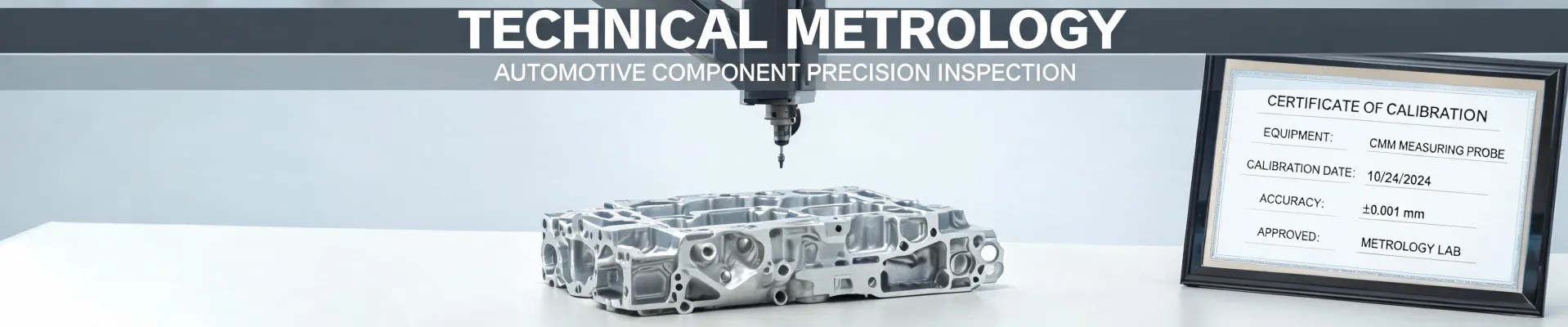
In short, Hexagon is the manufacturer, and CMM stands for coordinate measuring machine. When you see the phrase "hexagon cmms" in lists, it usually refers to the Hexagon Manufacturing Intelligence line—models like the Leica laser trackers and the Global series. I've specified these machines for customers, though I'm not a metrology engineer myself. I'm the person who verifies that what was promised is what gets delivered.
Here's a surprise I keep running into: the machine itself is rarely the root cause of bad measurements. A $120,000 CMM won't fix a poorly trained operator or a room that fluctuates by 5°C. In our Q1 2024 quality audit, we rejected 9% of first articles from a stamping supplier because their CMM sat near a loading dock. Parts were measured, but readings drifted by a few microns. The vendor blamed the machine; we pointed to the temperature log. That had nothing to do with the brand—or rather, it had everything to do with the environment around the machine.
For what it's worth, a used Hexagon CMM might be tempting. A customer did that last year and then spent nearly half the purchase price on a new controller and retrofit—so budget for that when you see a 'hexagon cmm for sale' listing.
2. How much should I expect to pay for a multimeter? Multimeter price basics
A basic handheld multimeter with true RMS and CAT III rating starts around $50–$100. A bench-grade 5.5-digit meter might be $800–$2,500. I don't have hard data on average distributor markup, but based on years of purchase orders, those ranges are consistent as of Q4 2024. The market changes fast, so verify current pricing before you budget.
One thing I always tell buyers: price is not the first spec. Per FTC advertising guidance (ftc.gov), claims about performance have to be substantiated. So if you see a "shop multimeter" for $24, ask what safety category it meets. A few years ago we sent back a batch of 200 low-cost meters where the input jacks were too shallow for standard probes. The vendor called it "cost reduction." I call it a safety issue. The surprise wasn't the low price—it was that a reputable-brand replacement cost only 15% more at the same performance level.
The true cost of a multimeter also includes calibration. For a benchtop DMM, an accredited calibration certificate with data can add $150–$300 per year. If you're in an ISO 17025 environment, that's not optional.
3. What is a profile projector, and why would I use one if I already have a Hexagon CMM?
A profile projector—often called an optical comparator—magnifies a part's silhouette onto a screen so you can compare it to a 2D tolerance chart. It's a classic, low-tech tool, and I say that with respect. I don't have hard data on how many shops own both a CMM and a projector, but in my experience, they serve different roles. The projector is faster for visual checks like determining the radius on a molded plastic clip. The CMM is better for true 3D measurements and reporting.
The surprise for me was how often operators prefer the profile projector for batch inspections. No programming, no probing—just silhouettes. A solid 300 mm screen unit runs about $5,000–$15,000 new, but check the lens and screen quality. I learned years ago that a cheap lens can make a flaw look like a feature. And yes, you can measure many of those features on a Hexagon CMM, but if you're doing first-article inspections all day, a profile projector can be a better first-line tool.
4. How do you calibrate an Eppendorf pipette?
Calibrating a pipette means verifying that the volume it delivers matches the nominal volume. For Eppendorf pipettes, the accepted method is gravimetric: dispense distilled water onto a balance and weigh it. But that's a simplification. You need a balance with 0.01 mg readability for volumes under 200 µL, plus controlled conditions—usually 20–25°C and high humidity to minimize evaporation. The standard sequence includes pre-wetting the tip, then dispensing ten replicates at the test volume to calculate mean and standard deviation.
I wish I had tracked every pipette calibration we've run; what I can say anecdotally is that about one in five lab workers skips the pre-wetting step. In 2022, we rejected a batch of pipettes that were 3% off at 100 µL. The manufacturer said "within ISO 8655 tolerance"—but our acceptance spec was ±1.5%. The vendor recalibrated them at no charge. Now our purchase contracts list the required tolerance and the calibration procedure in the quote. If you're doing this yourself, the step-by-step is on Eppendorf's website, but don't overlook the balance's readability—it will be the bottleneck for accuracy.
5. What does the Hexagon brand cover, and do I still get support if I buy through a distributor?
Hexagon Manufacturing Intelligence builds CMMs, laser trackers, and metrology software. The portfolio also includes legacy brands like Brown & Sharpe and Leica. At my company, we also stock Fluke multimeters, Flir thermal imagers, Mitutoyo calipers, and Eppendorf lab instruments. So when a customer searches for "hexagon cmm" and then asks about accessories, I can usually source them quickly. It's not just the machine—it's training, calibration contracts, and phone support that make the difference.
To put it plainly: the hardware is only the beginning. In 2023, we ran a blind test with our QA team using two CMMs—a slightly older model and a new Hexagon machine. On the same calibrated sphere, both gave results within 0.5 µm. But 78% of the team identified the Hexagon report as "more professional" because the software presented the data more clearly. That's not a physical measurement, but it matters when a report goes to an aerospace auditor.
6. I'm a small workshop. Will you take my one-piece order seriously?
Yes. Small orders aren't distractions—they're potential long-term relationships. When I was starting out in this role, the suppliers who treated our $200 purchases with respect are the ones I've stuck with for orders 100 times that size. We don't have a minimum order for most stock items. You can buy one thermal imaging camera or a single calibration weight. That said, be honest about expectations: you won't get the same per-unit price as a company ordering 500 units. That's basic math, not snobbery.
What I can't do is promise a service contract if you've only bought one multimeter from us. But we'll still answer your technical questions and provide the documentation you need for ISO 9001. If you're local, you can even visit our calibration lab and watch the process—a one-person R&D shop did that last month with a single micrometer. The way I see it, small means potential. I've watched small orders become large ones—both from us and from us as customers.