I'm a quality compliance manager at an instrumentation company. I review every instrument before it reaches a customer—roughly 200 items a month. Over the past four years, I've rejected about 8% of first deliveries because the spec didn't match the order. Some instruments are made by Hexagon, some by Fluke or Agilent, and some by smaller manufacturers. I check them all the same way.
So when someone asks me which piece of test equipment to buy, I don't answer with a model number. There's no single best answer. It depends on where you're using it, what failure costs you, and whether you can trust the source. Let's split that into three scenarios.
Scenario 1: You need precision measurement in a controlled lab
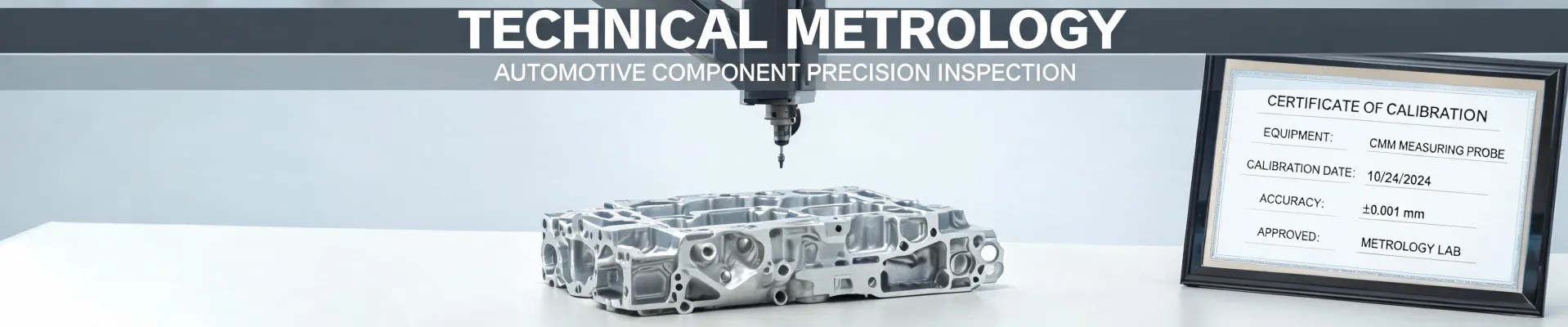
If you're measuring machined parts for aerospace, automotive, or medical devices, you're probably looking at a coordinate measuring machine. Hexagon comes up a lot, and that's not surprising. They make benchtop CMMs, portable arms, and laser trackers used in some of the tightest-tolerance factories I've visited.
Here's where I see buyers get into trouble: they search for 'hexagon' and assume the first result is the manufacturer. It isn't always. Resellers and brokers sometimes reuse official photos. Before you send a PO, go to the hexagon official homepage and compare the model number and spec sheet. Then compare the hexagon logo on the quote or machine nameplate with the one on the official site. It sounds basic. I've seen someone skip it.
If you want a quick check, compare the logo colors. Pantone's color matching system sets the industry standard for brand-critical colors. Delta E below 2 is the usual tolerance, according to Pantone's color matching guidelines. If the color on that nameplate looks off, that's a red flag, not a decoration choice.
A few years ago, a shop ordered a 'Hexagon CMM' from a liquidator at 40% below the usual market price. The logo in the photos looked right. When the machine arrived, the controller software was outdated, the calibration certificate didn't match the serial number, and the seller disappeared. The shop spent $22,000 on re-calibration and waited two extra weeks for a software license. The discount didn't survive contact with reality.
My rule for this scenario: if precision matters, buy from a channel that can prove the machine's history. You don't have to buy new, but you do have to verify. Hexagon's official homepage is also where you check support coverage.
Scenario 2: You need a field meter for electrical troubleshooting
Now let's talk about handheld meters. If you're an electrician, a facilities tech, or someone who just needs to know whether a wire is live, the conversation changes. You don't need a CMM. You need a meter you can trust at the voltage you're testing.
The Fluke 115 digital multimeter is a common choice for this work. It handles AC and DC voltage, resistance, and continuity checks. It's compact, easy to read, and built to survive a work truck. But the meter only helps if you use it the right way.
People often search for 'how to use a Fluke multimeter to test voltage' and then get a generic video. Here's the short version:
- Turn the dial to V AC (~) or V DC.
- Put the black lead in COM and the red lead in VΩ.
- Touch the probes to the circuit: black to the grounded or common side, red to the hot or live side.
- Read the display. If it shows the expected voltage, the circuit is live.
Before you do that, check the meter's category rating. A CAT III meter is rated for distribution circuits. A CAT IV meter is rated for service entrances. If you're not sure, don't measure a panel with a meter that isn't designed for it. The Fluke 115 has a CAT III rating, which is appropriate for most commercial and residential outlets.
Why bring up value over price? Because I've seen no-name meters that show a number but don't hold their accuracy at higher energy levels. A meter can be cheap because it skipped safety components. The 115 isn't the most expensive meter I know, but it's built to a standard. Buying a safer meter is not a luxury. It's a one-time insurance policy.
Scenario 3: You're keeping an old HPLC alive in a working lab
The third scenario is different. You're not measuring metal or voltage. You're measuring chemistry. And maybe your lab is still running an Agilent 1100 series hplc. That system has been in labs for over twenty years. It was a workhorse then, and it can still be a workhorse now.
I'm not a chromatography engineer, so I can't speak to detector optics or mobile-phase chemistry. What I can tell you from a quality control perspective is where the money actually goes.
I've seen labs compare a $4,000 repair quote against a $40,000 replacement and pick the repair. That's often the right decision. But it becomes the wrong decision when the old system starts failing batches. A failed analytical run can cost far more than the repair if it delays release of a product. In 2024, we had a customer reject an entire lot because retention times drifted and the issue wasn't caught until after release. The loss was bigger than any pump repair.
For an 1100 series HPLC, the decision should be based on total cost per year: service contracts, spare parts, failed runs, and the time your team spends chasing drift. If that number is stable and predictable, keep the system. If it's not, a newer system is not an expense. It's a stop-loss.
How to tell which scenario you're in
Still not sure? Answer three questions.
- Where will this instrument live? A climate-controlled room, a service van, or a lab on a production floor?
- What does a bad reading cost? A scrapped part, a miss on a live circuit, or a ruined batch?
- Can you verify the source? Is there a serial number, a calibration certificate, and a company that answers the phone?
Here's where I'll be blunt. The lowest quote is rarely the lowest total cost. In my experience, the cheapest option has cost us more in more than half of the cases where we chased it. That's not a saying. It's a pattern.
One more misconception worth killing: people think a higher price automatically means better quality. The reality is different. Vendors who invest in training, calibration, and support can charge more. The causation runs the other way. Paying more doesn't guarantee quality; it's the other way around.
As of early 2025, my advice hasn't changed. Find your scenario, verify the source, and calculate the total cost. You'll still be able to balance a budget—you just won't do it by betting that hidden problems won't happen.