The rejection
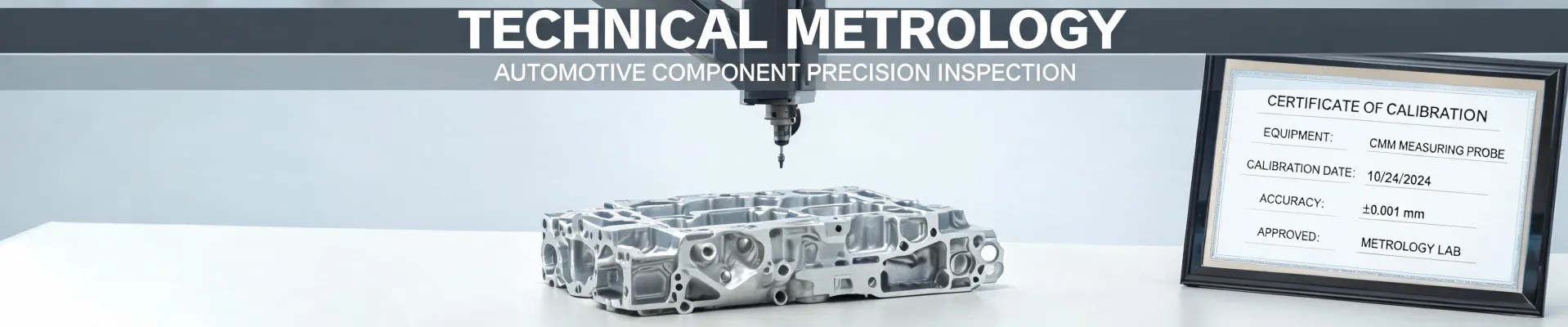
The email arrived at 2:47 on a Tuesday in late October 2024. Subject line: 'REJECTION - Batch 4481.' The customer had received 142 machined housings, put them on their own CMM, and found that a critical interior dimension drifted across the run. Our lab said the parts were in spec. Their lab said they weren't. The difference was 0.012 mm.
Because I'm the person who controls the calibration and training budget (about $210,000 a year across three sites), I was pulled into the corrective-action call. I sat there thinking this was an operator error or a bad fixture. I was wrong.
The purchase order I almost didn't approve
For six years, I've tracked every equipment purchase in the same cost tracking spreadsheet. I've negotiated with more vendors than I can count, and I've built a reputation for saying no to nice-to-haves. But this rejection exposed a hole in our defense. Our CMM was a Hexagon unit. Its calibration was NIST-traceable. The operator had 12 years of experience. When the customer asked for training records, though, the only record we had said 'on-the-job.' The customer's quality engineer asked: Trained by whom? On what standard? I did not have a good answer.
So I spent a week searching for answers and ended up on the Hexagon official homepage, which I honestly had never visited. I had been buying calibration services through third-party resellers and assumed the manufacturer's site was just product brochures. Instead, I found a public training calendar with a Hexagon CMM training course that used the same software version we had in our lab. The next class had open seats, but registration closed that day. I had two hours to decide. Normally, I would compare three options, call a vendor, and ask for a better price. There was no time. I approved it. As of November 2024, I couldn't find an equivalent public course for significantly less. Don't hold me to this, but the fee was in the four-figure range per operator, and the alternative—reworking 142 parts—was way more expensive.
The operator came back from class, rewrote the probing routine we had been using since 2017, and gave the quality manager a set of settings that matched the customer's baseline method. The customer re-audited the same batch in our lab with the new routine and accepted it. That one training decision cost us maybe a fraction of what a rework would have cost, and it avoided the conversation we would have had if the batch had been rejected twice.
The tool request that looked like an upsell
Two weeks later, maintenance sent me a requisition for two items: a FLIR ONE Gen 3 thermal camera and a clamp meter. I almost declined. We are a machine shop, not an electrical contractor. Then my maintenance supervisor showed me a photo on his phone. It was a thermal image of the contactor panel that feeds the air conditioner in the metrology lab. The AC was cycling on and off, and the lab temperature was swinging by about three degrees Celsius. Three degrees. Try holding a 0.012 mm tolerance when the machine base plate changes temperature by that much.
He asked for the clamp meter to measure starting current on the compressor without breaking the circuit, and to log actual readings before and after the repair. That sentence changed my mind. It wasn't a toy. It was a way to produce documented evidence for the next audit. We bought both. The FLIR ONE Gen 3 thermal camera plugs into a phone and costs a fraction of a full thermal imager. The clamp meter was a basic CAT III model from a local distributor. Combined, it was in the ballpark of a few hundred dollars as of November 2024. Check current distributor pricing, because this stuff changes. The pair paid for itself in one weekend: maintenance replaced a failing contactor, the lab temperature stabilized, and our CMM repeatability stopped moving around. Temperature stability is a game-changer when you're measuring small features.
The dental microscope lesson
Around the same time, our parent company asked me to review quotes for a dental microscope for its training center. The shortlist was a Zeiss and a Global dental microscope. I know, dental equipment isn't exactly metrology, but the same thought process applied. On paper, the Global had a longer warranty and a lower price. The magnification range was similar. My spreadsheet said Global. Then the training director asked: Which one do you think the dentists who visit want to see?
The Zeiss vs Global dental microscope decision isn't only about glass. It's about what the equipment communicates to a visitor. A training center sells a standard of practice. If the microscope in the demo room feels like an afterthought, the rest of the training can feel like an afterthought. We bought the Zeiss, not because I think Zeiss is automatically better in every category, but because in that specific room, the perceived quality was the product.
This is the same reason a gap in operator training or a three-degree temperature swing matters. Customers cannot see your spreadsheet. They see your equipment, your records, and your confidence. If those look shaky, the price you charged starts to look questionable. The training course gave us a certificate. The clamp meter gave us a log file. The microscope gave visitors a story. All three were part of the same invisible budget: the budget for being taken seriously.
What I would tell my past self
It is now January 2025. I still have the same cost tracking spreadsheet, but the columns look different. I have also started adding a column for 'customer perception risk,' which sounds soft until it saves you from buying a cheaper thing that looks worse. (Note to self: re-read the maintenance log before the next budget review.) I still ask for three quotes. I still check the Hexagon official homepage before I assume our training is current. A clamp meter is still a valid line item to me if it keeps the CMM room stable. But the bottom line is this: quality is not a premium extra. Quality is the brand.
Quality is not a premium extra. Quality is the brand.
People think expensive vendors deliver better quality. Actually, the vendors who deliver quality can charge more. The causation runs the other way. Six years ago, I started this role thinking every dollar spent was a dollar lost. I now think of it as buying the right story to tell a customer. That story has to be true, but it also has to be visible. A certification, a thermal image, a brand name on a microscope—these are evidence. Evidence is what makes a total cost of ownership calculation honest.
This worked for us, but our situation was a mid-size manufacturing company with customers who audit our process. If your customers only buy on price, your calculus might be different. Your mileage may vary. And if you're on the fence about a training course or a diagnostic tool, ask yourself which choice you'd rather defend after a batch rejection. That question usually gives you the answer.