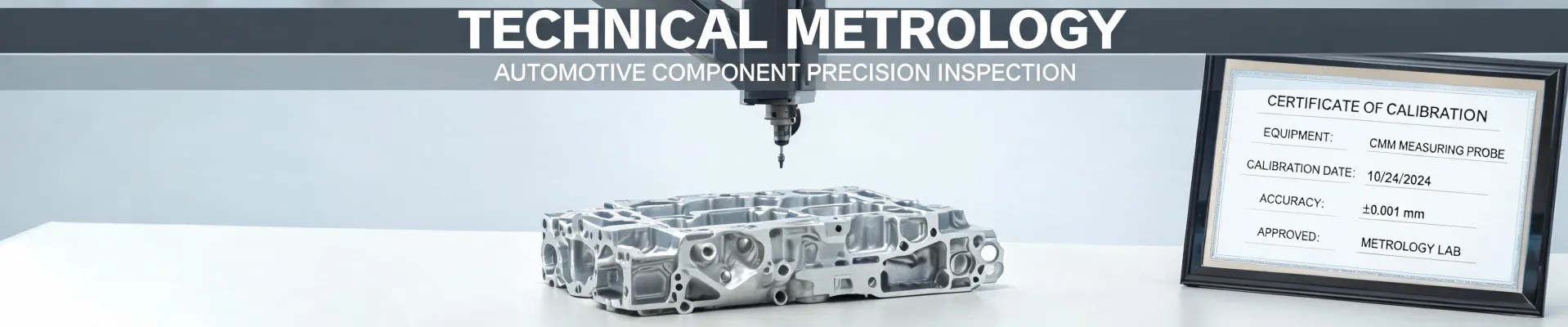
When a measurement instrument goes out of spec, you rarely have the luxury of a long procurement cycle. I coordinate calibration services for a mid-sized manufacturing group, and I've handled over 200 rush calibration orders in the past seven years—plenty of them for hexagon CMMs, but also handheld test equipment, sensors, and lab instruments.
This article compares two options: OEM calibration (sending your instrument back to the manufacturer—typically Hexagon for a CMM) and independent third-party labs. I'll compare them on the dimensions that actually matter when you're on a deadline: turnaround time, cost transparency, quality and traceability, and aftercare. And at the end, I'll give you the selection framework I use with our own internal customers.
One caveat first: my experience is based mostly on mid-size manufacturers in the U.S. Midwest, primarily automotive and medical device suppliers. If your operation is in aerospace, pharma, or a small job shop, your mileage may differ. I'll flag where I think that's likely.
Turnaround Time: The Obvious Difference Isn't the Real One
Conventional wisdom says independent labs are faster. For standard workload, that's usually true. In my experience, hexagon cmm calibrations through the OEM run 7–10 business days including transit. An independent lab with local logistics can often complete the same work in 3–5 days.
But when you actually need a rush, the bottleneck is rarely the calibration work itself. It's the logistics around it. I've seen more rush orders fail because of a courier schedule than because of the lab's capacity.
In March 2024, a client called at 4 PM on a Wednesday. They had a quality audit at 8 AM Friday, and their CMM failed an interim verification. I went back and forth between the independent lab downstate and the OEM's field team for nearly a full day. The independent lab quoted a 24-hour rush calibration, which sounded perfect. But their courier only picked up twice a week from our region, which meant the instrument would sit in their depot for 30+ hours before it even traveled. The OEM's field service, on the other hand, could be at our facility Thursday morning with portable reference standards.
We paid $1,250 in rush fees on top of the $1,800 base for the on-site OEM calibration (from our purchase records, March 2024; verify current pricing). That stung. But the alternative—a failed audit and a $50,000 penalty clause in our supply contract—was far worse.
The counterintuitive conclusion: for urgent calibrations, OEM field service is often faster than an independent lab because it removes shipping from the critical path. If you have more than 3 days of buffer, the independent lab usually wins on speed. If you need a certificate in-hand within 48 hours, the OEM's local team is the safer bet.
Cost Transparency: What's NOT in the Quote
I'll be upfront about my bias here: I believe transparent pricing is the most overlooked factor in selecting a calibration provider. I've lost count of how many low quotes turned into high invoices once the fees surfaced.
Several months before that CMM incident, I sent a 179 true rms multimeter to an independent lab. The quote was $149. The final invoice was $412. Here's the breakdown that wasn't in the original quote:
- $149 — base calibration (as quoted)
- $85 — out-of-tolerance adjustment fee (the meter was 0.03% off, and they adjusted it without calling me)
- $60 — rush fee (because I requested expedited handling mid-order)
- $58 — return shipping with insurance
- $60 — calibration certificate fee (buried in the terms and conditions)
I'm not saying every independent lab operates this way. Some of the best vendors I've worked with are third-party labs that quote all-inclusive pricing. But I've encountered enough buried fees to develop a firm habit: before accepting any quote, I ask "what's NOT included in this price?" in writing.
That question has saved me more money than any volume discount. The vendor who lists every fee upfront—even if their total looks higher—almost always costs less in the end. If a vendor can't answer the question clearly, that's a red flag, and honestly a deal-breaker for me.
OEM quotes aren't automatically better here. Some manufacturers also break out certificate fees and shipping separately. But in my experience, Hexagon's quotes have been more complete, which makes sense because they already know what the instrument requires. I still ask the question. Every time.
Also ask about out-of-tolerance outcomes. If the instrument fails, do you pay for the failed attempt? Is adjustment included or extra? Their answer should be in writing, and it should be part of your comparison.
Quality and Traceability: The Certificate Is the Product
For calibration, the certificate is the product. The measurement itself takes hours or less, but the documentation is what your auditor will examine.
Both OEM and independent labs can provide ISO/IEC 17025-accredited calibration with NIST-traceable reference standards. From a regulatory standpoint, certificates from either source are generally accepted. So is there a real quality difference? In my experience, yes, but not where you might expect.
For CMMs, the OEM has a genuine edge in measurement uncertainty. Hexagon's factory calibration uses reference standards tied directly to the machine's original design tolerances. Their uncertainty budgets are tighter, which matters when you're measuring features close to your product tolerance limits. If your tolerances are generous, this might not justify a premium. For tight-tolerance work, tighter calibration uncertainty is the difference between trusting a measurement and just hoping it's right.
Independent labs win on breadth. A well-equipped third-party lab can handle your zero speed sensor, your 179 true rms multimeter, your pressure gauges, and your Eppendorf pipettes in one visit. If you operate both a lab and a production floor, that consolidation is genuinely valuable—one vendor, one service report, one invoice.
On the lab side, if you've searched "how to calibrate eppendorf pipette," you know it's more nuanced than a quick fix. Pipette calibration is a gravimetric procedure: you weigh dispensed water volumes, correct for temperature and density, and compare results against tolerances. Any competent lab with an analytical balance and the right procedures can do it—the manufacturer is not required. However, I've seen a catch: if a pipette is out of tolerance and needs repair, an independent lab often doesn't carry OEM spare parts. That can leave your pipette idle for days. That's kinda the catch with third-party pipette service, and it might justify paying for an authorized service center if you have limited pipette inventory.
My unexpected conclusion: for standard instruments like multimeters, sensors, and pipettes, a well-qualified independent lab is often equal to—or better than—the OEM. For CMMs and high-accuracy metrology equipment, OEM calibration's lower measurement uncertainty is a real advantage.
Support and Aftercare: The Dimension Most People Skip
This dimension became clear to me after several audits and dozens of certificate lookups.
When a Hexagon CMM is calibrated by the OEM, you typically get access to the hexagon support login portal. That's not just a customer dashboard—it's where your calibration certificates are stored, searchable by serial number. When an auditor asks for proof that a specific machine was calibrated on a specific date, I can find it in under a minute. The portal also maintains firmware update records and service history, which adds valuable context to your quality records.
Independent labs vary widely here. Some have good customer portals and organized reporting. Others send a PDF and call it done. And when your instrument needs a repair alongside calibration, an independent lab often has to order parts from the OEM anyway—which becomes a shipping delay in your timeline.
Independent labs do have their own support advantages. A local lab can frequently send a technician to your facility on short notice, and it's easier to get a human on the phone. OEM support, meanwhile, often funnels through a ticketing system. That works when you have lead time, but feels slow in a crisis.
So Which Should You Choose?
Here's the framework I've landed on after all those rush orders. It's not about "OEM is better" or "independent is better." It's about what matches your specific situation.
Choose OEM calibration (Hexagon or the original manufacturer) when:
- You need a certificate in-hand within 48 hours—on-site field service removes the shipping variable
- You're calibrating a CMM used for tight-tolerance work where measurement uncertainty directly impacts product quality
- You want your service history, certificates, and firmware documentation in one portal—hexagon support login is a genuine advantage here
- Your equipment might need parts or firmware updates during the same service visit
Choose an independent lab when:
- You have a mixed fleet of instruments and want one vendor to handle everything—multimeters, sensors, pipettes, pressure gauges
- You can afford a 5–7 day turnaround
- You've asked "what's NOT included?" and gotten a clear, written answer
- Having a local technician who can visit your facility matters more than OEM-specific depth
If you're on a tight deadline, the certainty of an on-site OEM field visit is a no-brainer—provided your budget can absorb the rush premium. If time is flexible, the independent route often delivers strong results at a lower total cost.
The Bottom Line
I don't think there's a universal winner between OEM and independent calibration. The right answer depends on your timeline, your tolerance requirements, and—especially in my view—how transparent the vendor is about pricing.
If I'm honest, I've been surprised more often by independent lab invoices than by OEM ones. But I've also seen third-party labs do outstanding work at a fraction of the OEM cost. The difference consistently came down to whether the vendor disclosed out-of-tolerance fees and turnaround contingencies before the instrument was on their bench.
Honestly, I'm not entirely sure why some labs bury their fees while others are fully transparent. My best guess is that competitive pressure on the base price pushes them to recover margins elsewhere. Whatever the reason, the fix is the same: ask what's not included, get it in writing, and compare total cost rather than the headline number.
Calibration prices in this article are from our own purchase records from late 2024 and are for general reference only. Actual quotes vary by instrument type, condition, location, and delivery timeline. Verify current rates before relying on any of the figures above.