-
Your Client Doesn't Care How Accurate Your Equipment Is—They Care Whether They Can Trust the Paperwork
-
My First Big Assumption: A Multimeter Is a Multimeter
-
Communication Failure: "Calibrated" Means Different Things to Different People
-
Bigger Equipment, Same Problem
-
The Mindshift: What Changed in How I Buy
-
The Pushback I Usually Get
-
What I'd Say to My 2017 Self
Your Client Doesn't Care How Accurate Your Equipment Is—They Care Whether They Can Trust the Paperwork
I've been handling metrology procurement and quality processes for a small industrial team for about eight years. In that time I've personally made, and documented, more than a dozen significant mistakes—roughly $40,000 in wasted budget if you count the rework, the expedited shipping, and the client meetings where I had to explain myself. Now I keep a checklist so nobody on my team repeats them.
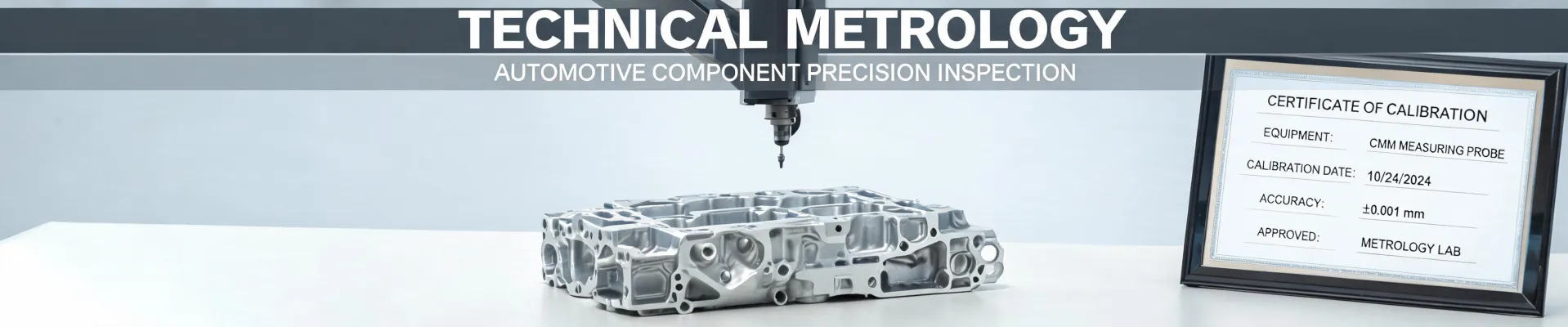
Here's the opinion that gets me strange looks in procurement meetings: the brand name on your measurement gear matters less than the calibration certificate sitting next to it. Clients don't trust you because you bought the right logo. They trust you because you can prove your numbers mean what they say.
Specifics, not theory. Here's what taught me that.
My First Big Assumption: A Multimeter Is a Multimeter
In 2017, I needed twelve pocket multimeters for incoming inspection benches. I searched "multimeter near me," found a decent price, and ordered twelve units of a 106-R pocket digital multimeter for about $340 total. My thinking was simple: it's a multimeter. It reads voltage. How wrong can it be?
Three months later, a client's QA auditor came through for a spot check. She asked to see our calibration certificates for the meters we used to sign off on incoming components. I had nothing. Not the certificates, not a calibration log, nothing. She pulled out a reference meter and found ours were reading about 0.4V off on one bench. Not catastrophic in absolute terms, but enough that the components we had approved on that bench got flagged.
The result: a $3,200 order had to be reworked. Add $890 for the auditor's travel and the expedited replacement shipment. That's the invoice. The part that stung was the email my client's procurement lead sent two weeks later asking whether our other inspection data was "reliable." That question doesn't go away. I'm still answering it.
Communication Failure: "Calibrated" Means Different Things to Different People
Here's where it gets embarrassing. When I bought those meters, I told the supplier "we don't need anything fancy, just something that works for basic checks." What I meant was: I don't need a premium brand. What he heard was: I don't need calibration paperwork. Same conversation, two completely different purchase orders in our heads.
I didn't discover this until the auditor asked for the certificates. I called the supplier and he said, "You didn't order calibrated units." Technically true. I never asked. I assumed calibration was standard on anything sold as a measurement instrument. It isn't.
That one misunderstanding cost me roughly five hours of back-and-forth, a $620 rush order for calibrated replacements, and the humility of admitting to my boss that I'd never read the spec sheet closely enough to notice the phrase "calibration certificate sold separately."
Bigger Equipment, Same Problem
Fast forward to 2022. We needed a laser tracker for a large fixture alignment job, and I found a used one at about 35% below new pricing. I approved the purchase. The unit worked fine—at first.
The problem showed up during a client audit in Q1 2023. The auditor asked for the calibration history on the FARO laser tracker we were using to report final dimensions. We handed over our internal calibration log. She read it, set it down, and said: "We require OEM-recognized calibration for measurement equipment used on our projects."
That's when I understood the difference between "the machine measures accurately" and "the machine's measurements are accepted by the client." Those are two completely separate things, and only one of them shows up on a spec sheet. We got 90 days to remediate. The job was fine. But the supplier rating on their side dropped, and it took us almost a year to get back to the approved-vendor tier we had been on before.
The Mindshift: What Changed in How I Buy
What actually changed my approach wasn't the tracker incident by itself—it was a smaller moment a few months later. I was sourcing a used inspection microscope and started reading up on whether the listed seller was an authorized dealer. I searched around and kept landing on variations of the same question: is Microscope World an authorized Zeiss dealer? People were arguing about it in forums, and I realized I had never once asked any of my equipment suppliers that exact question. I'd been buying measurement gear the way I buy office chairs.
So I rebuilt our supplier list around a simple filter: does this vendor provide OEM-supported calibration and a documented service network in the regions where we actually deploy equipment? That filter eliminated about half the list. It also changed what we ended up buying. We standardized on FARO laser trackers and a FARO CMM arm for the portable work, not because the spec sheet was flashier (honestly, it's not dramatically different from options we considered), but because their service network matched where our field teams actually are, and the calibration records are the kind clients accept without a five-email argument.
To be fair, not every job requires OEM-level calibration. If you're doing internal-only inspection for rough tolerance work, a calibrated-but-not-OEM meter is completely fine. I get why people buy the cheapest option—budgets are real, and I've been the one defending a cost line in a meeting. But the moment your data leaves your building and shows up in a client's quality system, the equation changes.
The Pushback I Usually Get
The objection I hear most is: "We're a small shop. Our clients aren't going to audit us that closely."
I said the same thing in 2017. But here's the thing about audits—they don't happen on your schedule. They happen when the client's own customer questions something upstream, and suddenly your paperwork is on someone's desk. One failed audit costs more than three years of buying calibrated equipment from the start. I've run that math more than once, and it's not close.
The second objection: "A cheaper brand with the same accuracy spec is functionally identical." Maybe on paper. But accuracy on day one and accuracy after 18 months of shop-floor use are different numbers, and the difference is usually service support—not the spec sheet. Frequency-wise, most measurement failures I've seen in eight years weren't caused by the wrong instrument being purchased. They were caused by an instrument that wasn't maintained, wasn't calibrated on schedule, or wasn't documented to the standard the client actually required.
What I'd Say to My 2017 Self
So here's where I land, and I'll say it plainly because I earned the right to: when your client opens your report, they are not evaluating your equipment. They are evaluating whether your company looks like it knows what it's doing. A clean calibration record from a manufacturer with an accountable service network does more for that perception than any spec sheet ever will. A missing one does more damage than a slightly lower-accuracy instrument ever could.
Before you sign any PO for measurement gear, ask three questions: Who calibrates it? What happens when it drifts? Will the client accept the paperwork? If you can't answer all three, the price on the invoice is not the real price.
I learned that from a $30 multimeter. You can learn it for less—just check the calibration line on the quote before you check the total.